
Russia banking crisis concern revealed in bond market’s rebound
By Bloomberg
As the biggest Russian corporate debt rally in five years pulled three out of every four junk-rated bonds back from distressed territory, some banks got left behind.
Investors are still demanding a premium of about 1,000 basis points over Treasuries to own subordinated notes of lenders including VTB Group and OAO Gazprombank. Those securities carry risk because, in some cases, they allow the borrower to skip coupon payments if it struggles to make a profit. In others, the issuer can convert the debt into equity.
With Russia’s banks strained by sanctions over the Ukraine conflict and the country’s first recession since 2009, the potential for such clauses to be triggered is growing, according to Aton Capital and UralSib Capital LLC. While the higher-risk bonds were boosted by a 13 percent advance for Russian corporate debt - the most among emerging markets tracked by Bloomberg - it wasn’t enough to lift them out of distress as burgeoning losses and bad loans curb appetite.
“I am more conservatively positioned in Russia, avoiding subordinated bonds due to low capitalization and the still huge non-performing loan realization ahead for banks,” Peter Varga, who manages about $1 billion of developing-nation corporate bonds at Erste Sparinvest in Vienna, said by e-mail March 26. He invests in Russian senior bonds, which enjoy higher creditor priority.
Escaping Distress
The number of Russian notes trading at distressed levels has plunged to 20, or one in every 10 corporate bonds worldwide, according to data compiled by Bloomberg. That compared with 68 in January, or a fifth of all distressed bonds globally.
Subordinated notes typically offer higher yields as they rank low in the order of payment by the issuer in the event of bankruptcy. In Russia, some of these securities have been issued with greater risk in recent years. VTB’s $2.25 billion perpetual securities sold in July 2012, which don’t have a maturity date, allow the lender to skip a coupon payment if it hasn’t announced or paid a dividend in the previous six months.
“VTB’s perpetual bond is a very subordinated instrument,” Ivan Kachkovski, an analyst at Aton said by phone on March 26. “It has very viable risks that the next coupon or even two will not be paid. The market is pricing in that risk.”
High Yields
The security trades at 939 basis points over Treasuries, compared with 661 basis points for the lender’s senior dollar bonds maturing in April 2017. Notes of Russia’s biggest banks have suffered since sanctions implemented by the U.S. and European Union over Russia’s role in the fighting in eastern Ukraine curbed their ability to borrow internationally.
VTB “has not taken any decisions to defer coupon payments on its perpetual-bond issue and does not anticipate occurrence of events leading to coupon deferral” in the foreseeable future, the lender’s press office said in an e-mailed response to questions about the bond.
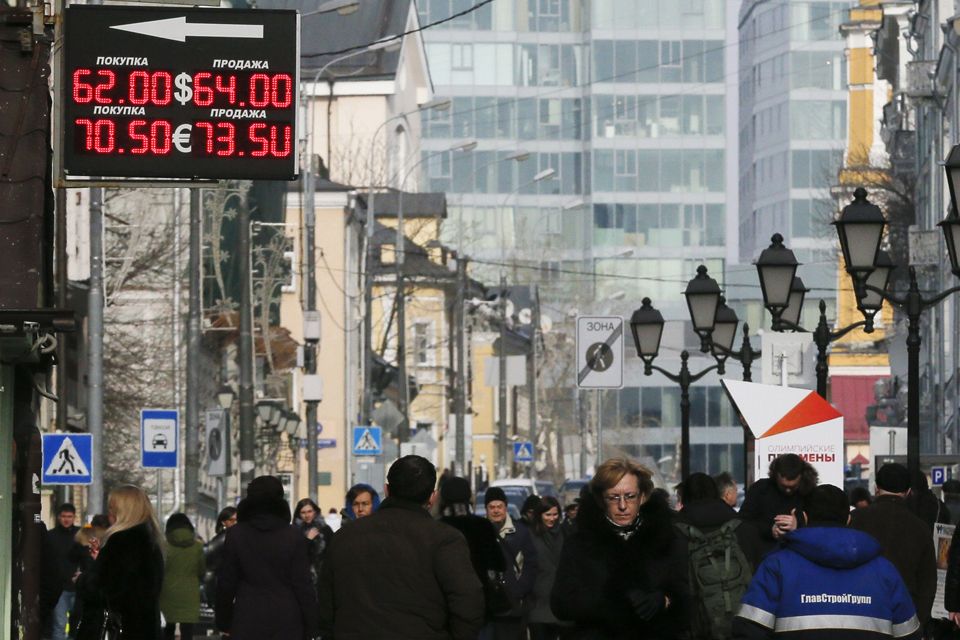
Russia’s banking industry has shown multiple signs of stress with lenders posting cumulative losses of 23.5 billion rubles ($401 million) in January versus profits a year earlier. Bank of Russia Deputy Governor Mikhail Sukhov said this month lenders face two years of hardship with non-performing loans poised to increase by 900 billion rubles in 2015.
There are official programs that provide lenders “a sufficient cushion” to withstand a low-liquidity environment, Gazprombank’s press office said in an e-mailed response to questions. The central bank now allows lenders to use third- quarter exchange rates to value risk-weighted assets and credit ratings pre-dating Russia’s incursion into Crimea, easing pressure on their capital requirements.
“A wide-scale crunch” in the financial system is unlikely and subordinated debt could offer a buying opportunity in “high-quality names” such as Gazprombank, according to Dmitry Dudkin, the head of research at Uralsib Capital in Moscow.
“That said, the banking system in Russia clearly remains stressed by sanctions, the fall of the ruble and the recession,” Dudkin said by e-mail on March 27. “That’s why banking bonds are lagging.”
Here we are to serve you with news right now. It does not cost much, but worth your attention.
Choose to support open, independent, quality journalism and subscribe on a monthly basis.
By subscribing to our online newspaper, you can have full digital access to all news, analysis, and much more.
You can also follow AzerNEWS on Twitter @AzerNewsAz or Facebook @AzerNewsNewspaper
Thank you!