
Lira slides toward record as Turkey support fails to counter Fed
By Bloomberg
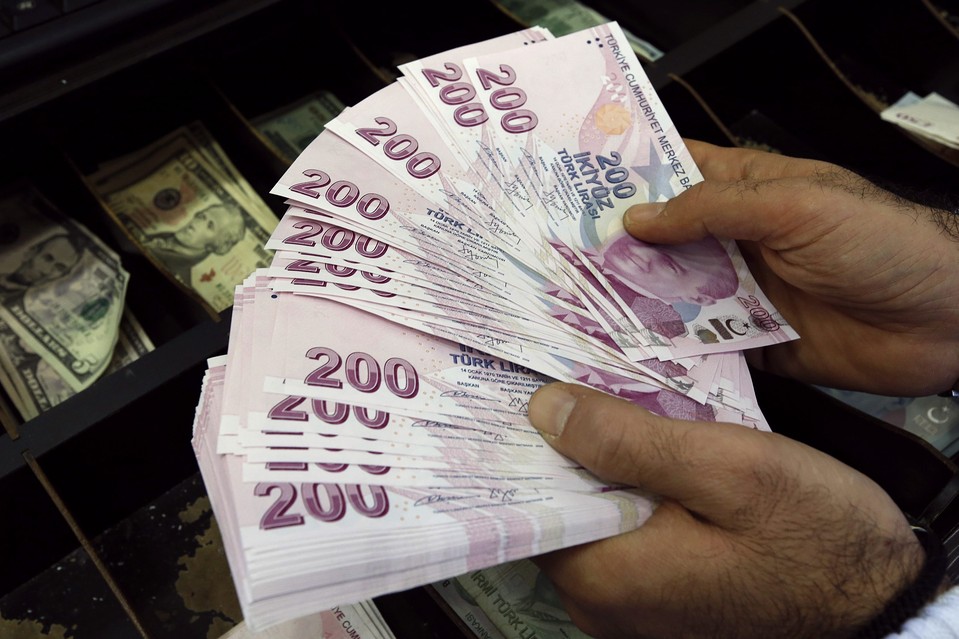
The lira slid toward a record as speculation the U.S. is moving closer to raising interest rates outweighed attempts by the Turkish central bank to support the currency.
The lira retreated 1.5 percent to 2.6403 per dollar by 1:43 p.m. in Istanbul, the second-biggest decliner among 24 emerging- market peers. Stocks fell to the lowest level in almost three months and government bonds decreased, sending yields higher for a fourth day.
Turkish central bank Governor Erdem Basci is struggling to stop the lira from falling to repeated records as government pressure to deepen interest-rate cuts stoked speculation he will lose his autonomy over monetary policy. The bank reduced the amount of local-currency offered in auctions of one-week repurchase agreements in the past five days among measures to shore up the currency as more Federal Reserve officials make a case for gradually raising interest rates.
“The lira has been suffering from a rising country-risk premium due to intensifying concerns of political pressure on the Central Bank of Turkey,” Gokce Celik, an economist at Finansbank AS in Istanbul, said in e-mailed comments. Government calls to ease policy “are likely to continue, especially against a backdrop of weak growth outlook.”
Dollar Liquidity
Federal Reserve Bank of Dallas President Richard Fisher, in his last speech at the helm of the Fed branch, said on Monday the central bank should begin to gradually raise rates as the labor market improves. All but seven of 24 emerging-market currencies fell against the dollar on Tuesday, according to data compiled by Bloomberg.
The lira, the worst performer this year after Brazil’s real among developing nations, last slid to an all-time low of 2.6475 per dollar on March 6. In addition to reducing lira liquidity, the central bank said on Tuesday it was changing the reserve options mechanism, or ROM, to release more foreign-currency funds into the market.
The monetary authority will provide about $1.5 billion to banks on March 13 as part of the change. The ROM allows lenders to hold part of their required lira reserves in foreign exchange or gold. An increase in the ROM coefficients can increase the banking system’s funding gap as commercial banks store more liras as reserves at the central bank.
“As the Central Bank of Turkey attempts to curb the selling pressures on lira by alternative measures, the reluctance to act on interest rates should continue keeping the downside pressures tight before next week’s Fed meeting” on March 17-18, Ipek Ozkardeskaya, a currency strategist at Swissquote Bank AS in Gland, Switzerland, said in an e-mailed note.
Yields on the government’s two-year notes climbed 19 basis points to 8.99 percent. The Borsa Istanbul 100 Index retreated 2.2 percent, led by declines in banks.
Here we are to serve you with news right now. It does not cost much, but worth your attention.
Choose to support open, independent, quality journalism and subscribe on a monthly basis.
By subscribing to our online newspaper, you can have full digital access to all news, analysis, and much more.
You can also follow AzerNEWS on Twitter @AzerNewsAz or Facebook @AzerNewsNewspaper
Thank you!