
Oil imbalance will even out later this year, OPEC head says
By Bloomberg
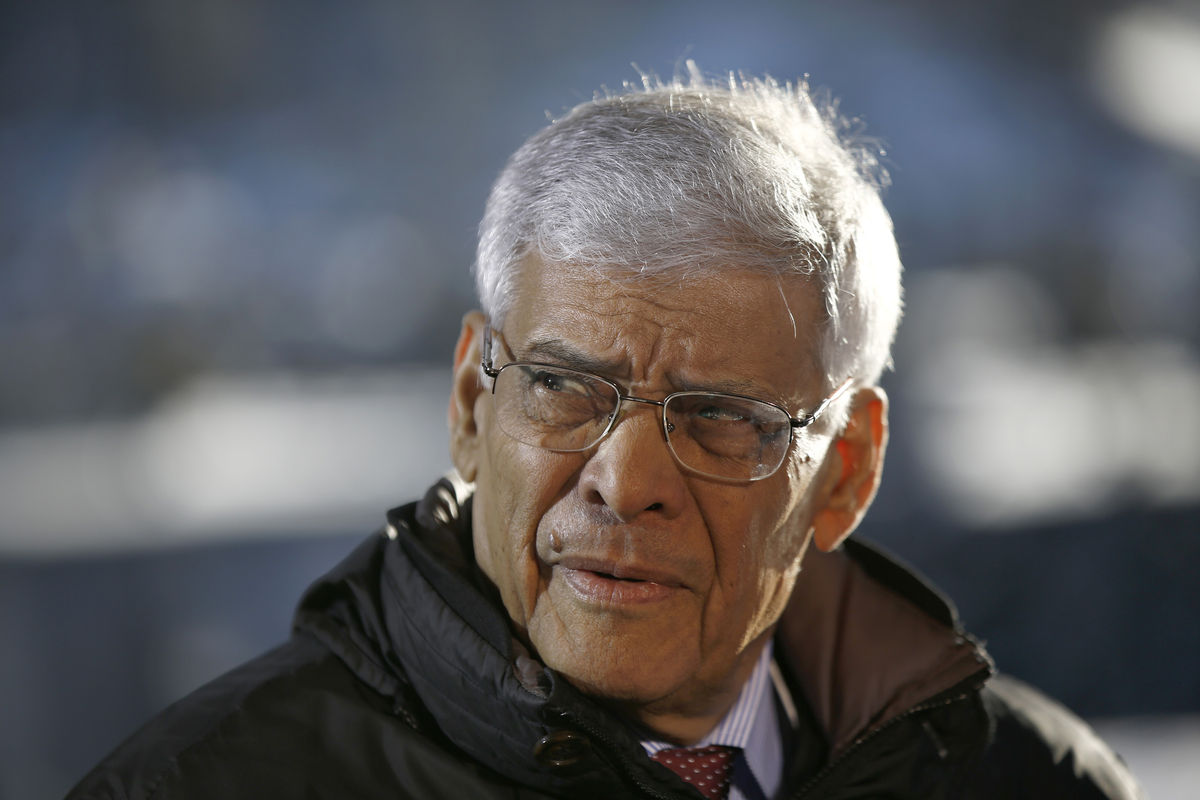
The global crude-oil market will return to balance in the second half of this year from an oversupply of 2 million barrels a day that has caused prices to plummet, OPEC Secretary-General Abdalla El-Badri said.
Speaking Sunday at a conference in Manama, Bahrain, El- Badri said demand growth in 2014 was weaker than expected “at just below 1 million barrels a day” and usage will rise by 1.2 million barrels a day this year.
Crude has lost half its value since June as U.S. producers pumped oil at the fastest pace since 1983. Prices collapsed after OPEC’s decision on Nov. 27 to maintain production rather than sacrifice market share in the face of a glut.
Non-OPEC supply has grown by 6 million barrels a day since 2008 while production by members of the Organization of Petroleum Exporting Countries has remained at about 30 million barrels, he said. Brent oil futures, a benchmark for more than half of the world’s oil, dropped 0.7 percent today to $59.30.
OPEC pumped 30.6 million barrels a day in February, an increase of 163,000 a day that was led by gains from Saudi Arabia, the world’s biggest crude-oil exporter. It was the ninth straight month that the 12-member group has produced more than its collective target of 30 million barrels, the data show.
Shale Output
OPEC can’t cut production because of the rise in shale and non-OPEC output, El-Badri said. He urged OPEC nations to continue investments and diversify their economies, many of which rely mostly on oil revenue.
“If we made a cut in the November meeting, then we would have needed to make another cut in January, and then we would need another cut in June as supply will keep increasing from non-OPEC,” he said.
Kuwait is in a “critical situation” because crude oil accounts for 94 percent of the Persian Gulf nation’s gross domestic product, Oil Minister Ali al-Omair said at the conference.
Over the next 25 years, the oil industry will need to invest $10 trillion to meet a forecasted 60 percent increase in energy demand, El-Badri said.
“The world will need huge investments in oil to meet growth in demand by 2040 and our projections show that we will need around $10 trillion between now and 2040,” El-Badri said. “Energy demand will keep growing and it will increase by 60 percent between now and 2040 and fossil fuel will remain central to the energy mix.”
Here we are to serve you with news right now. It does not cost much, but worth your attention.
Choose to support open, independent, quality journalism and subscribe on a monthly basis.
By subscribing to our online newspaper, you can have full digital access to all news, analysis, and much more.
You can also follow AzerNEWS on Twitter @AzerNewsAz or Facebook @AzerNewsNewspaper
Thank you!