
Ruble falls 2nd day as Russia faces $20 billion debt repayments
By Bloomberg
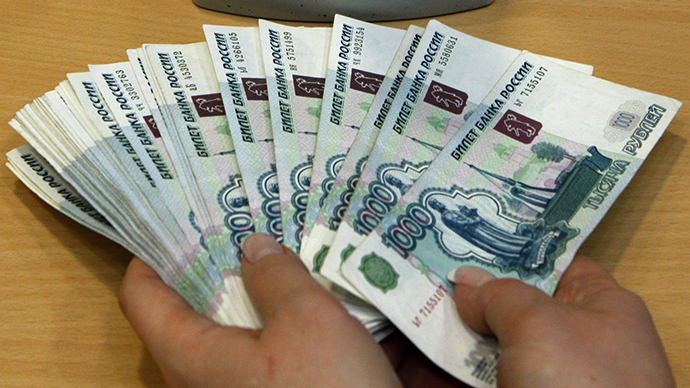
The ruble fell for a second day as Russia braced for the biggest month of external-debt repayments until at least the third quarter amid mounting political turmoil and declining oil prices.
The currency depreciated 1 percent to 62.1880 versus the dollar as of 3:29 p.m. in Moscow. Russian government bonds declined, pushing the yield on the five-year note up seven basis points to 14.49 percent, the highest in a month on closing basis. Tens of thousands marched through Moscow on Sunday to honor slain political activist Boris Nemtsov in the biggest show of support for Russia’s opposition in three years.
About $19.7 billion of external debt for local borrowers is coming due in March, making it the most intense month for repayments since December and until at least October, according to Bank of Russia data. The amount due comes amid rising economic pressures in the nation grappling with the fallout from the crisis in Ukraine and declining oil prices, which have weighed on the world’s largest crude exporter.
“The main impact now is from oil and external debt repayments,” Dmitriy Gritskevich, an analyst at OAO Promsvyazbank in Moscow, said in an e-mail. “The market is pretty cynical, and in the medium term this incident looks neutral for the market,” he said, referring to the demonstrations on March 1.
The Russian central bank has an open limit of $50 billion for dollar-based refinancing available to commercial lenders and has said it would be ready to expand the cap if necessary. Tapping into the funds would have a negative effect on dwindling international reserves, Gritskevich said.
Lower Reserves
Russia’s reserves have declined by 26 percent in the past 12 months to $364.6 billion after the central bank ate into the funds to prop up the sliding ruble. International sanctions on Russia from the U.S. and European Union have shut local companies off from refinancing.
Brent oil declined 1.8 percent to $61.43 a barrel in London on Monday after the first monthly gain since June as Saudi Arabia stepped up production, lifting OPEC’s output beyond its collective quota for a ninth month.
If oil prices are supportive, the ruble won’t see any substantial impact from debt repayments, Vladimir Evstifeev, an analyst at Bank Zenit in Moscow, said in an e-mailed note.
“As a factor of speculations against the ruble, it may be a short-term trade idea,” he said.
The benchmark Micex Index of stocks rose 0.8 percent to 1,773.78 in Moscow, led by OAO Lukoil, which added 0.9 percent. The crude producer gained as much as 2.2 percent earlier, rising to the highest level since Feb. 18.
President Vladimir Putin’s critics bet that the unfolding economic crisis will spark a revolt on a scale last seen during the winter protests of 2011-2012, when more than 100,000 turned out for rallies that were the largest since the collapse of communism.
Here we are to serve you with news right now. It does not cost much, but worth your attention.
Choose to support open, independent, quality journalism and subscribe on a monthly basis.
By subscribing to our online newspaper, you can have full digital access to all news, analysis, and much more.
You can also follow AzerNEWS on Twitter @AzerNewsAz or Facebook @AzerNewsNewspaper
Thank you!