
Apple, RadioShack, NFL, Power Rangers: intellectual property
By Bloomberg
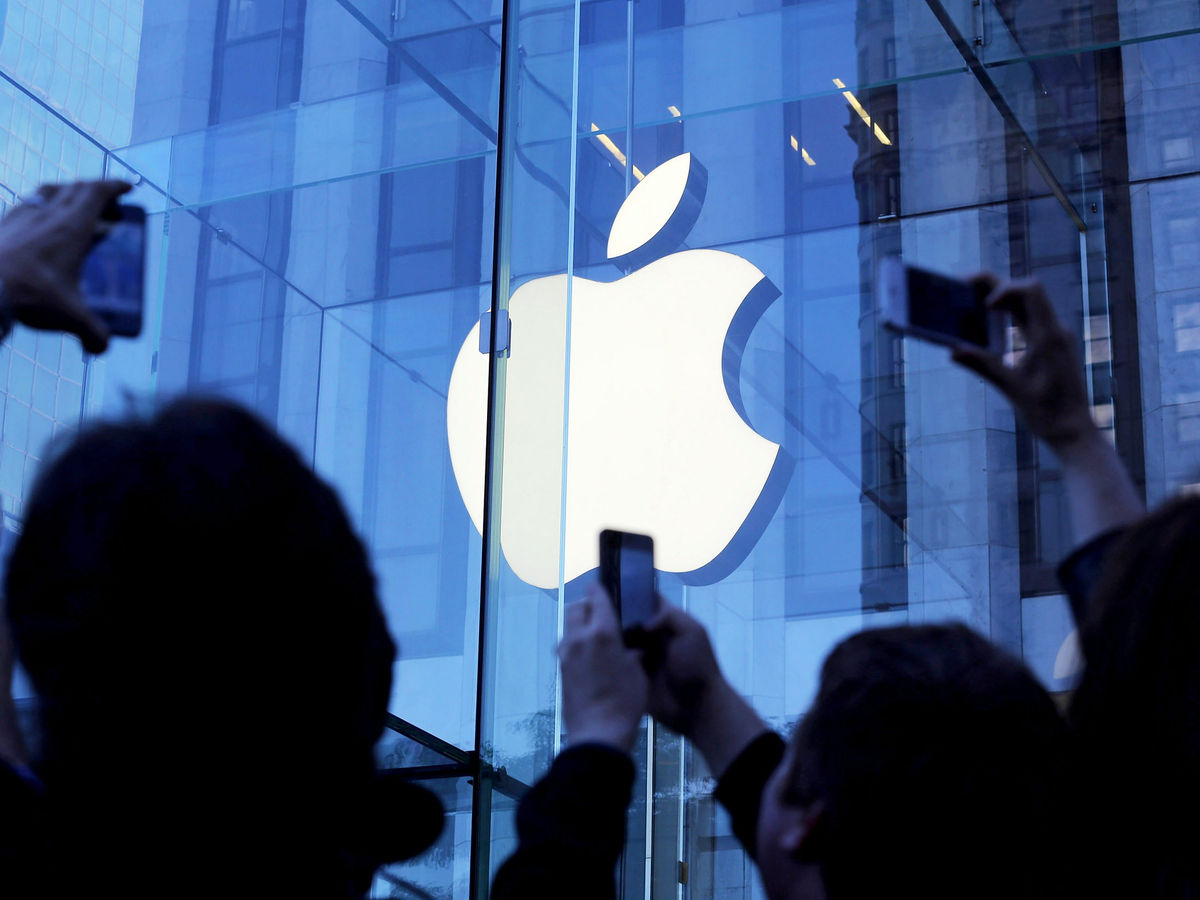
Apple Inc. was told to pay $532.9 million after a federal jury said the company’s iTunes software used a Texas company’s patented inventions without permission.
Closely held Smartflash LLC, which claimed that Apple infringed three patents, was seeking $852 million in damages, while Apple said the case was worth $4.5 million at most. A federal jury in Tyler, Texas, where Smartflash is based, on Tuesday rejected Apple’s arguments that it didn’t use the inventions and that the patents were invalid.
The dispute is over digital rights management and inventions related to data storage and managing access through payment systems. Smartflash claimed that iTunes used the inventions in applications such as Game Circus LLC’s Coin Dozer and 4 Pics 1 Movie. Apple said it will appeal.
“Smartflash makes no products, has no employees, creates no jobs, has no U.S. presence and is exploiting our patent system to seek royalties for technology Apple invented,” said Kristin Huguet, an Apple spokeswoman. “We refused to pay off this company for the ideas our employees spent years innovating, and unfortunately we have been left with no choice but to take this fight up through the court system.”
Game Circus and another game developer, KingsIsle Entertainment Inc., maker of Wizard 101 and Grub Guardian, were defendants before being dismissed from the case last year.
In asking for $852 million, Smartflash argued it was entitled to a percentage of sales of Apple’s devices, including the iPhone, iPad and Mac computers, that were used to access iTunes. It claimed that Apple intentionally infringed the patents, in part because one of its executives had been given a briefing on the technology more than a decade ago.
Cupertino, California-based Apple attacked every aspect of Smartflash’s case. It said the patents were invalid and weren’t infringed. It said Smartflash didn’t have complete control of the patents and waited too long to sue. It argued that Smartflash’s royalty demands were “excessive and unsupportable.”
“They are not just invalid, they are invalid many times over,” James Batchelder, a lawyer at Ropes & Gray LLP in East Palo Alto, California, who is representing Apple, told the jury.
The case is Smartflash LLC v. Apple Inc., 13-447, U.S. District Court, Eastern District of Texas (Tyler).
For more patent news, click here.
Trademark
RadioShack to Sell Name Separately With $20 Million Opening Bid
RadioShack Corp.’s biggest shareholder, already seeking to buy hundreds of stores from the bankrupt electronics retailer, agreed to a separate sale of the chain’s name, with bids to start at $20 million.
The plan to break off the sale of trademarks and other intellectual property from the auction for store leases would put the 94-year-old brand up for grabs without forcing buyers also to bid on the stores.
Greg Gordon of Jones Day, a lawyer for RadioShack, announced the arrangement Wednesday in U.S. bankruptcy court as he outlined last-minute changes to a proposal by Standard General LP, which holds 10 percent of the company’s stock, to buy as many as 2,000 stores.
Before the Fort Worth, Texas-based retailer filed for bankruptcy this month, Standard General agreed to bid on about half of the company’s 4,000 locations, with plans to co-brand some of the stores with Sprint Corp., the wireless carrier.
An official committee of unsecured creditors has objected to various aspects of the proposal.
Susheel Kirpalani, a lawyer for the committee, on Wednesday told U.S. Bankruptcy Judge Brendan Shannon in Wilmington, Delaware, that Standard General is negotiating to buy senior debt owned by other hedge funds to improve its ability to trade debt for RadioShack assets, rather than pay cash, during an auction.
Kirpalani, a partner at Quinn Emanuel Urquhart & Sullivan LLP, said it was too soon to release those entities from any liability they may have incurred before the Feb. 5 bankruptcy filing.
The case is In re RadioShack Corp., 15-10197, U.S. Bankruptcy Court, District of Delaware (Wilmington).
NFL’s Redskins Say Trademark Cancellation Is Unconstitutional
The owners of Washington’s National Football League team told a federal court in Virginia that the cancellation of its “Redskins” trademark is unconstitutional.
The team is attempting to hold on to the rights to its name despite opposition from American Indians that the term is racially disparaging.
In its Feb. 23 filing with the court, Pro-Football Inc. said the disputed trademarks were first used in 1933 and registered in 1967, and the move by the U.S. Patent and Trademark Office to cancel the marks “improperly singles out Pro-Football Inc. for disfavored treatment based solely on the content of its protected speech.”
The patent office issued a cancellation order June 18.
The team ownership also argued in its filing that the patent office is “interfering with the ongoing public discourse” over the name, and “choosing sides and cutting off the debate.” Cancellation amounts to the taking of the team ownership’s property “for an unconstitutional public use without just compensation,” Pro-Football argued.
The team ownership filed the suit in August 2014, following the adverse ruling from the patent office. A group of American Indians filed an opposition to the trademark in 2006. In addition to the patent office, individual members of that group are also named as defendants in the case in federal court.
The case is Pro-Football Inc. v. Blackhorse, 14-cv-01043, U.S. District Court, Eastern District of Virginia (Alexandria).
For more trademark news, click here.
Copyright
Infringement Claim Removes Power Rangers Fan Film from Vimeo
A fan film about the Power Rangers superheroes was taken down from the Vimeo video-sharing website after an infringement complaint by Salon Brands LLC, owner of the copyright to the Mighty Morphin’ Power Rangers, the Telegraph reported.
The film, rated a “staff pick” by Vimeo, contained a statement that it was distributed for free and that the filmmaker had no intention of making a profit, according to the U.K. newspaper.
The filmmaker is insisting that every image in his film is original and contains no copyrighted footage, the newspaper reported.
A version of the film that was posted on YouTube and that the Telegraph reported received more than 5 million hits in its first 24 hours is no longer available.
Here we are to serve you with news right now. It does not cost much, but worth your attention.
Choose to support open, independent, quality journalism and subscribe on a monthly basis.
By subscribing to our online newspaper, you can have full digital access to all news, analysis, and much more.
You can also follow AzerNEWS on Twitter @AzerNewsAz or Facebook @AzerNewsNewspaper
Thank you!