
Oil set for record run of monthly losses in London on oversupply
By Bloomberg
Oil headed for its longest-ever run of monthly declines in London as the highest U.S. crude production and stockpiles in more than 30 years signaled that a surplus in world markets will persist.
Brent futures have slumped 14 percent in January, a seventh monthly drop that caps the longest slide since the contract began trading in 1988. U.S. crude inventories and production both rose last week to the highest level since the Energy Information Administration began collecting weekly data in the early 1980s. Kurdish security forces regained full control of the Kirkuk oil hub, according to an official from the region’s force known as Peshmerga.
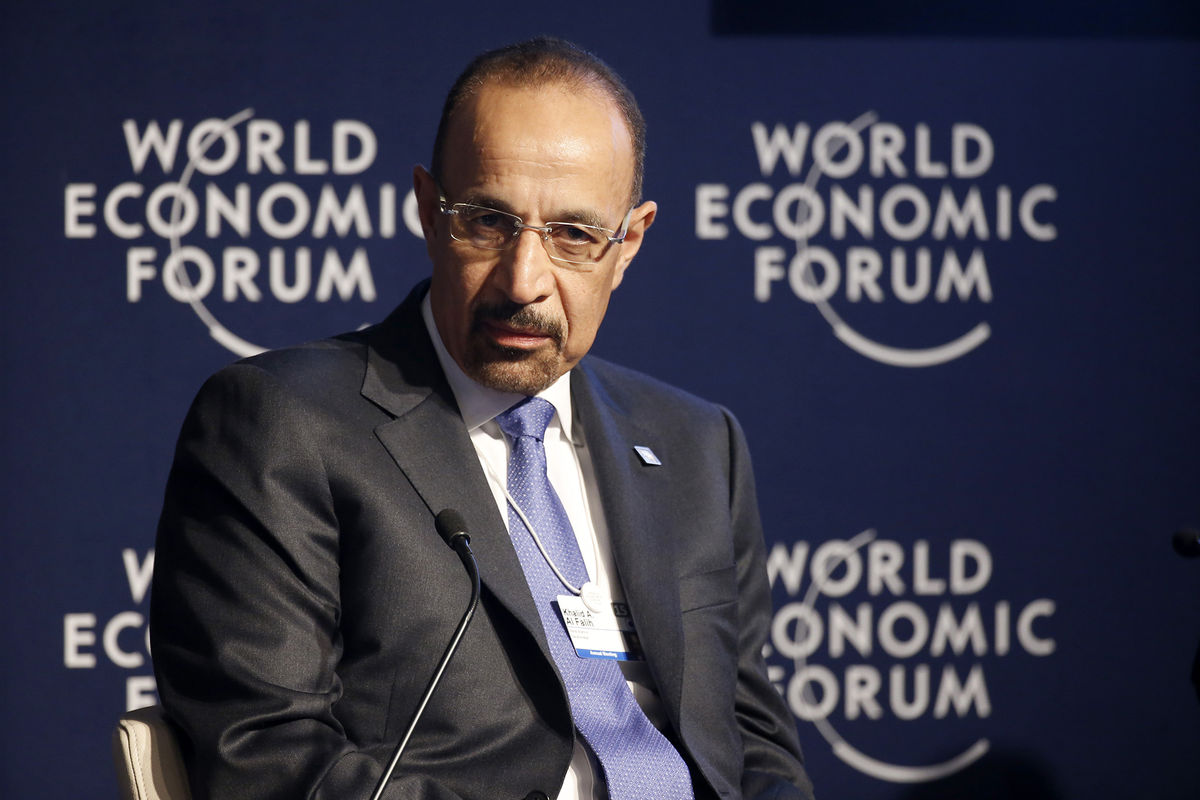
Oil fell into a bear market last year as OPEC resisted cutting output amid a surge in U.S. production driven by new supplies from Texas to North Dakota. Saudi Arabian Oil Co. Chief Executive Officer Khalid Al-Falih reiterated government policy on Jan. 27 that the kingdom won’t balance global crude markets “singlehandedly.”
“We’ve seen continued, massive stock builds,” Torbjoern Kjus, an analyst at DNB ASA in Oslo, said by phone. “The market is still oversupplied and people are very insecure on what’s going to happen. People have realized now that Saudi Arabia and core OPEC are not going to step in.”
Brent Losses
Brent for March settlement rose 10 cents to $49.23 a barrel on the London-based ICE Futures Europe exchange as of 1:21 p.m. local time. The benchmark for more than half the world’s oil has advanced 0.9 percent this week. It traded at a premium of $4.43 to WTI, compared with $4.06 at the end of December.
West Texas Intermediate for March delivery gained 30 cents to $44.83 a barrel in electronic trading on the New York Mercantile Exchange. The volume of all futures traded was about 29 percent below the 100-day average for the time of day. Prices have decreased 16 percent in January, a seventh monthly drop that’s the longest retreat since 2009.
Crude inventories in the U.S., the world’s biggest oil consumer, gained by 8.87 million barrels to 406.7 million through Jan. 23, the most since at least August 1982, according to the EIA. Output expanded to 9.21 million a day, the most in weekly estimates from the Energy Department’s statistical arm dating back to January 1983.
Saudi Appointments
Saudi Arabia’s King Salman brought his own team into government a week after ascending to the throne, replacing key security and economic officials amid twin threats from Islamic State and plunging oil prices. He appointed his son, Prince Abdulaziz bin Salman, as deputy to Oil Minister Ali Al-Naimi, who remained in his position.
Saudi Arabia led the Organization of Petroleum Exporting Countries to maintain its output quota at 30 million barrels a day at a Nov. 27 meeting in Vienna. The 12-member group, which pumps about 40 percent of the world’s oil, produced 30.2 million barrels a day last month, according to data compiled by Bloomberg. The oil market has a supply surplus of about 1.5 million barrels a day, OPEC Secretary-General Abdalla El-Badri said Jan. 26.
Two Pershmerga officers were killed regaining control of Kirkuk in northern Iraq, Brigadier Saho Abdul Kareem said by phone. Exports from the Kirkuk field resumed for the first time since March following a deal in December between the Iraqi central government and the semi-autonomous Kurds. Iraq is the fastest-growing producer in OPEC.
Here we are to serve you with news right now. It does not cost much, but worth your attention.
Choose to support open, independent, quality journalism and subscribe on a monthly basis.
By subscribing to our online newspaper, you can have full digital access to all news, analysis, and much more.
You can also follow AzerNEWS on Twitter @AzerNewsAz or Facebook @AzerNewsNewspaper
Thank you!