
Euro peg non-negotiable as Denmark gives up on krone vote
By Bloomberg
It will be at least half a decade before the Danes are asked to vote on their euro peg.
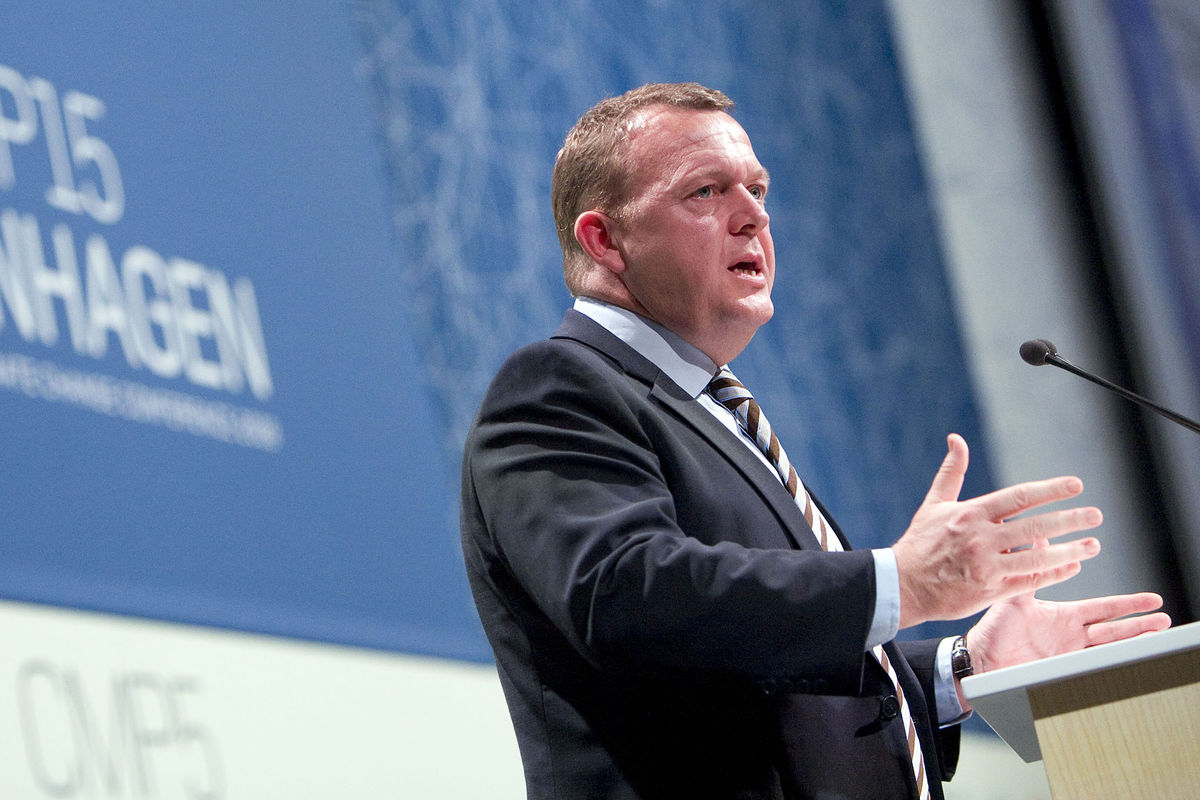
That’s according to Lars Loekke Rasmussen, the 50-year-old leader of Denmark’s opposition and the man who polls consistently show will become prime minister after elections due to take place by September. He says there’s no point setting a date for a referendum on swapping Denmark’s currency peg for full euro membership.
“After what Europe’s been through, things need to settle down considerably before we can ask people to vote on the euro again,” Loekke Rasmussen, who was prime minister from 2009 to 2011, said in an interview in Copenhagen. “It won’t happen in the next term,” which ends in 2019. “I think we can say that for certain.”
The comments follow one of the most turbulent periods in Danish monetary policy since 2008 after the Swiss National Bank’s decision to abandon its peg spurred speculation Denmark was next. Last week, the central bank was forced to cut rates twice after selling a record $12 billion in kroner to drive down the currency and fight back speculators.
The events show that Denmark would be better off inside the euro area, Loekke Rasmussen said. The political case for membership is also clear, as policy makers in Copenhagen would have a seat at the table when the region’s monetary policy is set, he said.
Voter Gap
“We should be part of the euro,” Loekke Rasmussen said. “We’re de facto in it.” The challenge remains that “there’s such a gap between voters and the leadership that we wouldn’t be able to win such a vote.”
The no-vote leads by a margin of about 30 percentage points, according to the most recent poll by Danske Bank A/S and Statistics Denmark, which was published in March. The country rejected euro membership in a 2000 referendum. Its central bank has since defended the krone’s peg to the euro, and before that to the deutschmark, starting in 1982.
Loekke Rasmussen says Denmark’s currency peg is backed by a broad majority in the parliament and among business leaders.
“I don’t believe there’s a single corporate decision maker in Denmark who thinks the krone’s peg is at risk,” Peter Lybecker, chief executive officer of Nordea Bank AB’s Danish unit, said in Copenhagen.
A vote on the common currency also needs to be delayed because there’s too little time in the next term for several plebiscites, Loekke Rasmussen said. Danish pro-EU parties already agreed on holding a referendum on expanding EU cooperation on legal issues. That will also push back a possible vote on Denmark joining the EU’s bank union, he said.
Goldman Sachs
Loekke Rasmussen became prime minister after Anders Fogh Rasmussen stepped down as head of government six years ago to become secretary general of the North Atlantic Treaty Organization. Loekke Rasmussen was then ousted in 2011 by Helle Thorning-Schmidt, who won after promising voters more welfare at the height of Europe’s struggle with austerity policies.
Thorning-Schmidt’s popularity has since plummeted and her coalition split a year ago after a junior partner balked at the government’s decision to sell part of state utility Dong Energy A/S to a unit run by Goldman Sachs Group Inc. Thorning-Schmidt has already said she wouldn’t hold a euro referendum in a new term if re-elected.
A poll of polls published on the website of Berlingske this week shows Loekke Rasmussen’s Liberal Party-led coalition would get 54 percent of the vote, compared with 46 percent for Thorning-Schmidt’s bloc.
If he becomes prime minister again, Loekke Rasmussen says his time in government -- he was also finance minister from 2007 to 2009 -- means he has the experience to tackle financial turmoil should it hit again.
Dumping Assets
“I was the finance minister when the crisis hit us,” he said. “We had some days where we were under a lot of pressure and where we got the impression that there was so much stress that some traders couldn’t tell the difference between Danish, Swedish or Norwegian kroner.”
In 2008, when traders were dumping assets in markets deemed illiquid, Denmark suffered a krone sell-off that forced the central bank to start raising rates and buying up kroner, driving its currency reserves to less than a third their current size.
“There was an enormous pressure back then and there had to be interventions, while we had to be very creative working with pension funds and others,” Loekke Rasmussen said. “But the Danish model showed its strength,” even though “we had to work together outside the normal tracks to protect the krone.”
Here we are to serve you with news right now. It does not cost much, but worth your attention.
Choose to support open, independent, quality journalism and subscribe on a monthly basis.
By subscribing to our online newspaper, you can have full digital access to all news, analysis, and much more.
You can also follow AzerNEWS on Twitter @AzerNewsAz or Facebook @AzerNewsNewspaper
Thank you!