
Ebola spurs WHO plan for health reserves after early missteps
By Bloomberg
The World Health Organization’s board agreed to create a special fund to respond to outbreaks such as Ebola and to set up a global emergency workforce after the agency acknowledged missteps in its response to the epidemic.
The WHO’s executive board agreed “in principle” at a meeting in Geneva Sunday to a contingency fund, and asked Director General Margaret Chan to develop by May options on its size and sources. Chan should also start creating a public- health reserve workforce that can be promptly deployed in response to health emergencies, according to the resolution adopted by senior health officials from 34 countries.
The WHO was too slow to respond to the Ebola outbreak, which has led to the deaths of 8,675 people in Liberia, Sierra Leone and Guinea, Chan said in opening remarks to a special meeting of the board, only the third such gathering in the agency’s history. The epidemic highlights the need for “urgent change” at the United Nations agency, she said.
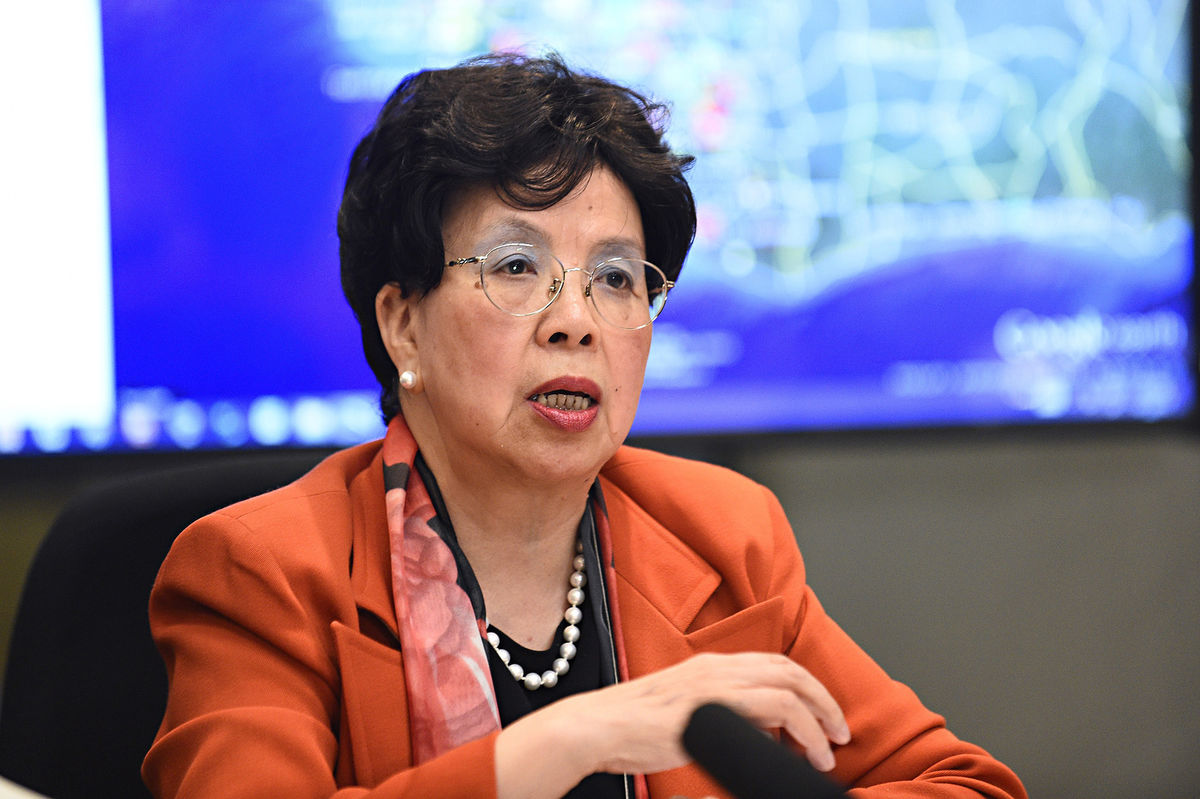
“For many years we’ve been able to manage medium, small- sized outbreaks,” Chan, 67, said at a briefing with reporters after the board meeting. “But the Ebola outbreak was a mega- crisis, and it overwhelmed the capacity of WHO. The world is not as well prepared for epidemics as they are for war.”
A report in 2011 reviewing the WHO’s response to the swine- flu pandemic recommended the agency establish a $100 million fund for fighting outbreaks, a provision that hasn’t been acted upon. Chan said that figure is a “good starting point” for the fund approved by the board on Jan. 25.
‘Landmark Day’
“This is a landmark day for the WHO,” said David Nabarro, a former senior WHO official who was appointed as UN Secretary- General Ban Ki Moon’s special envoy on Ebola in September.
The recommendations will encourage WHO’s management to take action that better equips the organization to strengthen national systems for health security, and to react and respond to health crises, Nabarro said in an e-mail after addressing the meeting.
“It encourages the integration of work on preparedness, prevention, research, human resources and information systems with the WHO’s response mechanisms at all levels of the organization,” he said.
The emergency workforce should involve about 1,500 people who could be deployed rapidly, Bruce Aylward, the agency’s assistant director-general in charge of the response to Ebola, said in an interview.
‘Emergency Agency’
“I think you saw the birth of an emergency agency that doesn’t exist today,” Aylward said late Sunday in Geneva. “What you see here is the potential for some of the most wide- ranging and sweeping reforms in any area of WHO that we’ve seen almost since the organization was established.”
It’s a critical first step in developing a cadre of well- trained international rapid response experts to tackle global infectious disease emergencies, said John Mackenzie, a Perth- based virologist, who was the chairman of the WHO’s emergency committee on pandemic influenza in 2009.
Recommendations from the meeting reaffirm the role of WHO as the lead agency in global public health and in helping countries to respond to public health emergencies, Mackenzie said in an e-mail.
Change Needed
While the WHO is “indispensable” to ensure global health security, significant change is needed, Tom Frieden, director of the U.S. Centers for Disease Control and Prevention, said at the executive board’s meeting.
“We have to be frank: too many times the technical is overruled by the political in WHO, and we have to reverse that,” Frieden said.
The resolution said the WHO and its member states had failed to act on a 2011 report following the global swine flu pandemic that recommended a global health workforce be established to respond to emergencies.
Efforts to identify and isolate Ebola patients and ensure safer burials have helped drive the number of new infections to the lowest levels in months.
The board’s decision is “only the start” of the process of reforming the WHO, Sally Davies, the U.K.’s chief medical officer, said in an interview after the meeting. “Now we have to make it real. That’s going to be difficult.”
Davies, who said the U.K. would make an advanced commitment of $10 million to the contingency fund, told the meeting the world should not “pack up too early” or risk the epidemic persisting.
“We all stand shamed at every level across the world for too slow a response, and initially too little,” Davies said. “Today is the day we must move from words to action. We must all commit to ensuring we never face this shame again.”
More Funds
Commitment to establish a fund to strengthen the WHO’s capacity to respond to public health emergencies is welcome, but $100 million won’t be enough, said Adam Kamradt-Scott, a senior lecturer at the University of Sydney’s Center for International Security Studies.
“As the current Ebola outbreak has taught us, the resources required to respond to public health crises can be significant, requiring billions of dollars in financial and in- kind support,” he said in an e-mail. “If the international community is genuinely committed to strengthening global capacity to respond rapidly to such humanitarian disasters in the future, then the size of the contingency fund needs to be billions, not millions, and partitioned from the WHO’s regular budgetary processes that time and again have been subjected to political interference.”
Structural Impediments?
Questions remain as to whether implementation of some proposed measures, such as allowing the director-general to add or change staff in regional and country offices, will be impeded by the structure of the organization, said Charles Clift, a senior consulting fellow with the Centre on Global Health Security at Chatham House in London.
Directors of WHO’s regional offices are elected by representatives of local WHO member-states to whom they owe principal allegiance, Clift said, noting that the head of the African regional office was the only WHO regional director absent from the meeting.
Doctors Without Borders, which has cared for almost one quarter of all Ebola cases at its treatment centers in West Africa, said it was “alarmingly evident” that the world lacks an adequate system for dealing with outbreaks in countries with fragile health systems.
Human Cost
“The world was unable to contain this epidemic,” Jerome Oberreit, secretary general of the organization also known as MSF, said at the meeting. “The first lesson we must retain is that thousands have died because of international negligence.”
The WHO’s board sets the agenda for the World Health Assembly. The week-long event held annually in May is attended by representatives of 194 member-countries who form the agency’s highest decision-making body.
The next meeting will hear the findings of a panel of outside independent experts, whose report may influence the direction of WHO’s emergency response plans, Clift said.
A legacy of Ebola must be a stronger system to defend world health security, with rich countries playing a lead role in helpinh poorer nations strengthen their health systems, Chan told the meeting.
“The volatile microbial world will always deliver surprises,” she said. “Never again should the world be caught by surprise, unprepared.”
Here we are to serve you with news right now. It does not cost much, but worth your attention.
Choose to support open, independent, quality journalism and subscribe on a monthly basis.
By subscribing to our online newspaper, you can have full digital access to all news, analysis, and much more.
You can also follow AzerNEWS on Twitter @AzerNewsAz or Facebook @AzerNewsNewspaper
Thank you!