
Palm seen pressured by rising production, slump in petroleum
By Bloomberg
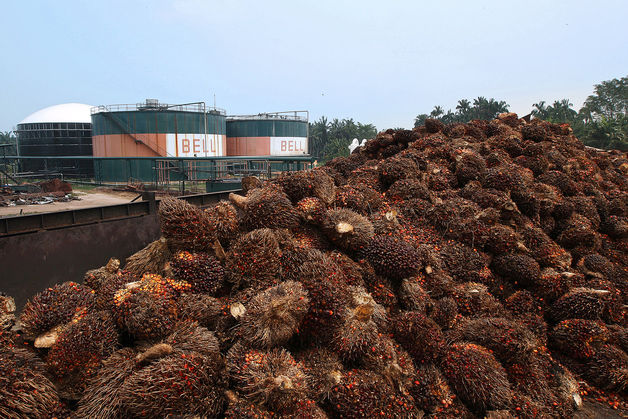
Palm oil prices will be pressured by an increase in reserves, rising production and the slump in crude, said a minister in Malaysia, the world’s second-largest supplier of the tropical oil used in food and biofuels.
“The regular build-up of stock, particularly towards the last quarter of the year, will continue to put pressure on palm oil prices,” said Plantation Industries and Commodities Minister Douglas Uggah Embas. The supply situation will be “exacerbated” by large harvests of competing oilseeds and expanding palm production in other countries, he said.
While futures have rallied 22 percent from a five-year low in September after Malaysia’s worst floods in four decades, prices still posted a 15 percent decline in 2014. That’s the third drop in four years as stockpiles in Malaysia reached a 21- month high and U.S. farmers harvested a record soybean crop, used to make an alternative oil. Crude prices dropped almost 50 percent last year, eroding demand for biofuel.
“These challenges will have to be met in 2015,” Uggah said in a speech read by the ministry’s secretary-general Himmat Singh at a conference in Kuala Lumpur today.
Futures rose 0.6 percent to 2,326 ringgit ($652) a metric ton on Bursa Malaysia Derivatives. They fell 1.5 percent last week after gaining for three weeks on improved weather in Malaysia. Prices hit 1,914 ringgit in September, the lowest since 2009.
Record Production
The “price will continue to be volatile” during the first half of 2015, Choo Yuen May, director-general of the Malaysian Palm Oil Board, said at the conference. Choo expects production in Malaysia to climb “marginally” this year, from a record high 19.67 million tons in 2014.
The monsoon that hit the east coast of Peninsular Malaysia spawned the worst floods since 1972, according to Maybank Investment Bank Bhd. Flood damage reduced Malaysian output to 1.36 million tons in December, the lowest for that month since 2010 and a 22 percent slump from November, the biggest for any month since December 2006, board data show. The decline reduced inventories for the first time in six months.
Macquarie Group Ltd. said in a Jan. 7 report that it expects the palm-oil rally to last because of the long-term impact of heavy rains on harvesting, roads and bridges.
U.S. farmers will harvest a record 3.969 billion bushels (108.01 million tons) of soybeans in the season that started Sept. 1, the U.S. Department of Agriculture said Jan. 12. World reserves in August will reach an all-time high 90.78 million tons, up from 66.16 million a year earlier, the agency said.
Here we are to serve you with news right now. It does not cost much, but worth your attention.
Choose to support open, independent, quality journalism and subscribe on a monthly basis.
By subscribing to our online newspaper, you can have full digital access to all news, analysis, and much more.
You can also follow AzerNEWS on Twitter @AzerNewsAz or Facebook @AzerNewsNewspaper
Thank you!