
If you just got a job, say thank you to cheap oil
By Bloomberg View
After six years of grousing about mediocre jobs reports, we're finally in a solid stretch of decent employment growth. The economy gained 252,000 jobs last month, enough to keep up with population growth and make a little dent in the employment problem.
Jobs Report
Rather than look at the details of the report, let's think about one thing this suggests: that the U.S. economy is still very dependent on the price of fossil fuels.
This is not exactly a new notion. In 2009, economist James Hamilton suggested that most of the GDP loss in the Great Recession could be explained by looking at the very high price of oil that preceded it. A more recent paper from the Fed assigns a lesser role, but still a significant one. The current confluence of strengthening jobs numbers and falling oil prices may suggest that they are right--not that jobs and GDP will fluctuate month to month along with the price of oil, but that positive and negative price shocks may also produce correspondingly positive and negative effects on our economy.
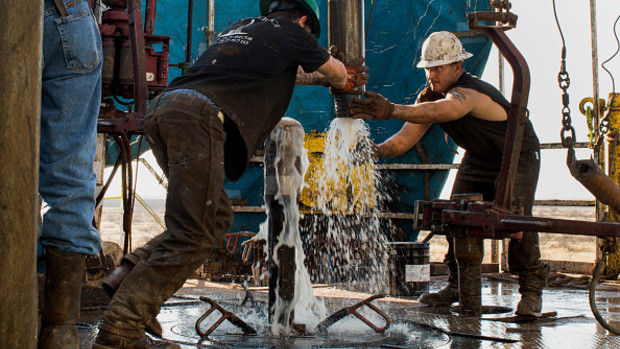
Although output per unit of oil has steadily risen, it's still fair to say that much of American life floats along on a sea of fossil fuels. The food in your refrigerator was likely grown using fertilizers derived from fossil fuels. The land was tilled using oil-driven machinery, and it was transported to you in trucks and trains driven by, yes, fossil fuels. Your home was erected using more such machinery, and it is heated and cooled with hydrocarbon energy. Your clothes were produced using such fuels, and at least partly made from them as well, and fossil fuels are the reason you can wear clean clothes every day without having to spend hours every week beating the dirt out of them. You probably move around using more fossil fuels, and if you've given up the automobile, someone else drives all the stuff you buy straight to your house. Without fossil fuels, we'd be plunged back to 1900 standards of living--not the romantic stuff of fantasy, but the actual past of constant, brutal labor just to put a few calories in your belly and clothes on your back.
So it's not surprising that when oil gets more expensive-- which practically means more scarce--our standards of living often contract. Or at least, grow slower than we'd expected. Nor that when oil becomes cheap and plentiful, the economy frequently booms.
This has a lot of implications for policy--everything from how we fund our highways to how we attack global warming. And while the good news is that we're in a bit of a boom, the bad news is that the boom may be very dependent on the price of a finite commodity, the cost of which fluctuates according to all sorts of factors we don't control, like Chinese consumption and the geopolitics of the Middle East.
Here we are to serve you with news right now. It does not cost much, but worth your attention.
Choose to support open, independent, quality journalism and subscribe on a monthly basis.
By subscribing to our online newspaper, you can have full digital access to all news, analysis, and much more.
You can also follow AzerNEWS on Twitter @AzerNewsAz or Facebook @AzerNewsNewspaper
Thank you!