
European stocks drop with Italian, Spanish bonds on Greek vote
By Bloomberg
European stocks fell and Italian and Spanish government bonds retreated after Greece’s parliament rejected a nominee for president, triggering early elections. Gilts and Treasuries rose, while oil advanced amid fighting in Libya.
Greek three-year note yields jumped 169 basis points from Dec. 23 to 11.88 percent at 7:59 a.m. New York time. Italy’s 10- year yield rose five basis points while similar-maturity Spanish debt increased three basis points. Greece’s ASE Index sank 6 percent, the Stoxx Europe 600 Index slipped 0.5 percent and Standard & Poor’s 500 Index futures dropped 0.3 percent. The yield on U.S. Treasuries dropped three basis points and on gilts by five basis points. Oil climbed 1.2 percent in London.
Greek Prime Minister Antonis Samaras failed in a third and final attempt to get his presidential candidate, Stavros Dimas, confirmed. Samaras said he will ask for an early general election to be held on Jan. 25, a few weeks before the nation’s 240-billion-euro ($292 billion) bailout expires. Crude-storage tanks at Libya’s largest oil port were on fire after fighting between militias and forces loyal to the internationally recognized government.
“This is bad news for Greece and the euro zone,” said Raimund Saxinger, who helps oversee $22 billion as a fund manager at Frankfurt-Trust Investment GmbH. “The next thing to watch is how the campaigning and the polls will evolve over the next few weeks.”
Anti-Austerity
The prospect of early parliamentary elections has roiled financial markets in Greece as it evoked memories of the height of the financial crisis in 2012, when the country’s euro membership was in jeopardy. The new polls could usher in Syriza, an anti-austerity party that seeks to renegotiate the nation’s debt, threatening the stability of Europe’s currency union and the start of the European Central Bank’s bond-buying program.
The ASE slumped the most among 18 western-European markets, heading for its lowest close since November 2012. Short bets on an exchange-traded fund tracking Greek shares climbed this month to the highest level since May 2012.
Benchmark stock indexes of Italy and Spain slid more than 1.6 percent. Germany’s DAX Index declined 0.7 percent. The volume of Stoxx 600 shares changing hands was 24 percent below the 30-day average, data compiled by Bloomberg show.
Futures on the S&P 500 expiring in March dropped 0.2 percent after the gauge climbed for a second week. The Dow Jones Industrial Average and Russell 2000 Index of smaller U.S. stocks also closed at records. The Nasdaq Composite Index ended at its highest level since March 2000.
Government Bonds
The yield on three-year Greek government bonds rose 169 basis points, or 1.69 percentage points, from Dec. 23 to 11.88 percent. Spain’s 10-year bonds climbed three basis points to 1.70 percent and Italy’s increased five basis points to 2 percent.
U.S. government bond-yields fell with their German and U.K. counterparts, perceived to be among the safest fixed-income assets in Europe. Treasury 10-year yields fell two basis points, or 0.02 percentage point, to 2.23 percent. The yield on U.K. government bonds of similar maturity dropped six basis points to 1.82 percent, while German bund yields slid to 0.563 percent, the least since Bloomberg began collecting the data in 1989.
The euro traded at $1.2197 after falling to $1.2165 on Dec. 23, its weakest point since August 2012. The ruble declined 3.5 percent against the dollar after rallying 8.4 percent last week. Russia’s Micex index rose with oil.
The dollar is set for an annual gain versus all of its 31 major counterparts for the first time in data going back to 1989, buoyed by an improving economy and the Federal Reserve’s plan to raise interest rates next year. The ruble plunged the most among the major currencies amid geopolitical turmoil in eastern Europe and a decline in oil prices.
China Lending
The Hang Seng China Enterprises Index jumped the most since Nov. 2013 as China Life Insurance Co. rallied. The Shanghai Composite Index reached the highest level since January 2010.
The People’s Bank of China plans to temporarily waive a requirement for lenders to set aside reserves for some deposits, people with knowledge of the matter said. The measures are seen as another move to replace a universal reserve-requirement ratio cut that the central bank needs to boost credit and bolster the economy.
Oil Rallies
Crude advanced 1.3 percent to $60.20 a barrel in London amid speculation that an escalating conflict in Libya will help ease a global supply surplus that’s driven oil into a bear market. At Libya’s largest oil port of Es Sider, capable of holding four times the country’s daily production, two out five storage tanks were still on fire today.
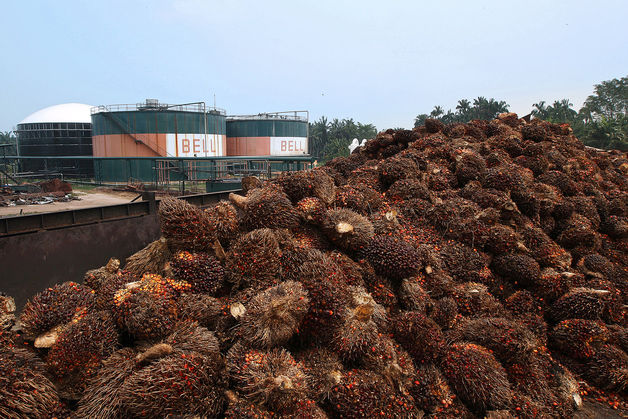
Palm oil futures rose as high as 2,308 ringgit ($660) a metric ton in Kuala Lumpur, advancing for an eighth day. Malaysia, the second-largest producer, is experiencing its worst flooding in decades. Rubber climbed for a third day in Tokyo and traded near a four-month high. Prices for June delivery rose 0.6 percent to settle at 205.4 yen a kilogram.
Nigeria’s benchmark stock index rallied in its biggest six- day gain since 1998 as local investors sought bargains following the gauge’s fall to an almost two-year low. The Nigeria Stock Exchange All Share Index advanced 1.8 percent by 12:11 p.m. in Lagos, the commercial capital, extending its advance since Dec. 18 to 21 percent.
Here we are to serve you with news right now. It does not cost much, but worth your attention.
Choose to support open, independent, quality journalism and subscribe on a monthly basis.
By subscribing to our online newspaper, you can have full digital access to all news, analysis, and much more.
You can also follow AzerNEWS on Twitter @AzerNewsAz or Facebook @AzerNewsNewspaper
Thank you!