
Ebola doctor’s recovery shows promise of resurrected lung drug
By Bloomberg
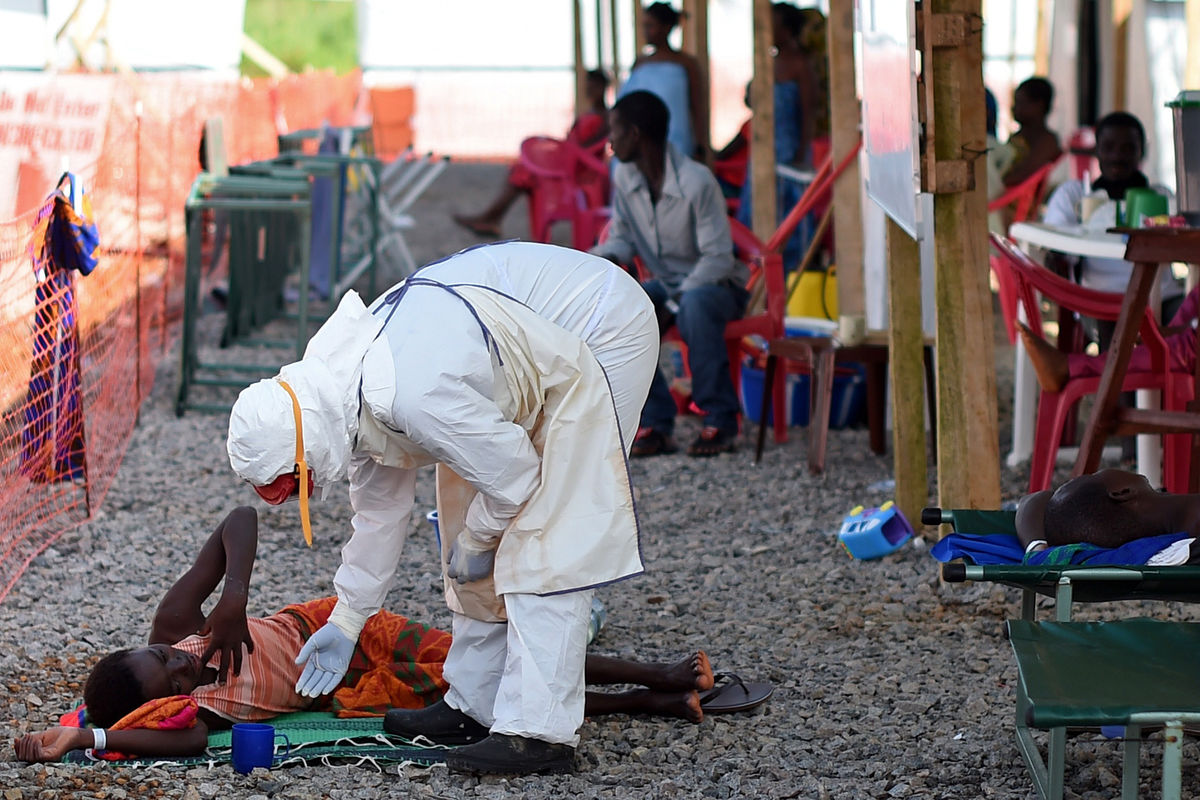
An experimental drug that fights a condition called vascular leak may play a role in helping people survive Ebola, said doctors in Germany who used it to treat a fellow physician who contracted the virus in West Africa.
Doctors at Frankfurt University Hospital in Germany cared for the 38-year-old with the drug known as FX06. The therapy helped the patient recover even after his infection spurred the failure of multiple organs, researchers said in an article published today in the journal Lancet.
Experimental therapies being studied to help cure Ebola have been successful when given early in treatment though haven’t wiped out the virus when administered later. Vascular leak causes the lungs to fill with fluid, making it hard to breathe, said Petra Wülfroth, acting chief operating officer of FX06’s current developer, MChE F4-Pharma. FX06 may help seal the walls of Ebola patients’ blood vessels, keeping them alive long enough to develop antibodies to fight the virus, Wülfroth said in a telephone interview.
“In view of the urgency for action in light of the current epidemic, where validated therapies are desperately needed, the efficacy of FX06 should soon be assessed in clinical trials or at least by standardized collection of data from patients with Ebola virus disease who received it in a compassionate use setting,” the patient’s doctors wrote in the Lancet.
While the doctors led by Timo Wolf in the hospital’s Division of Infectious Diseases said FX06 could be “a potentially valuable therapeutic candidate,” he cautioned that “the publication is focused on intensive care therapy of one Ebola patient” and FX06 was one treatment of many.
No Conclusions
“We certainly cannot draw any conclusion on the efficacy of the drug from a case report,” Wolf wrote in an e-mail.
The patient, who contracted the virus in Sierra Leone, also received antimicrobial drugs, intravenous fluids, mechanical ventilation and procedures to treat kidney failure, including dialysis.
There have been 18,603 reported Ebola cases with 6,915 deaths mostly in Sierra Leone, Liberia and Guinea, according to the World Health Organization.
Wülfroth and two other F4-Pharma founders are still forming the Vienna-based company to resurrect the treatment studied by a now defunct company in 2006 in Europe for a complication associated with heart attack. The company was just beginning to raise funds to develop FX06 for vascular leak when the Ebola outbreak hit in West Africa, Wülfroth said.
While the drug has shown promise, the developers face hurdles, Wülfroth said. She spoke from Washington where she planned to meet with the U.S. Biomedical Advanced Research and Development Authority to discuss grant possibilities.
Seeking a Partner
F4-Pharma, currently a three-person endeavor, also is in talks to form a partnership with a pharmaceutical company developing an antiviral drug that could be used in combination with FX06. Wülfroth declined to identify the drugmaker.
Mapp Biopharmaceutical Inc., Chimerix Inc., Tekmira Pharmaceuticals Corp. and Fujifilm Holdings Corp. are developing drugs that target Ebola. Chimerix’s brincidofovir and Fujifilm Holdings’ favipiravir are antivirals.
The doses of FX06 given to the Ebola patient in Germany under compassionate use rules were made by Swiss manufacturer Bachem Holding AG and shipped from its Philadelphia storage facility, according to the Lancet article. Enough FX06 exists to treat as many as 400 patients, Wülfroth said. The amount needed to treat another 400 people could be made in about two months, she said.
FX06 is a peptide synthesis that combines 28 amino acids, she said.
Patient’s Case
The physician patient who survived in Germany is originally from Uganda and was in charge of an Ebola treatment center in Lakka, Sierra Leone. He received FX06 twice daily for three days, according to the article. He also attempted to take Fujifilm’s favipiravir though nausea and gastrointestinal distress kept him from ingesting the tablets.
The patient was airlifted to Germany in October and arrived at the hospital six days after he developed Ebola symptoms. His condition deteriorated until he was given FX06 intravenously on Day 11 and he has since recovered fully, according to the Lancet report. He was released from the hospital last month, Wülfroth said.
FX06 was also given to an Ebola patient in Leipzig, Germany, who didn’t have fluid in the lungs though had severe bleeding. He died 13 days after showing Ebola symptoms, according to the Lancet.
Here we are to serve you with news right now. It does not cost much, but worth your attention.
Choose to support open, independent, quality journalism and subscribe on a monthly basis.
By subscribing to our online newspaper, you can have full digital access to all news, analysis, and much more.
You can also follow AzerNEWS on Twitter @AzerNewsAz or Facebook @AzerNewsNewspaper
Thank you!