
Sony hack, Stem cells, Lehman brothers: intellectual property
BY Bloomberg
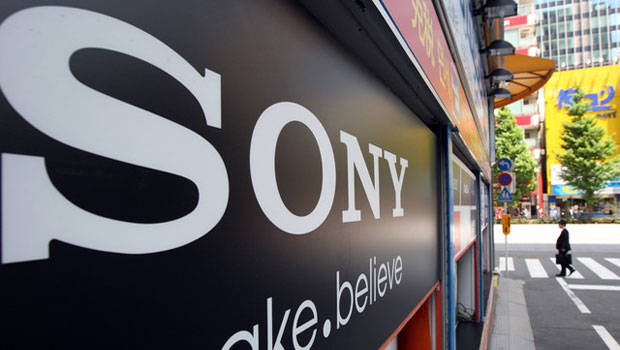
The Obama administration is considering how to respond to the cyber-attack on Sony Pictures Entertainment computers, while remaining wary that the intrusion may have been designed to provoke a U.S. reaction, White House spokesman Josh Earnest said.
Earnest refused to say whether the U.S. had determined that North Korea was behind the attack, which crippled Sony’s computers and drove the studio to pull its movie “The Interview” from its planned release.
The attack was “initiated by a sophisticated actor” and the U.S. investigation is making progress, he said. The character of the intrusion makes it a national security matter, not just economic espionage, he said.
The hacking and the U.S. response has been the subject of regular meetings at the White House that include senior members of intelligence and law enforcement agencies, the military and the diplomatic corps, Earnest said.
“They will be mindful of the fact that we need a proportional response,” he said. “Sophisticated actors, when they carry out an activity like this, are seeking to provoke a response from the United States of America” and “we want to be mindful of that too.”
Earnest refused to discuss the options and said the administration won’t necessarily reveal what actions are taken. He said President Barack Obama has been monitoring the deliberations.
A person familiar with the investigation, who wasn’t authorized to speak publicly, said yesterday that U.S. law enforcement and intelligence officials have gathered sufficient evidence to determine with high confidence that the North Korean government is responsible.
Sony Corp.’s Culver City, California-based studio yesterday canceled the planned Dec. 25 release of “The Interview” when major theater chains said they wouldn’t show the picture after a group claiming credit for the cyber-attack invoked Sept. 11 this week in threatening movie goers with violence if they went to see the film.
The Seth Rogen comedy about a plot to assassinate North Korean leader Kim Jong Un drew condemnation from that country. In November, attackers crippled the movie studio’s computers and began releasing thousands of internal documents, including e- mails, salary information and medical histories.
Patents
Stem-Cell Use Gets EU Boost as Court Sidesteps ‘Sci-Fi’ Fears
International Stem Cell Corp. won a ruling at the European Union’s top court that lawyers described as a victory for stem- cell research in the 28-nation bloc.
The use of organisms in stem-cell research that are incapable of developing into a human being can be patented, the EU Court of Justice in Luxembourg ruled yesterday.
The decision “walks a clear line to exclude the sci-fi horrors of the abuse of human embryos whilst allowing the use of techniques to generate stem cells which may alleviate much human misery,” said Jason Rutt, head of patents at the industry consulting firm Rouse in London.
A non-fertilized egg in research must be considered a human embryo and can’t be patented if it has “the inherent capacity of developing into a human being,” the EU court said. Still, in cases where an “ovum commences a process of development” that is “not sufficient for it to be regarded as a human embryo” a patent may be granted for industrial or commercial purposes.
Under an EU law from 1998, research methods that involve human embryos for industrial or commercial purposes can’t be patented. A U.K. court referred the case to the EU tribunal to further define the scope of what consists a human embryo.
Yesterday’s ruling helps determine whether International Stem Cell will get a U.K. patent on a process to extract stem cells based on unfertilized human eggs, which the Carlsbad, California-based company argued shouldn’t be considered a human embryo. A 2011 EU court ruling clarified that European law bans patents in stem-cell research that involve human embryos.
The case is: C-364/13, International Stem Cell Corporation v. Comptroller General of Patents.
For more patent news, click here.
Trademark
Barclays Opposes Tiger Lily Bids for ‘Lehman Brothers’ Marks
Barclays Plc’s investment-banking unit filed papers opposing U.S. trademark applications submitted by another U.K.- based company for “Lehman Brothers.”
In a filing with the U.S. Patent and Trademark Office, Barclays said it would be harmed if London’s Tiger Lily Ventures Ltd. registered two “Lehman Brothers” marks.
Tiger Lily applied in March 2013 and June 2014 to register the term as a trademark for bar services, restaurant services, beer and spirits. Barclays opposed those applications last month.
Barclays acquired assets of Lehman Brothers Holdings Inc. following the U.S. investment bank’s bankruptcy filing in September 2008. The acquisition included 147 marks in the financial services categories.
Barclays had filed its own application to register “Lehman Brothers” as a trademark in October 2013, specifying in that the mark would be used for a variety of financial services.
In a filing to with patent office’s Trademark Trial and Appeal Board, Tiger Lily claimed Barclays hadn’t used the term in commerce before October 2013 and said bank even permitted the Lehman Brothers name to be parodied in the 2010 animated film “Despicable Me.”
Tiger Lily said it contacted both Barclays and what’s left of Lehman Brothers in January 2014, seeking confirmation that “as a matter of law” Barclays had no claim to any Lehman Brothers right of publicity. The response, Tiger Lily said, was that Barclays reserved all rights to protect its intellectual property.
Tiger Lily told the appeal board that the Lehman Brothers name is “toxic in the banking world” and Barclays has failed to show a legitimate intent to use the mark in commerce.
It asked that the Barclays application be refused.
For more trademark news, click here.
Copyright
Samsung Fire & Marine Seeks Infringement Non-Coverage Ruling
Samsung Fire & Marine Insurance Co. asked a Los Angeles federal judge to declare that it doesn’t have to provide coverage to a clothing company in a copyright infringement suit.
In its Dec. 17 filing, the insurance company said client AFR Apparel International Inc., which does business as Parisa USA, was sued for infringement in March 2014. Klauber Brothers Inc. of New York said Target Corp. and Parisa were selling lingerie that infringed its copyright for a lace design.
Samsung said the language of the policy it issued to Northridge, California-based AFR specifically excludes infringement of copyrights.
The company said the only allegation in the infringement suit that could potentially fall within the policy’s definition of infringement is by advertisement of copyright-protected material. Samsung said there was no advertisement of the copyright-protected material.
The insurance case is Samsung Fire & Marine Insurance Co. v. AFR Apparel International Inc., 2:14-cv-09642, U.S. District Court, Central District of California (Los Angeles). The copyright case is Klauber Brothers Inc. v. Target Corp., 1:14- cv-02125, U.S. District Court, Southern District of New York (Manhattan)
Here we are to serve you with news right now. It does not cost much, but worth your attention.
Choose to support open, independent, quality journalism and subscribe on a monthly basis.
By subscribing to our online newspaper, you can have full digital access to all news, analysis, and much more.
You can also follow AzerNEWS on Twitter @AzerNewsAz or Facebook @AzerNewsNewspaper
Thank you!