
Asia stocks drop with oil as currency swings near 15-month high
By Bloomberg
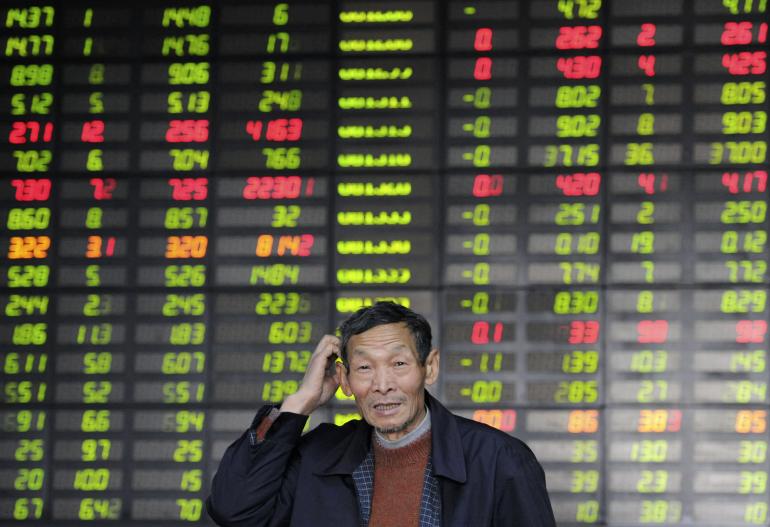
Asian stocks fell, with the regional index heading for its biggest two-day drop in a month, as oil erased yesterday’s gains and global currencies swung by the most in more than a year. Chinese stocks fluctuated as inflation data missed estimates, underscoring growth concerns.
The MSCI Asia Pacific Index slid 1.3 percent by 2:18 p.m. in Tokyo, poised for its lowest close since Oct. 24 as Japan’s Topix gauge fell 2.5 percent. The Hang Seng China Enterprises Index was little changed after tumbling 4.6 percent yesterday. The JPMorgan Global FX Volatility index rose to 9.48 percent, matching the highest since September 2013 as the yen headed for a third straight gain and Australia’s currency snapped a record losing streak. Oil decreased for the fourth time in five days.
Chinese producer prices slipped 2.7 percent in November from a year before, a 33rd straight decrease, while consumer inflation slowed to 1.4 percent, the slowest since 2009, reports today showed. A move to tighten short-term lending rules in China sparked a rout in global equities yesterday, fanning concern over the outlook for Asia’s largest economy. The prospect of an election in Greece fueled speculation opponents of the European Union’s bailout terms may gain more power.
“Caution is probably at the top of the agenda,” Tim Schroeders, a portfolio manager who helps oversee $1 billion in equities at Pengana Capital Ltd. in Melbourne, said by phone. “As some investors change asset allocations, we’ll see some extreme moves over the next couple of weeks.”
Japan Election
The Topix index fell for a second day, sliding toward its lowest close since Nov. 27. Japanese voters head to the ballot box Dec. 14, after Prime Minister Shinzo Abe called a snap election to seek validation for his program of economic reform. Data this week showed Japan’s recession is deeper than first thought.
The Shanghai Composite Index added 0.7 percent after plunging 5.4 percent yesterday from a 3 1/2-year high. The Hang Seng China Enterprises Index, which tracks mainland Chinese stocks listed in Hong Kong, declined the most in three years yesterday. Hong Kong’s Hang Seng Index was little changed today.
“China has entered into a rapid dis-inflation process, and faces the risk of deflation,” said Liu Li-Gang, the chief Greater China economist at Australia & New Zealand Banking Group Ltd. in Hong Kong. “As the PBOC has exhausted its newly invented and ineffective policy tools, we believe the next move will have to be a reserve ratio requirement cut in order to regain policy effectiveness and credibility.”
Bond Rules
The cost of one-year swaps, the fixed payment to receive the floating seven-day repurchase rate, was little changed at 3.3450 percent, after climbing as much as seven basis points. The yuan swung to a gain of 0.1 percent in offshore trading after two days of losses.
China’s clearing agency said Dec. 8 that local bonds rated lower than the highest AAA grade are too risky to be used as collateral for short-term loans. That means about half of the outstanding 1 trillion yuan ($162 billion) of securities sold by local government financing vehicles, or LGFVs, in the exchange market can no longer be pledged to raise funds, according to Morgan Stanley.
Gross domestic product growth in China will decline gradually, Moody’s Investors Service said in a report today. Credit quality will, however, be supported because policy makers will manage economic weakness.
Australia’s currency climbed 0.3 percent to 83.15 U.S. cents after falling as much as 0.3 percent and trading near a four-year low. The Aussie yesterday capped a ninth straight decline, the longest losing streak since it was floated in 1983, according to data compiled by Bloomberg. China is the No. 1 trading partner for the resource-exporting nation.
Crude Retreats
The Bloomberg Dollar Spot Index retreated 0.2 percent to 1,113.31, a third consecutive decline after closing at its highest level since 2009 Dec. 5. The greenback was weaker against all major peers.
Japan’s currency jumped 0.7 percent to 118.87 per dollar after advancing versus all but one of its 31 major peers yesterday. The worst-performing major currency versus the U.S. dollar this half climbed as much as 2.3 percent yesterday.
West Texas Intermediate crude slid 1.4 percent to $62.93 a barrel, erasing yesterday’s 1.2 percent gain. Brent crude slipped 1.3 percent to $66.01. Yesterday’s rally boosted U.S. shares of smaller energy companies.
The Russell 2000 Index of smaller companies rose 1.8 percent as energy stocks jumped 6.1 percent, leading gains among nine industry groups and paring yesterday’s 7.3 percent tumble. The Nasdaq 100 Index added 0.4 percent, while the Dow Jones Industrial Average slipped 0.3 percent. The S&P 500 was down less than 0.1 percent to close at 2,059.82.
Here we are to serve you with news right now. It does not cost much, but worth your attention.
Choose to support open, independent, quality journalism and subscribe on a monthly basis.
By subscribing to our online newspaper, you can have full digital access to all news, analysis, and much more.
You can also follow AzerNEWS on Twitter @AzerNewsAz or Facebook @AzerNewsNewspaper
Thank you!