
World needs more immigrants like Paddington Bear
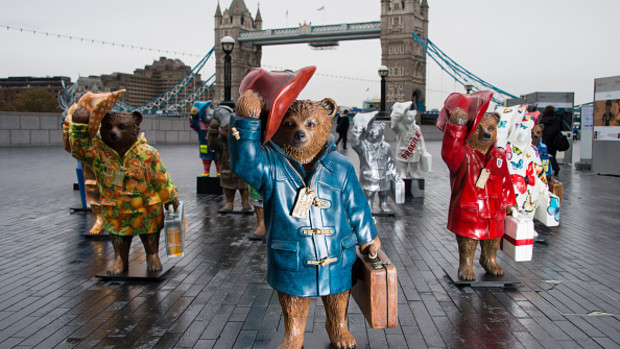
By Bloomberg View
"In London, everyone is different, but that means anyone can fit in," says the computer- generated Paddington Bear in the just-released film bearing his name. It's a sentiment that governments everywhere might bear in mind as they wrestle with the thorny issue of how to cope with immigration. Certainly, the movie makers would like them to.
Michael Bond, who created Paddington Bear in 1958, has said he took inspiration from footage of children being evacuated from London during World War II. Hence the tag around the stuffed bear's neck reading, "Please look after this bear. Thank You." But the new movie is littered with allusions to today's debate over how porous national borders should or shouldn’t be, nudging the viewer toward tolerance rather than the kind of nationalism that's gaining traction in so many countries.
Swerving Path to Citizenship
Just last week, the anti-immigrant Sweden Democrats toppled the governing coalition by backing the opposition party's budget plans and forcing elections in March. In France, Marine Le Pen, head of the jingoistic National Front Party, leads opinion polls for the 2017 presidential election. In Germany, some 7,500 people recently marched in Dresden to protest asylum for an estimated 200,000 foreigners. In the U.S., at least 20 states are contesting President Barack Obama's Nov. 20 executive order to shield up to 4 million undocumented immigrants. And here in Paddington's adopted country, the anti-immigration U.K. Independence Party has picked up two seats in parliament, and become the country's third-most popular party.
The Paddington movie acknowledges the misgivings many people have about immigration.
Mr. Brown, the father who reluctantly agrees to house the bear for a night, is no racist (species-ist?), but when his family encounters Paddington on the railway platform, he warns them of "stranger danger." His disbelief in Paddington's claim to be an orphan stowaway echoes general mistrust of economic migrants everywhere.
Far more sinister is Brown's curtain-twitching neighbor, Mr. Curry. Played by Peter Capaldi, he bears a distinct resemblance to Nigel Farage, the UKIP leader.
A Jamaican calypso band supplies much of the soundtrack, and appears in several scenes -- a direct reference to the influx of Caribbean immigrants who came to the U.K. starting in 1948 and built a community around Notting Hill, the neighborhood where Paddington ends up living.
The villain of this film, an Aryan-styled platinum-blond taxidermist named Millicent who would like to stuff Paddington for museum display, co-opts Curry's mistrust. "If I can get hold of the bear I can see that he's sent where he belongs, no questions asked," she purrs, channeling the "they don't belong here" rhetoric favored by nationalist parties.
It's Paddington himself, though, well-mannered and elegant, who provides the counterargument for enlightened economic self- interest: He has brought with him from darkest Peru his aunt Lucy's recipe for orange marmalade. With a bank loan and some smart marketing, Paddington's marmalade empire could provide hundreds of jobs and millions in export revenue for his new home country.
Here we are to serve you with news right now. It does not cost much, but worth your attention.
Choose to support open, independent, quality journalism and subscribe on a monthly basis.
By subscribing to our online newspaper, you can have full digital access to all news, analysis, and much more.
You can also follow AzerNEWS on Twitter @AzerNewsAz or Facebook @AzerNewsNewspaper
Thank you!