
Emerging markets approach decade low on dollar, oil: currencies
By Bloomberg
Nothing’s going right for emerging- market currencies these days.
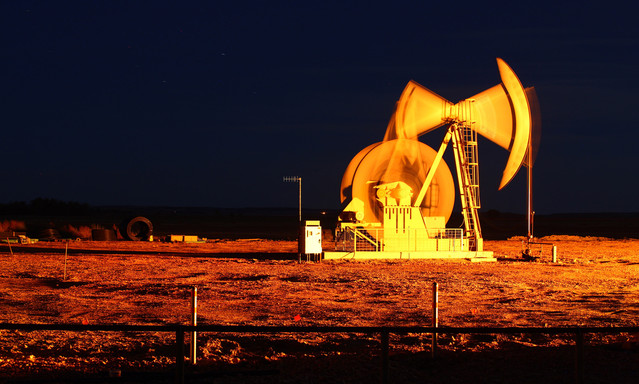
Oil prices are falling the most in six years, undermining exchange rates of energy producers from Latin America to Russia, just as slowing growth in China and a tumbling yen weigh on currencies across Asia. And surging demand for the dollar, the result of speculation that U.S. interest rates will rise, is adding to the woes of developing-nation currencies.
An index tracking 20 key exchange rates has fallen to levels last seen more than a decade ago, down 10 percent this year in what would be the biggest annual slide since 2008. Argentina’s peso and Czech Republic’s koruna will lead declines among 16 of 23 developing-nation currencies next year, according to strategist forecasts compiled by Bloomberg.
“Emerging markets are suffering slow growth, low commodity prices and weak exports,” Pierre-Yves Bareau, the London-based head of developing-nation debt at JPMorgan Asset Management Inc., which oversees $1.6 trillion, said by phone on Dec. 4. “We don’t expect that to change.”
While some developing nations may welcome a weaker currency because it makes their exports more competitive, for others the pace of decline is destabilizing their economies by fueling inflation and eroding investor confidence.
‘Harsh’ Measures
In his annual address to parliament on Dec. 4, Russian President Vladimir Putin pledged “harsh” measures to punish speculators who contributed to the ruble’s 38 percent drop versus the dollar this year, its worst performance since the nation defaulted in 1998. The ruble has “substantially” deviated from its fundamental value, creating risks for financial stability, the central bank said on Dec. 4.
Russia has burned through $90 billion of its foreign reserves this year in a failed attempt to stem the slide, which saw the currency plunge to a record versus the dollar on Dec. 3.
The advantage to exports from the weaker exchange rate has been offset by falling oil revenues and the impact of sanctions imposed for the nation’s incursion into Ukraine. Russia’s exports dropped 13 percent in September from a year earlier, the worst decline since 2009, while crude oil has lost a third of its value in 2014, the most since it slid 54 percent in 2008.
2003 Lows
Bloomberg’s index of 20 emerging-market currencies from South Africa’s rand and the Thai baht to Poland’s zloty fell today to its weakest level since April 2003.
The gauge has been tumbling since the middle of the year, while a rebound in the second quarter proved short-lived as growth in developing nations failed to gain traction.
The outlook, though, isn’t universally negative. Investors can profit by purchasing currencies of nations with relatively high interest rates, such as the Indian rupee and South African rand, in deals funded in euros or yen rather than dollars, Christian Keller, the London-based head of economic research at Barclays Capital, said at a conference in New York on Dec. 4.
Carry Opportunity
These transactions, known as carry trades, exploit differences in global interest rates and post enhanced returns if the purchased currency strengthens. India and South Africa have benchmark rates of more than 5 percent, compared with about zero in the U.S. and euro region.
Falling oil prices are also dividing emerging-market currencies, with the exchange rates of energy importers, including the Turkish lira and rupee, as likely winners against those of commodity exporters such as Brazil’s real.
“The game will be about relative value,” Daniel Tenengauzer, the head of emerging markets at RBC Capital Markets LLC in New York, said by e-mail on Dec. 4.
One region where gains are unlikely is eastern Europe, whose economies are closely tied to the flagging euro area. Five of the seven worst emerging-market performers against both the dollar and euro by the end of 2015 will come from this region, with the koruna and Hungarian forint leading declines, according to median forecasts compiled by Bloomberg.
Lagging Growth
While the International Monetary Fund expects developing economies to pick up next year, it still sees them falling short of their longer-term growth. The IMF predicts expansion of 4.95 percent across emerging markets in 2015, up from a forecast of 4.43 percent this year and compared with average growth of 6.44 percent over the past decade.
China, which buys everything from Brazil’s iron ore to South Korea’s cars, will grow 7.1 percent next year, the slowest pace since 1990, the IMF forecasts.
Philippine Peso
The slowdown in the world’s second-largest economy is weighing on emerging-Asian currencies. The Philippine peso will lead declines among its peers in that region by the end of 2015, with a slide of almost 2 percent, strategists surveyed by Bloomberg predict.
Asian exchange rates are also weakening in line with the yen, which touched a more than seven-year low versus the dollar at the end of last week amid speculation the Bank of Japan will expand its money supply to stave off deflation.
The impact of lagging emerging economies is exacerbated by the contrast with the U.S., where a Dec. 5 Labor Department report showed employers added 321,000 jobs in November, the most in almost three years. The better-than-forecast result was seen by investors as strengthening the case for policy makers to raise the nation’s benchmark interest rate from the zero to 0.25 percent range it’s been in since 2008.
The U.S. recovery will contribute to the “still- challenging external backdrop” faced by emerging-market currencies, Deutsche Bank AG strategists including Drausio Giacomelli wrote in a Dec. 4 note. “We expect emerging-market foreign exchange to face yet another difficult year.”
Here we are to serve you with news right now. It does not cost much, but worth your attention.
Choose to support open, independent, quality journalism and subscribe on a monthly basis.
By subscribing to our online newspaper, you can have full digital access to all news, analysis, and much more.
You can also follow AzerNEWS on Twitter @AzerNewsAz or Facebook @AzerNewsNewspaper
Thank you!