
Poverty beyond the numbers
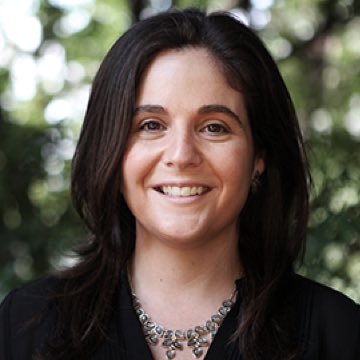
By Julia Corvalan
What is poverty? For decades, we have defined it with a number,
which the World Bank currently puts at a personal income of less
than $1.90 per day. But a single number fails to capture the
complexity of poverty. Measuring more than just income is essential
to understanding the needs of poor people and delivering optimal
assistance.
As the World Bank convenes its Spring Meetings in Washington, DC
next week, we have an opportunity to set benchmarks that include
social and environmental dimensions of poverty. The Bank has
acknowledged that more than income should be considered, and
recently established a Commission on Global Poverty to recommend
additional metrics.
Although many public and private groups already collect data on a
range of issues affecting poor communities such as nutrition,
maternal health, or access to education, such information remains
largely untapped and is rarely shared across institutions. But
there are some beacons of light, including the Social Progress
Index, which provides a framework for tracking multiple symptoms of
poverty across countries and complements traditional income-based
measures.
When we rely on a single number to measure poverty, we misdiagnose
the needs of poor people. In my home country, Paraguay, I work with
one of the country’s largest social enterprises, Fundación
Paraguaya, to provide microfinance, education, and training to
thousands of our poorest citizens. We look at 50 metrics across six
dimensions of poverty, including income, housing, education, and
infrastructure.
One of our clients, Doña Mercedes, is now a successful
micro-entrepreneur from a rural community not far from the capital
city of Asunción. When she first started with Fundación Paraguaya,
she was sharing a single-bedroom home with 16 other family members
and cooking meals on a small fire pit on the dirt floor. Now she
has a cement floor, a brick house, a separate kitchen, and around
$500 in personal savings.
By using Fundación Paraguaya’s self-evaluation on poverty, she was
able to understand her own needs better and address them one at
time. While traditional approaches focus largely on estimating the
sources of household expenses and income, the Fundación Paraguaya
self-evaluation helped Doña Mercedes break down her needs into 50
discrete areas that she could work on, piece by piece, and monitor
over time.
For example, she self-evaluated the state of her bathroom and
kitchen, the quality of the food eaten at home, the family’s dental
health, the number of separate bedrooms in the house, and even her
self-esteem and decision-making capacity. A simple poverty map
helps her track her progress by using the colors of the stoplight,
red, yellow, and green, and highlight her priority areas. Next she
plans to add two more bedrooms to her house and to work on
enlarging her business.
Fundación Paraguaya has been able to replicate this type of success
in other parts of the world. In Tanzania, where I worked for three
years in rural communities, we helped villages in the Southern
Highlands adapt our poverty indicators to the local context in
order to tackle water, sanitation, and electrification needs.
Similar efforts are being deployed in South Africa, Nigeria,
Uganda, China, and beyond.
We could make even more progress with public-sector support.
Fundación Paraguaya collects rich data across multiple dimensions,
tracking more than 8,700 families each year in Paraguay alone. If
this information were to reach the government of Paraguay – which
has its own methods for collecting data – we could identify pockets
of poverty sooner and customize programs to help each family.
Because the information is self-reported, this sort of
collaboration could deliver targeted aid and highlight specific
public services that are needed.
Moreover, if the World Bank’s Commission on Global Poverty adopts
multidimensional poverty measures, it will spur other organizations
to produce and share more detailed poverty data. That will give aid
workers a more comprehensive poverty map of the world, helping to
boost the effectiveness of anti-poverty efforts everywhere.
It won’t be easy to choose which measures to include, or even how
to set universal yardsticks; but even adopting a few basic ones
would spur progress. For too long, one-dimensional measures such as
the $1.90 per day guideline have misdiagnosed poor people’s
problems – and more importantly, their causes. We know that the
$1.90 per day benchmark does not fully capture the struggles of
poor people in places such as Paraguay.
Fortunately, the World Bank now appears to recognize the limits of
its income-based indicator. Ensuring that the right type of aid
reaches those most in need in a timely and effective manner
requires development policymakers to embrace the type of
multidimensional poverty data that aid organizations like Fundación
Paraguaya have learned to gather.
Copyright: Project Syndicate:Poverty Beyond the Numbers
---
Follow us on Twitter @AzerNewsAz
Here we are to serve you with news right now. It does not cost much, but worth your attention.
Choose to support open, independent, quality journalism and subscribe on a monthly basis.
By subscribing to our online newspaper, you can have full digital access to all news, analysis, and much more.
You can also follow AzerNEWS on Twitter @AzerNewsAz or Facebook @AzerNewsNewspaper
Thank you!