
Will Russia's withdrawal propel peace deal for Syrian crisis?
By Aynur Karimova
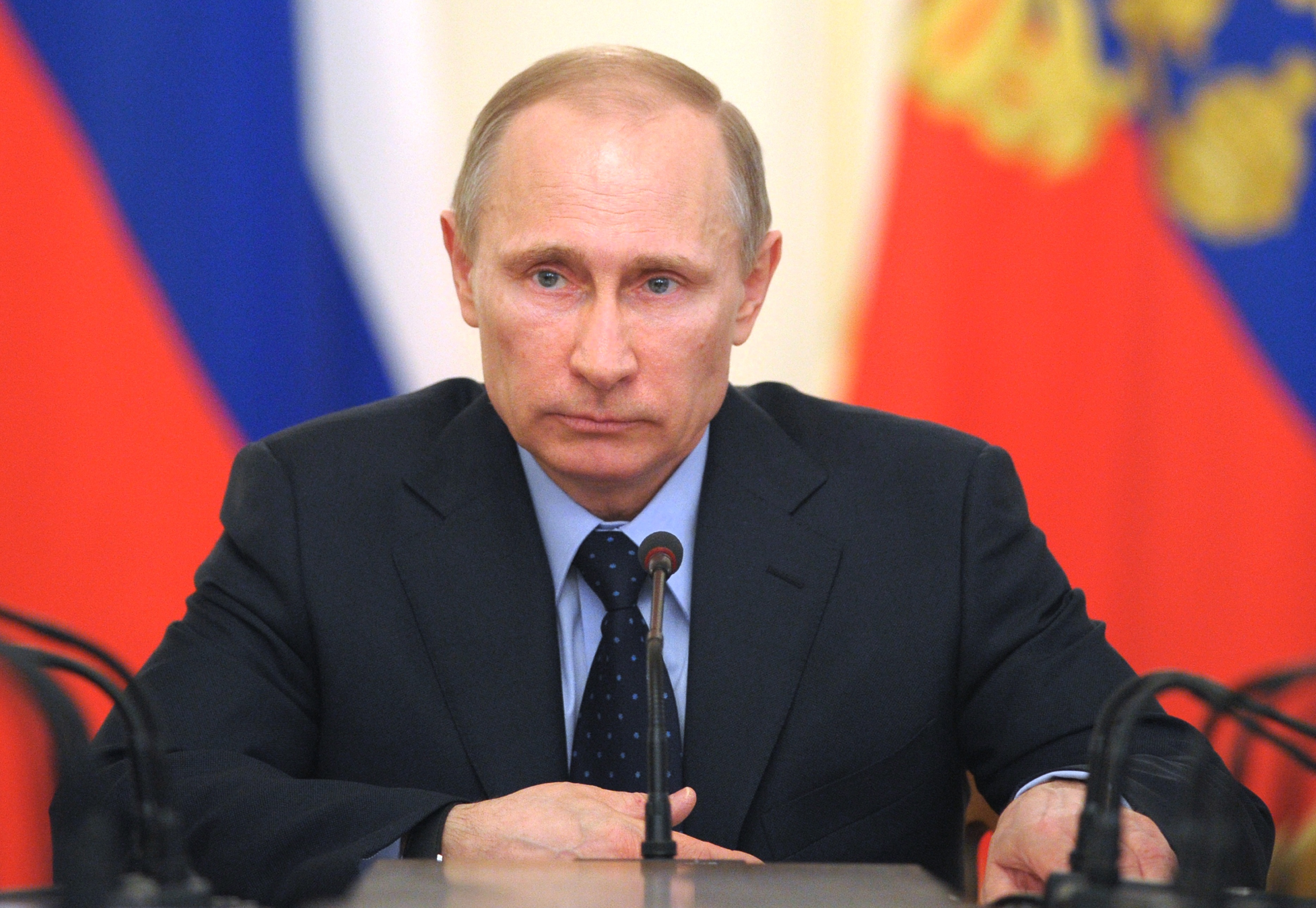
Russian President Vladimir Putin's statement on withdrawal of the armed forces from Syria is seen as a pressure on Syrian President Bashar al-Assad to reach a political settlement to the country's civil war and raises prospects for a U.S.-Russian deal to accomplish that.
Putin said on March 14 that he has instructed his armed forces to start pulling out of Syria, over five months after he ordered the launch of a military operation that shored up his ally, Syrian President Bashar al-Assad, Reuters reported.
Putin, at a meeting in the Kremlin with his defense and foreign
ministers, said Russian military forces in Syria had largely
fulfilled their objectives and ordered an intensification of
Russia's diplomatic efforts to broker a peace deal in the
country.
But the Russian leader signaled Moscow would keep a military
presence: he did not give a deadline for the completion of the
withdrawal and said Russian forces would stay on at the port of
Tartous and at the Hmeymim airbase in Syria's Latakia province.
Nikolai Pankov, the Deputy Defense Minister of Russia, said Moscow would continue military operations against the Islamic State and another terror group linked to al-Qaeda. The forces remaining in Syria “have a task to continue striking terrorist targets,” the Associated Press reported.
The United Nations special envoy for Syria, Staffan de Mistura called Russia's such a move “a significant development” that would propel the UN-led peace talks in Geneva, which was resumed on March 14, in which members of the Syrian regime and opposition are meeting indirectly through a mediator to try to forge a path to peace and to resolve the five-year civil war in the country.
As a result of the Syrian crisis, more than 270,000 people have been killed, more than a million migrants have made the dangerous voyage to Europe, leading to an international humanitarian crisis. In general, 4.6 million Syrians are refugees, and 6.6 million are displaced within the country.
Syria's government reported that is was not surprised with Russia's decision to withdraw "as the decision was made in coordination and consultation with us."
The country's main opposition group, the High Negotiations Committee, also welcomed the Russian withdrawal. The group believes that if Russia is serious about pulling out from Syria, it will be an end to crimes in Syria and "will help us to put an end to terrorism there in Syria."
However, the U.S. is cautious on Russia's withdrawing from Syria. "We're going to judge Russia by its actions — not its words," State Department spokesman John Kirby said.
The positions of Russia and the U.S. clashed in the Syria crisis: Russia strongly supported its long-time ally Assad, while the U.S. has called for Assad to step aside and backed rebels trying to force him out. Now, Russia's decision to withdraw from Syria is believed to make Moscow and Washington closer to finding a diplomatic compromise in this issue.
Experts believe that if earlier Assad showed little interest in making any compromises to end a war that marked its fifth anniversary on March 15, after the removal of the Russian troops from Syria, Assad will be forced to make concessions in negotiations.
Russian air strikes against the rebel groups in Syria, which began in September 2015, have helped Assad remain in power and turned the tide of the war in his favor, while prior to Russia's increased military involvement, Assad was losing territory to the insurgents.
The Russians had deployed about 50 aircraft and several thousand ground advisers and other support troops for Assad’s forces in Syria.
Putin apparently decided not to keep his military in place to deal a final blow to Assad's opposition, which could take time and would be very costly at a time when the Russian economy is in recession because of falling prices for its huge oil exports.
Experts believe that Putin has achieved its goal in Syria: he intervened to prop up the regime, to get Assad in a position to negotiate.
After Putin's such a statement, a question arose why Russia, a country facing international sanctions imposed on it due to the Ukraine crisis and not winning many friends for supporting the Assad regime, had effectively abandoned its long-standing ally.
Putin had a number of motives for making the announcement, according to the experts. The main factor was Russia's desire to improve its negative image on the global stage.
Also, Russia seeks improved relations with its allies, in particular with its major trading partner, the EU.
Putin's other goal in Syria is to win a seat at the negotiating table and have a chance to press its interests in any final peace deal as Moscow eyes to be recognized as a pivotal player in the Middle East and a global power equal to the U.S.
Thus, Russia's decision to withdraw from Syria will likely improve Moscow's relations with the world, which was worsened after the Ukraine crisis.
--
Aynur Karimova is AzerNews’ staff journalist, follow her on Twitter: @Aynur_Karimova
Follow us on Twitter @AzerNewsAz
Here we are to serve you with news right now. It does not cost much, but worth your attention.
Choose to support open, independent, quality journalism and subscribe on a monthly basis.
By subscribing to our online newspaper, you can have full digital access to all news, analysis, and much more.
You can also follow AzerNEWS on Twitter @AzerNewsAz or Facebook @AzerNewsNewspaper
Thank you!