
Markets’ Federal Reserve Love Story
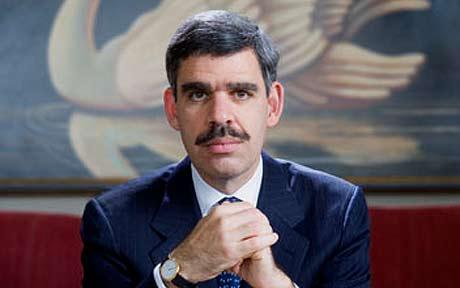
By Mohamed A. El-Erian
Chief Economic Adviser at Allianz and a member of its International Executive Committee. He is Chairman of President Barack Obama's Global Development Council and the author, most recently, of When Markets Collide.
The morning drive to my 11-year old daughter's school is always
fun, and often a source of insight. That was certainly the case
last week when she pointed out something about Frozen, the hugely
popular Disney film, that had totally escaped me. "It's unusual,"
she said, "to see a Disney movie in which they end up telling us
not to marry someone we've just met."
Quite early on in the movie, Princess Anna meets Prince Hans at her
sister Princess Elsa's coronation ball. They immediately connect on
many levels and, yes, "fall in love." He quickly proposes, and she
accepts, but Elsa refuses to give her blessing.
It then takes Anna most of the movie to figure out that Hans is
evil - set on getting rid of both her and her older sister in order
to take over the kingdom. Luckily for her, there is a wonderful
commoner - Kristoff - whom she has gotten to know during the course
of her adventures. Unlike Hans, he is genuine and dependable; they
end up together.
After many decades of Disney movies, we have been conditioned to
expect princesses to fall in love quickly with their charming
princes and "live happily ever after." And when there are
challenges or obstacles (mostly in the more recent movies), these
are quickly overcome (and with humor).
Similarly, for many years market participants have been richly
rewarded for falling in love - quickly and decisively - with the
new policy measures adopted by America's Federal Reserve. Indeed,
the romance has overwhelmingly followed the Disney script. Yes,
there may have been some bumps along the way, but they have been
overcome quickly. And the romance has resulted in both parties
living happily: the Fed feels better positioned to pursue its dual
mandate of high employment and stable inflation, while investors
feel that they have the opportunity for sizeable financial
rewards.
This relationship has been so comfortable that market participants
have adopted the mantra "Never fight the Fed" - and for good
reason. The Fed is the world's most powerful central bank. It owns
the printing press that produces the world's main reserve currency.
It enjoys a significant amount of political independence. And it
has not been shy about using its considerable operational
autonomy.
Market participants also know that the Fed needs them to leverage
its policy influence and deliver on its mandate, which, in recent
years, has rightly been broadened in practice to incorporate the
goal of financial stability. To this end, the Fed has become much
more "transparent" with markets in the last few years, sharing more
readily the minutes and transcripts of its policy discussions. The
Chair of the Federal Reserve Board has even taken to holding
periodic press conferences that are closely watched on trading
floors around the world.
Since the 2008 global financial crisis, the romance has become
particularly intense, especially as the Fed has been compelled to
use a range of unconventional measures to overcome the
capital-market disruptions that almost tipped the world economy
into a deep depression. In doing so, the Fed has become more
involved in how markets function, the valuation of assets, and
fluctuations in their prices. And the markets have come to depend
much more on the Fed, expecting more frequent attention and support
from it (and throwing a short tantrum when they feel disappointed,
as was the case a year ago).
Initially, central bankers were keen to cultivate this romance as a
means of meeting their broader policy objectives of growth,
employment, stable inflation, and financial stability. More
recently, however, some have become less comfortable, warning that
the codependence is encouraging excessive risk-taking and, in some
cases, bubbly valuations. Some worry that it may even undermine the
Fed's political independence. And, only two weeks ago, an outgoing
Fed governor, Jeremy Stein, declared that the Fed is in the middle
of a policy transition that renders its guidance to markets "more
qualitative," "less deterministic" and, therefore, less
precise.
Like Princess Anna in Frozen, it will take time for markets to
recognize that their relationship with the Fed is changing (and
should change); and, similar to the movie, some sort of shock may
be involved in socializing the new understanding. Having said that,
the outcome will certainly not be as dramatic as in the movie - if
only because, unlike Hans, the Fed is not out to take over the
markets.
So the romance will survive, but it is unlikely to be as intense,
and it is unlikely to be unconditional. The hope is that, by that
time, a more vibrant real economy will perform the role that
Kristoff played in the movie.
The best and most sustainable love story for markets is one based
on a healthy and dynamic real economy that creates jobs and
opportunities for many more people. Unfortunately, on that count,
it is too soon to predict whether we will live happily ever
after.
Here we are to serve you with news right now. It does not cost much, but worth your attention.
Choose to support open, independent, quality journalism and subscribe on a monthly basis.
By subscribing to our online newspaper, you can have full digital access to all news, analysis, and much more.
You can also follow AzerNEWS on Twitter @AzerNewsAz or Facebook @AzerNewsNewspaper
Thank you!