
Global development’s winning goals
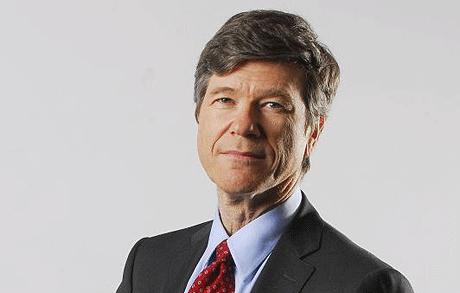
By Jeffrey D. Sachs
Professor of Sustainable Development, Professor of Health Policy
and Management, Director of the Earth Institute at Columbia
University. He is also Special Adviser to the United Nations
Secretary-General on the Millennium Development Goals
The world's governments meet at a special session of the United
Nations General Assembly on September 25 to discuss how to
accelerate progress on the Millennium Development Goals, and also
to agree on a timetable for a new set of Sustainable Development
Goals. The MDGs, adopted in 2000, will conclude in 2015, to be
followed by the SDGs, most likely for the 2015-2030 period.
The MDGs focus on ending extreme poverty, hunger, and preventable
disease. They have been the most important global development goals
in the UN's history. The SDGs will continue the fight against
extreme poverty, but also add the challenges of ensuring more
equitable economic growth and environmental sustainability,
especially the key goal of curbing the dangers of human-induced
climate change.
Setting international development goals has made a huge difference
in people's lives, particularly in the poorest places on the
planet. Sub-Saharan Africa has benefited enormously from the MDGs,
and we can learn from that success in designing the SDGs.
To see the MDGs' importance for Sub-Saharan Africa, one need only
compare the decade before their adoption with the decade after. In
the ten years before the MDGs, economic growth in the region was
slow, the poverty rate was high (and rising), and there was an
increasingly heavy disease burden, including HIV/AIDS and
malaria.
The adoption of the MDGs focused increased attention by African
governments, non-governmental organizations, UN agencies,
international donors, foundations, and activists on the urgency of
combating poverty, hunger, and disease. The MDGs also cast a global
spotlight on the crippling debt burdens faced by many of Africa's
poorest countries, leading to a process of debt cancelation led by
the International Monetary Fund and the World Bank.
From 2000 to 2010, Sub-Saharan Africa's poverty rate (as measured
by the share of those living on less than $1.25/day) fell to 48.5%,
after having risen from 56.5% to 58% in the 1990-1999 period, while
overall annual economic growth, which averaged 2.3% from 1990 to
2000, more than doubled, to 5.7% during the 2000-2010 period.
There were significant improvements in disease control as well.
From 1990 to the peak year, around 2004, annual malaria deaths rose
from roughly 800,000 to 1.6 million. After that point, upon the
MDGs-inspired mass distribution of anti-malaria bed nets, malaria
deaths began to decline, to around 1.1 million per year in 2010,
and perhaps lower now.
Likewise, as of 2000, there were still no official donor-supported
programs to enable poor Africans to receive antiretroviral
treatment for AIDS. Thanks in large part to the agenda-setting
power of the MDGs, donor programs to fight AIDS began to be
implemented, and more than six million Africans now receive
antiretroviral treatment supported by official donor programs.
As Special Adviser to the UN Secretary-General on the MDGs since
2001 (to Kofi Annan until 2006, and to Ban Ki-moon since 2007), I
have seen how seriously many African governments take the targets,
using them to set priorities, catalyze stakeholders, increase
public awareness and motivation, and hold ministries accountable.
Over time, the UN and the high-income countries' donor agencies
increasingly used the MDGs to help organize their own work in
Africa as well. While the MDGs are not the only factor underpinning
the improvements since 2000, they have played a huge role.
Of course, much remains to be done to maximize progress on
achieving the targets set by the MDGs. Most important, significant
gains in health could be attained with adequate financial
resources. Donor countries should provide ample replenishment
funding later this year to the Global Fund to Fight AIDS, TB, and
Malaria, which would ensure this vital agency's continued
success.
When UN member states turn to the next set of global development
goals, they should learn from the MDGs. First, keeping the list of
SDGs relatively short - no more than ten - will make them easy to
remember, which will help in mobilizing the public.
Second, all governments, rich and poor, should be accountable for
meeting the SDGs as implementers. The MDGs applied mainly to poor
countries as implementers and to rich countries as donors. The SDGs
should apply to all countries as implementers (and also to rich
countries as donors). Indeed, when it comes to problems like
climate change, which will be at the core of the new SDGs, rich
countries have more work ahead of them than poor countries do.
Third, the SDGs should build on the MDGs. The MDGs helped to cut
global extreme poverty by more than half. The SDGs should take on
the challenge of ending extreme poverty for good. The World Bank,
to its credit, has already adopted the goal of ending extreme
poverty by 2030. UN member states should do the same.
Finally, the SDGs should mobilize expert groups around the key
challenges of sustainable development. When the MDGs first
appeared, the relevant specialists began to organize themselves to
give advice on achieving them. The UN Millennium Project
synthesized the counsel of roughly 250 global experts on crucial
development issues. The same process of expert advice and problem
solving is urgently needed on issues such as low-carbon energy,
sustainable agriculture, resilient cities, and universal health
coverage, all of which are likely to feature in the SDGs.
Fifty years ago, US President John F. Kennedy declared that, "By
defining our goal more clearly, by making it seem more manageable
and less remote, we can help all people to see it, to draw hope
from it, and to move irresistibly towards it." The MDGs have helped
to play that role in the fight against poverty. The SDGs can do the
same for the complex challenge of achieving sustainable
development.
Here we are to serve you with news right now. It does not cost much, but worth your attention.
Choose to support open, independent, quality journalism and subscribe on a monthly basis.
By subscribing to our online newspaper, you can have full digital access to all news, analysis, and much more.
You can also follow AzerNEWS on Twitter @AzerNewsAz or Facebook @AzerNewsNewspaper
Thank you!