
Europe’s lost Keynesians
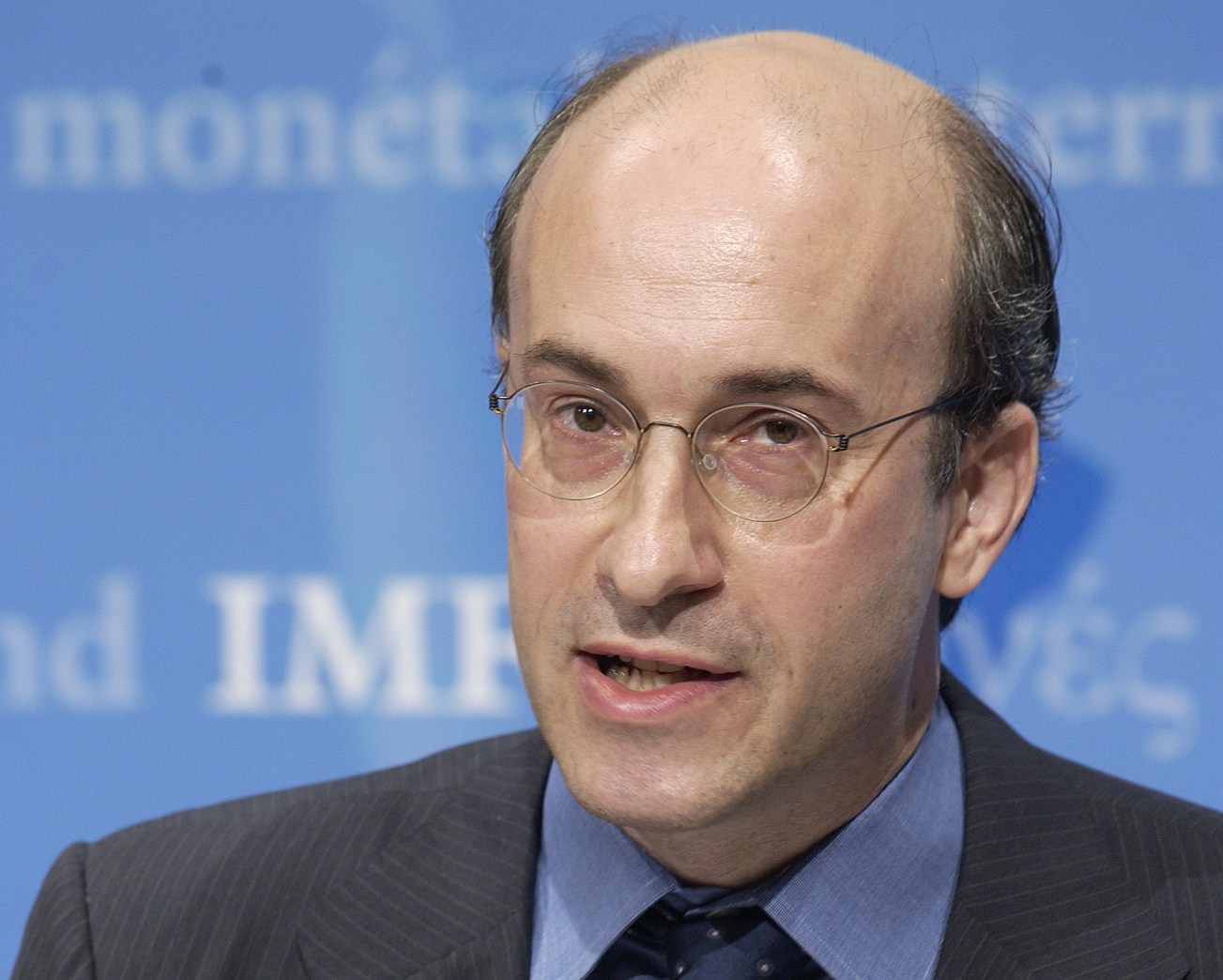
By Kenneth Rogoff
Former chief economist of the IMF, Professor of Economics and Public Policy at Harvard University
There is no magic Keynesian bullet for the eurozone's woes. But
the spectacularly muddle-headed argument nowadays that too much
austerity is killing Europe is not surprising. Commentators are
consumed by politics, flailing away at any available target, while
the "anti-austerity" masses apparently believe that there are easy
cyclical solutions to tough structural problems.
The eurozone's difficulties, I have long argued, stem from European
financial and monetary integration having gotten too far ahead of
actual political, fiscal, and banking union. This is not a problem
with which Keynes was familiar, much less one that he sought to
address.
Above all, any realistic strategy for dealing with the eurozone
crisis must involve massive write-downs (forgiveness) of peripheral
countries' debt. These countries' massive combined bank and
government debt - the distinction everywhere in Europe has become
blurred - makes rapid sustained growth a dream.
This is hardly the first time I have stressed the need for
wholesale debt write-downs. Two years ago, in a commentary called
"The Euro's Pig-Headed Masters," I wrote that "Europe is in
constitutional crisis. No one seems to have the power to impose a
sensible resolution of its peripheral countries' debt crisis.
Instead of restructuring the manifestly unsustainable debt burdens
of Portugal, Ireland, and Greece (the PIGs), politicians and
policymakers are pushing for ever-larger bailout packages with
ever-less realistic austerity conditions."
My sometime co-author Carmen Reinhart makes the same point, perhaps
even more clearly. In a May 2010 Washington Post editorial
(co-authored with Vincent Reinhart), she described "Five Myths
About the European Debt Crisis" - among them, "Myth #3: Fiscal
austerity will solve Europe's debt woes." We have repeated the
mantra dozens of times in various settings, as any fair observer
would confirm.
In a debt restructuring, the northern eurozone countries (including
France) will see hundreds of billions of euros go up in smoke.
Northern taxpayers will be forced to inject massive amounts of
capital into banks, even if the authorities impose significant
losses on banks' large and wholesale creditors, as well they
should. These hundreds of billions of euros are already lost, and
the game of pretending otherwise cannot continue indefinitely.
A gentler way to achieve some modest reduction in public and
private debt burdens would be to commit to a period of sustained
but moderate inflation, as I recommended in December 2008 in a
commentary entitled "Inflation is Now the Lesser Evil." Sustained
moderate inflation would help to bring down the real value of real
estate more quickly, and potentially make it easier for German
wages to rise faster than those in peripheral countries. It would
have been a great idea four and a half years ago. It remains a good
idea today.
What else needs to happen? The other steps involve economic
restructuring at the national level and political integration of
the eurozone. In another commentary, "A Centerless Euro Cannot
Hold," I concluded that "without further profound political and
economic integration - which may not end up including all current
eurozone members - the euro may not make it even to the end of this
decade."
Here, all eyes may be on Germany, but today it is really France
that will play the central role in deciding the euro's fate.
Germany cannot carry the euro on its shoulders alone indefinitely.
France needs to become a second anchor of growth and stability.
Temporary Keynesian demand measures may help to sustain short-run
internal growth, but they will not solve France's long-run
competitiveness problems. At the same time, France and Germany must
both come to terms with an approach that leads to far greater
political union within a couple of decades. Otherwise, the coming
banking union and fiscal transfers will lack the necessary
political legitimacy.
As my colleague Jeffrey Frankel has remarked, for more than 20
years, Germany's elites have insisted that the eurozone will not be
a transfer union. But, in the end, ordinary Germans have been
proved right, and the elites have been proved wrong. Indeed, if the
eurozone is to survive, the northern countries will have to
continue to help the periphery with new loans until access to
private markets is restored.
So, given that Germany will be picking up many more bills
(regardless of whether the eurozone survives), how can it best use
the strength of its balance sheet to alleviate Europe's growth
problems? Certainly, Germany must continue to acquiesce in an
ever-larger role for the European Central Bank, despite the obvious
implicit fiscal risks. There is no safe path forward.
There are a number or schemes floating around for leveraging
Germany's lower borrowing costs to help its partner countries,
beyond simply expanding the ECB's balance sheet. For meaningful
burden-sharing to work, however, eurozone leaders must stop
dreaming that the single currency can survive another 20 or 30
years without much greater political union.
Debt write-downs and guarantees will inevitably bloat Germany's
government debt, as the authorities are forced to bail out German
banks (and probably some neighboring countries' banks). But the
sooner the underlying reality is made transparent and becomes
widely recognized, the lower the long-run cost will be.
To my mind, using Germany's balance sheet to help its neighbors
directly is far more likely to work than is the presumed
"trickle-down" effect of a German-led fiscal expansion. This,
unfortunately, is what has been lost in the debate about Europe of
late: However loud and aggressive the anti-austerity movement
becomes, there still will be no simple Keynesian cure for the
single currency's debt and growth woes.
Copyrights: Project Syndicate
Here we are to serve you with news right now. It does not cost much, but worth your attention.
Choose to support open, independent, quality journalism and subscribe on a monthly basis.
By subscribing to our online newspaper, you can have full digital access to all news, analysis, and much more.
You can also follow AzerNEWS on Twitter @AzerNewsAz or Facebook @AzerNewsNewspaper
Thank you!