
Paths to Sustainable Power
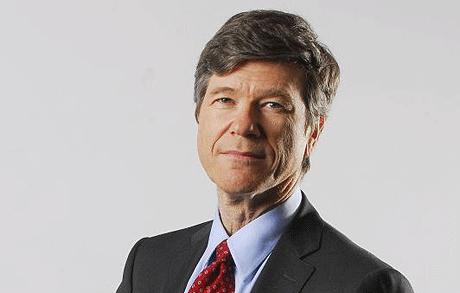
By Jeffrey D. Sachs
Professor of Sustainable Development, Professor of Health Policy and Management, and Director of the Earth Institute at Columbia University. He is also Special Adviser to the United Nations Secretary-General on the Millennium Development Goals.
The surest bet on the future of energy is the need for
low-carbon energy supplies. Around 80% of the world's primary
energy today is carbon based: coal, oil, and gas. We will need to
shift to no-or low-carbon energy by mid-century. The big questions
are how and when.
Low-carbon primary energy means three options: renewable energy,
including wind, solar, geothermal, hydropower, and biomass; nuclear
energy; and carbon capture and sequestration, which means using
fossil fuels to create energy, but trapping the CO2 emissions that
result and storing the carbon safely underground.
There are three compelling reasons for the world to make the shift
to low-carbon energy. First, higher levels of CO2 are making the
world's oceans acidic. If we continue with business as usual, we
will end up destroying a vast amount of marine life, severely
damaging the food chains on which we rely.
Second, CO2 is dangerously changing the world's climate, even if
many Big Oil interests would have us believe otherwise. (So, too,
did the tobacco companies spend vast sums on political lobbying and
bogus science to deny the links between smoking and lung
cancer.)
Third, we face steeply rising prices for fossil fuels, as
developing countries' growth drives up demand and conventional
supplies of coal, oil, and gas are depleted. Sure, we can find more
fossil fuels, but at much higher cost and at much greater
environmental risk from industrial spills, waste products, leaks,
and other damage.
Even the much-heralded shale-gas revolution is a lot of hype -
similar to the gold rushes and stock bubbles of the past. Shale-gas
wells deplete far more rapidly than conventional fields do. And
they are environmentally dirty to boot.
The United States has developed many new low-carbon energy
technologies, but other countries are currently far more intent,
far-sighted, and decisive than the US to put these technologies to
large-scale use. Politically, America is still the land of Big Oil.
Americans are bombarded by industry-funded media downplaying
climate change, while countries that are much poorer in fossil
fuels are already making the necessary transition to a low-carbon
future.
Two neighbors in Europe, Germany and France, are showing the way
forward - or, more precisely, the alternative ways forward - to a
low-carbon future. They are going about it in ways that reflect
their different resource endowments, industrial histories, and
political pressures.
Germany is undertaking the Energiewende, or transition to
sustainable energy - a remarkable effort (indeed, unprecedented for
a large advanced economy) to meet the country's entire energy
demand with renewable energy, especially solar and wind power.
Meanwhile, France relies heavily on low-carbon nuclear power, and
is switching rapidly to electric vehicles, such as the pioneering
Renault-Nissan Leaf.
Of the two approaches, Germany's is the more unusual bet. After
Japan's nuclear disaster at Fukushima, Germany decided to shut down
its entire nuclear power industry and shift entirely to a strategy
based on greater energy efficiency (lower energy input per unit of
national income) and renewables. There really is no clear roadmap
for such a huge energy transformation, and Germany almost surely
will need to rely on a European-wide electricity grid to share
clean energy, and eventually on imported solar power from North
Africa and the Middle East.
France's bet on nuclear power is a more proven option. After all,
most of France's electricity has come from nuclear power for many
years. And, though anti-nuclear sentiment is very strong in Europe
- and, increasingly, even in France - nuclear power will remain
part of the global energy mix for decades to come, simply because
much of Asia (including China, India, South Korea, and Japan) will
remain major users of it.
The key point is that France and Germany, and many other European
countries - including the Scandinavian countries, with their
considerable wind and hydropower potential - are all recognizing
that the world as a whole will have to move away from a
fossil-fuel-based energy system. That is the right calculation.
Many will no doubt argue about which alternative - France's bet on
nuclear power or Germany's solar pathway - is wiser. But both
strategies are probably correct. Most studies show that deep
de-carbonization of the world economy from now to mid-century, a
time horizon mandated by environmental realities, will require that
all low-carbon options - including greater efficiency and
renewables - be scaled up massively.
One of the highest priorities of the new Sustainable Development
Solutions Network, which I direct on behalf of United Nations
Secretary-General Ban Ki-moon, will be to elaborate alternative
pathways to a low-carbon economy, taking into account the specific
conditions of countries around the world. Different countries will
choose different strategies, but we will all need to get to the
same place: a new energy system built on low-carbon sources,
electrification of vehicles, and smart, energy-efficient buildings
and cities.
Early movers may pay a slightly higher price today for these
strategies, but they and the world will reap long-term economic and
environmental benefits. By embracing truly sustainable
technologies, France, Germany, and others are creating the energy
system that will increasingly support the world economy throughout
this century.
Copyrights: Project Syndicate
Here we are to serve you with news right now. It does not cost much, but worth your attention.
Choose to support open, independent, quality journalism and subscribe on a monthly basis.
By subscribing to our online newspaper, you can have full digital access to all news, analysis, and much more.
You can also follow AzerNEWS on Twitter @AzerNewsAz or Facebook @AzerNewsNewspaper
Thank you!