
U.S. wants to work with Russia to ensure change of political regime in Syria
By Kamila Aliyeva
The situation around Syria becomes exacerbated in connection with the recent missile attacks on the city of Idlib by the U.S. and the unwillingness of the parties involved in the conflict to retreat from their positions and come to a common compromise.
Despite concerns over the possible failure of dialogue to solve the Syrian crisis, there are still positive signals for the talks to resume.
On April 10, White House Press Secretary Sean Spicer reassured U.S. readiness to work with Russia on creating a new political environment in Syria and ensuring that the Damascus government recognizes its international responsibilities.
"You can have work with Russia, in particularly, to make sure that they understand that Syria, backed up by Russia's own accounting, should be held accountable for the agreements that it’s made with respect to its international agreements on chemical weapons alone," Spicer stated.
Moreover, he said that "if people are attacked using poisonous substances, we reserve the opportunity for new actions," while replying to the question of the possibility of new attacks.
From this statement, it follows that America leaves the possibility of new strikes against Syria. A certain discrepancy in addressing this issue is observed as, given the attitude and statements of the Russian side about these attacks, it is strange that America hopes for joint cooperation within the framework of the Syrian question.
Spicer once again confirmed that the Islamic state remains the threat number one in the region for the United States. Washington will be able to defeat ISIS, even if Syrian President Bashar al-Assad will remain in power.
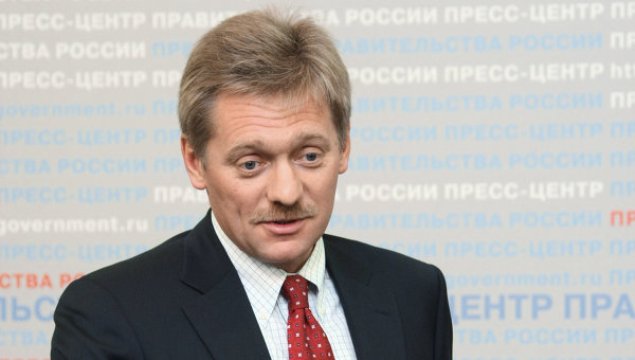
At the same time, Russian side believes that by these actions [by its missile strikes against Syria] the United States has shown its complete unwillingness to interact in the Syrian settlement, according to the Kremlin spokesman Dmitry Peskov.
"The American side has thus demonstrated its complete unwillingness to somehow interact on Syria and take into account the interests and the concerns of others [participants in the settlement process in the Syrian Arab Republic]," Peskov said.
In addition, Russia considers that recalling a need for the withdrawal of Syrian President Bashar al-Assad from his post does not bring the political settlement in the Arab Republic closer.
There is no alternative to Geneva process aimed at finding political solution to the long-lasting situation in Syria, Kremlin spokesman Dmitry Peskov told reporters on April 10, TASS reported.
"There is the Geneva process and the Astana process, which is a supporting component of the Geneva process. And the search in the framework of settlement is conducted there," Peskov said.
The Russian presidential spokesman noted that "returning to pseudo attempts to settle the situation" by declaring that Bashar Assad should leave power cannot bring anyone closer to political settlement in Syria.
"The only possible option is to continue this meticulous work underway as part of the Geneva and Astana process," he said.
Meanwhile, Syria with the support of Russia seeks to find a way to protect itself from possible repeated attacks by the United States.
Syrian Deputy Foreign Minister Faisal Mikdad stated that Damascus and its allies "do not intend to threaten the U.S. or threaten security in the world", but, in his opinion, will be able to protect Syrian sovereignty and independence.
After the U.S. strikes on the Syrian territory, Russia's Defense Ministry announced its plans to strengthen and improve the effectiveness of the air defense system in Syria.
To cover the most sensitive objects of the Syrian infrastructure, the Ministry plans to implement a set of measures in the near future to strengthen and improve the effectiveness of the air defense system of the Syrian armed forces, Russia's defense official, Major-General Igor Konashenkov said.
On April 4, the National Coalition of Opposition and Revolutionary Forces of Syria reported about 200 wounded and 80 victims of chemical weapons attack in Khan-Sheikhun city of Idlib province. The oppositionists blamed government troops of Syria for the attack. The command of the Syrian army rejected accusations in its address and laid the blame on the militants and their patrons.
The UN and the Organization for the Prohibition of Chemical Weapons (OPCW) have already taken up the investigation of the incident, but so far they have not published any conclusions about possible perpetrators of the incident.
As Syrian Foreign Minister Walid Muallem stated on Thursday, Syrian government troops have never used or intend to use chemical weapons against civilians and against terrorists.
The stocks of chemical weapons were successfully exported from Syria. In January 2016 the OPCW announced the complete elimination of the country's chemical industry.
---
Kamila Aliyeva is AzerNews’ staff journalist, follow her on Twitter: @Kami_Aliyeva
Follow us on Twitter @AzerNewsAz
Here we are to serve you with news right now. It does not cost much, but worth your attention.
Choose to support open, independent, quality journalism and subscribe on a monthly basis.
By subscribing to our online newspaper, you can have full digital access to all news, analysis, and much more.
You can also follow AzerNEWS on Twitter @AzerNewsAz or Facebook @AzerNewsNewspaper
Thank you!