
Azerbaijan can help diversify Bulgaria's natural gas imports
By Aynur Karimova
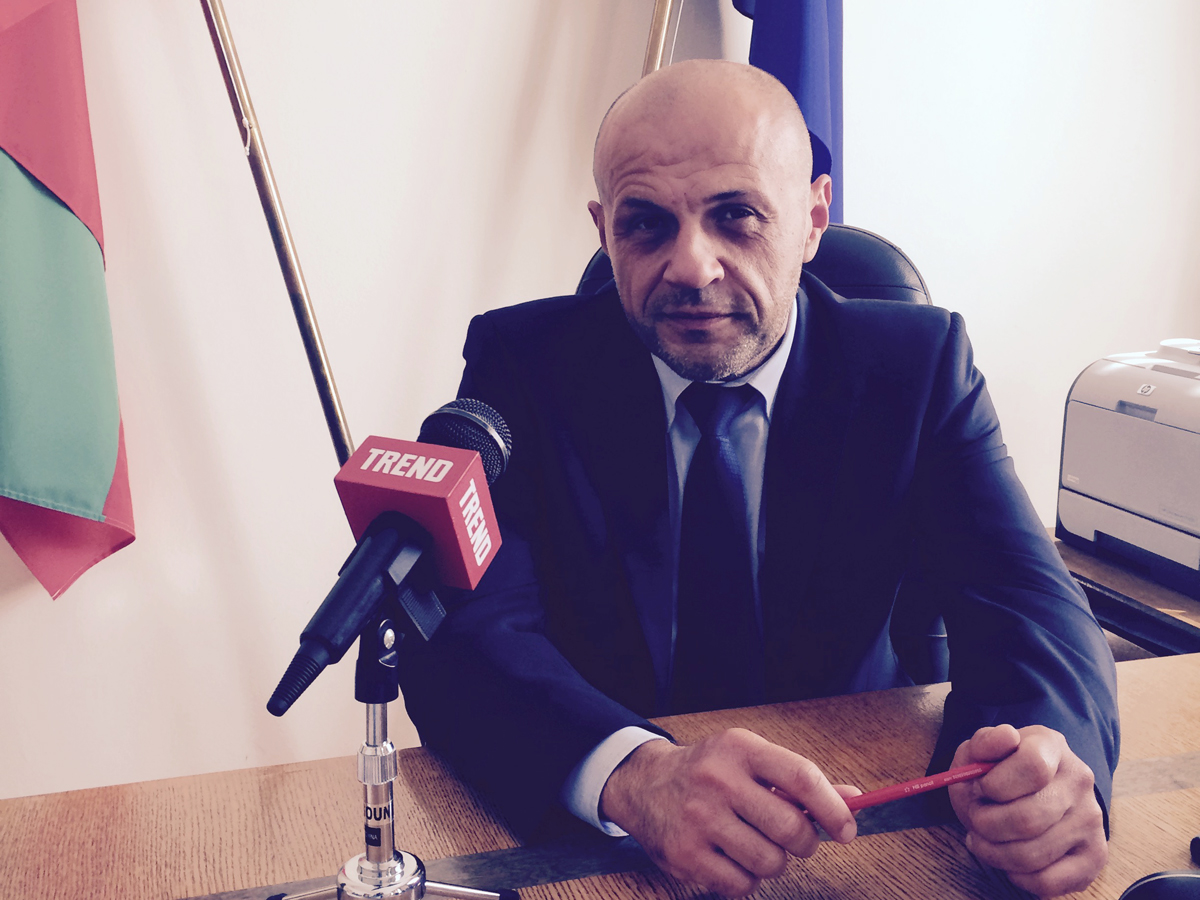
The diversification of natural gas resources and the routes delivering the blue fuel to Bulgaria is vital for the country, which today ensures its needs at the expense of Russian gas, Tomislav Donchev said.
The Bulgarian deputy prime minister told Trend in an interview that in this regard, Azerbaijan could become an important partner for Bulgaria. Bulgaria, in turn, is ready to become a transit country for Azerbaijani gas supplies to Europe.
He said that Bulgaria continues to put in all efforts to aid in the construction of the Greece-Bulgaria Interconnector for the supply of Azerbaijani gas.
"The approximate carrying capacity of the IGB will amount to 20 billion cubic meters of gas per year. Given the projected capacity of the interconnector with Greece and designed bridges connecting it to the gas transport systems of Romania and Serbia, the possibilities of Bulgaria in the distribution of gas throughout Europe will increase significantly," Donchev noted.
According to the deputy premier, Bulgaria is working on various joint projects with Azerbaijan in the energy sector. But first, the construction of the interconnector is important to implement said projects.
"Bulgaria does not lose hope that this issue will find a solution soon. Bulgaria and Greece will have opportunities to join the Southern Gas Corridor project and receive Azerbaijani gas through the construction of IGB," Donchev added.
The IGB is a gas pipeline that will allow Bulgaria to receive Azerbaijani gas, mostly from the second stage of development of Azerbaijan’s Shah Deniz gas and condensate field.
The IGB will connect to the Trans-Adriatic pipeline, providing a steady flow of natural gas from Shah Deniz in the Caspian to European markets.
In January 2014, TAP and the Interconnector Greece-Bulgaria Company – which is in charge of the development, financing, and construction of the IGB – signed a memorandum of understanding and cooperation.
The MoU will allow cooperation between the two companies that will work together on finding a possible connection point in the vicinity of Komotini, Greece. This will enable new gas supplies to flow into the Bulgarian gas network and further into South Eastern Europe.
The deputy premier believes that cooperation between Azerbaijan and Bulgaria in the energy sector will open new prospects for the two countries.
"The cooperation with other countries of the Caspian basin in the energy sector is also of great interest for Bulgaria. Turkmenistan and Iran have large reserves of energy resources in order to become alternative resources for the energy security of Europe," he added.
Earlier, Bulgarian Prime Minister Boyko Borissov said at a conference titled "Energy security and energy infrastructure in southeastern Europe" in Sofia that his country expects to receive gas for the Southern Gas Corridor from Azerbaijan, Turkmenistan and Iran in order to diversify its gas supplies.
The Southern Gas Corridor is a priority energy project for the EU that envisages the transit of gas from the Caspian Sea region to European countries through Georgia and Turkey.
This ambitious project aims to diversify the routes and sources of energy supply that will enhance Europe's energy security. The Southern Gas Corridor project will ensure Caspian gas supplies to European markets for the first time in history.
At its initial stage, the primary source of gas for the pipeline will be from Stage 2 of the Shah Deniz field. Other sources could also connect to the pipeline at a later stage.
As part of the second stage of development of the field, gas will be exported to Turkey and European markets via an expanded South Caucasus Pipeline and the construction of both the Trans-Anatolian and Trans-Adriatic pipelines.
TANAP is designed for the purpose of transporting gas from Azerbaijan’s Shah Deniz field from the Georgian-Turkish border to the western borders of Turkey. TANAP’s initial capacity is expected to reach 16 billion cubic meters of gas per year. Around six billion cubic meters of this gas will be delivered to Turkey and the rest of the volume to Europe.
Shah Deniz gas will reach Turkey in 2018, while Europe will be able to receive it in early 2020 after the construction of its major component, TAP. The approximately 870 km-long pipeline will connect to the Trans-Anatolian Pipeline at the Turkish-Greek border in the city of Kipoi, cross Greece, Albania, and the Adriatic Sea, before coming ashore in Southern Italy.
Azerbaijan and Bulgaria have developed friendly relations after Bulgaria recognized the independence of Azerbaijan in January 1992.
Diplomatic relations between the two countries were established in June 1992 and the Embassy of Bulgaria in Azerbaijan was opened in December 1999.
Bulgaria and Azerbaijan have the potential for a much greater trade turnover than current figures show. In 2014, the Azerbaijan State Statistics Committee reported that trade between the two countries amounted to $124.596 million, while this figure in January-July 2015 amounted to $6.55 million. Compared with the same period last year, export-import operations between the two countries have declined by 8.8 times.
--
Aynur Karimova is AzerNews’ staff journalist, follow her on Twitter: @Aynur_Karimova
Follow us on Twitter @AzerNewsAz
Here we are to serve you with news right now. It does not cost much, but worth your attention.
Choose to support open, independent, quality journalism and subscribe on a monthly basis.
By subscribing to our online newspaper, you can have full digital access to all news, analysis, and much more.
You can also follow AzerNEWS on Twitter @AzerNewsAz or Facebook @AzerNewsNewspaper
Thank you!