
Rosneft, BP said to near $28 billion deal for TNK-BP stake
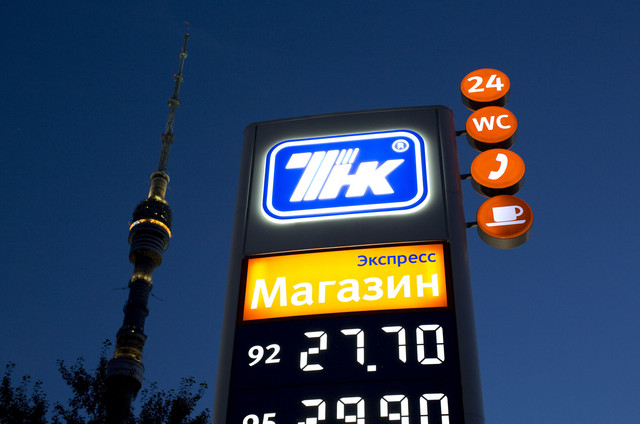
By Matthew Campbell, Brian Swint and Torrey Clark, Bloomberg
OAO Rosneft (ROSN) has agreed to the terms of a deal to buy BP Plc (BP/)'s half of its TNK-BP Russian venture, releasing the U.K. company from a fractious nine-year alliance and bringing state-backed Rosneft closer to becoming the world's biggest publicly traded oil producer, according to people familiar with the talks.
In a transaction valued between $26 billion and $28 billion, BP will sell its 50 percent stake for just under $13 billion in cash and an eventual 19 percent to 20 percent stake in Rosneft, the people said, asking not to be identified before an official statement. The deal, which will also give BP two seats on Rosneft's board, will probably be announced today following a meeting between Russia's president, Vladimir Putin, and Rosneft Chief Executive Officer Igor Sechin, they said.
A stake in Rosneft will allow BP to maintain a presence in Russia while exiting a 50-50 venture that brought billions in profits and years of conflict with its partners. For Rosneft's Sechin, absorbing the whole of TNK-BP would raise oil and gas production to about 4.5 million barrels a day, matching Exxon Mobil Corp. (XOM) Rosneft's output alone would thus exceed that of every Middle Eastern country except Saudi Arabia.
"Rosneft offers BP opportunities that TNK-BP didn't," said Stuart Joyner, an analyst at Investec Securities Ltd. in London. "It's a good time to switch horses."
BP spokesman Toby Odone in London yesterday declined to comment on the deal, as did a spokesman for Rosneft in Moscow.
Putin
Rosneft, a vehicle for Putin to cement state control over the world's largest oil and gas industry, is also nearing an accord to buy out the billionaire owners of the other half of TNK-BP, one of the people said. While the shareholders have agreed to a deal in principle, the BP transaction is more advanced, the person said.
Putin has sought greater influence over energy revenue to underpin public spending as Russia's economy slows. About half of Russian government revenue comes from the oil and gas industry.
While TNK-BP had focused on bolstering output from aging Siberian fields, BP sought to expand in Russian exploration last year, offering its drilling expertise to Rosneft in a failed alliance to tap the country's Arctic waters. BP's billionaire partners in TNK-BP, represented by the AAR holding vehicle, blocked that deal.
Difficult Partnership
Putin, who returned to the presidency this year following a term as prime minister, has invited foreign companies into Russia to keep oil output at a post-Soviet high of 10 million barrels a day. London-based BP already owns 1.25 percent of Rosneft, the country's biggest producer, after buying about $1 billion of shares in its 2006 initial public offering.
The deal would allow BP to leave behind a difficult partnership with AAR. In 2008, now BP Chief Executive Officer Bob Dudley was forced to resign as head of the venture and leave Russia after months of battling between the shareholders over strategy. Mikhail Fridman, one of the billionaires, quit as CEO of TNK-BP this year, saying the relationship with BP had run its course.
Fridman and his partners last year argued in court that BP was required to pursue all opportunities in Russia exclusively through TNK-BP, thwarting the proposed venture with Rosneft. Exxon took BP's place in the deal to explore the Kara Sea region, and also agreed to start drilling shale prospects in Siberia.
Sechin
BP offered to sell its half of TNK-BP, which is Russia's third-largest oil producer, in June after relations broke down with AAR. The nine-year partnership has paid BP $19 billion in dividends and accounted for a quarter of its global production.
Rosneft has relied on Sechin's access to Putin as the state strengthened control over the energy industry. The two men have worked together for more than 20 years.
As board chairman from 2006 to 2011, Sechin helped transform Rosneft into Russia's biggest crude producer with assets from bankrupt Yukos Oil Co., and gained preferred access to Arctic prospects.
That ascent has allowed Rosneft to eclipse Kremlin-backed OAO Gazprom, the world's largest natural gas producer, as the dominant force in the Russian energy sector. Increasing production of shale gas in the U.S. has reduced North American import demand and prompted European customers to seek cheaper prices as well, dragging on Gazprom's performance. It's also been targeted by a European Commission antitrust probe of its pricing practices in central and eastern Europe.
Here we are to serve you with news right now. It does not cost much, but worth your attention.
Choose to support open, independent, quality journalism and subscribe on a monthly basis.
By subscribing to our online newspaper, you can have full digital access to all news, analysis, and much more.
You can also follow AzerNEWS on Twitter @AzerNewsAz or Facebook @AzerNewsNewspaper
Thank you!