
EU launches talks on association agreement with Azerbaijan
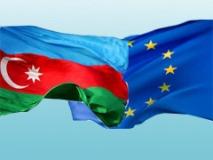
BAKU - The European Union and Azerbaijan started the first round of
negotiations in Baku on Friday on an Association Agreement that
will pave the way for a broader partnership between the EU and the
South Caucasus country.
The Azerbaijani negotiator, Deputy Foreign Minister Mahmud Mammadguliyev said while addressing the first plenary meeting that signing of this agreement is the next and major step toward expanding Baku’s relationship with the 27-member bloc. He reminded that in 1995 Azerbaijan and the EU signed an agreement on partnership and cooperation.
"This agreement has already fulfilled its purposes. Now, a new legal document - an Association Agreement – is to be signed in its place," Mammadguliyev said.
The deputy minister said the EU is capable of contributing to restored peace in the region, fostering stability and facilitating a settlement to the Armenia-Azerbaijan conflict, and these issues will be reflected in the Association Agreement.
The EU has put forth certain demands to Azerbaijan, mainly with regard to bringing national legislation into compliance with European standards. For instance, the bloc has called for drafting a document on combating organized crime, corruption and money laundering. Baku has already prepared the document and put it through domestic procedures, and is expected to submit it to the EU in the near future.
The head of the EU’s negotiating team, John Kjaer, said the conclusion of the Association Agreement indicates the EU’s interest in deepening its relations with Azerbaijan and the entire region.
"Since last year we have been placing a special emphasis on forging close relations with our eastern partners," Kjaer said. "We will be paying attention to rapprochement, with a focus on democracy, respect for human rights and market economy issues. A number of sides and institutions are to be involved in this process, and much work has to be done. I am confident that the best job can be done based on mutual confidence."
Deputy Minister Mammadguliyev told a news conference following the meeting that negotiations on the Association Agreement will be held in four key areas. These include political dialogue, including issues on foreign policy and security; justice, including human rights protection; economic issues; and trade.
According to Mammadguliyev, the next round of talks will be held in Brussels in October, to be followed by a meeting in Baku in December. In addition to the meetings, video-conferences are to be organized.
Kjaer, for his part, said Azerbaijan’s economic growth and stability in the country were remarkable. He said the Association Agreement aims to achieve closer political association and gradual economic integration between the EU and Azerbaijan. "This legal document will give new incentives and ensure long-term stability for Azerbaijan."
Kjaer went on to say that that the Association Agreement envisions simplifying visa regulations with Azerbaijan, with a focus on reducing time for visa issuance and its cost.
"Certain technical points need to be discussed here…This issue should be in the best shape possible, and I hope that once a visa facilitation agreement has been signed as part of the document, people will be able to receive visas more easily."
The EU official also said that during talks on Association Agreements with the South Caucasus states, the same attention will be paid to Azerbaijan, Georgia and Armenia, and the EU has made the same proposals to each of the three countries.
Arastun Orujlu, the head of East-West Research Center, says the Association Agreement is the next and pivotal stage in Azerbaijan’s many-year-long cooperation with the EU. He explained that following its signing, Azerbaijan’s EU membership will actually begin to be discerned. "Therefore, in principle this is a very nice initiative," the analyst said.
Along with Azerbaijan, the EU has embarked on Association Agreement talks with Georgia and Armenia. Talks with Georgia started in Batumi on Thursday.
Attending the Batumi event, the European Commission Vice President Catherine Ashton pointed out that Armenia, Azerbaijan and Georgia "have shown a clear ambition to intensify their relationships with the EU". Ashton expressed confidence that this comprehensive Association Agreement "shall impact positively" not just on political relations but also on people's lives, in terms of economic opportunities, easier contacts with people from the EU, the environment, and bring other benefits.
"This agreement will be a catalyst to the domestic reforms in these countries and can help us to focus resources on the key institutions needed to make further efforts," Ashton added.
The EU is currently negotiating similar Association Agreements with Ukraine and Moldova.
The European Neighborhood Policy governs the relations between the EU and its southern and eastern neighbors. In 2009 the EU launched the Eastern Partnership, the Eastern dimension of the ENP framework, aiming at substantially upgrading engagement with the six Eastern neighbors. The bloc aims to accomplish the goal by such initiatives as the establishing of Association Agreements with free trade areas, once conditions have been met, as well as progress on visa and mobility issues.*
Here we are to serve you with news right now. It does not cost much, but worth your attention.
Choose to support open, independent, quality journalism and subscribe on a monthly basis.
By subscribing to our online newspaper, you can have full digital access to all news, analysis, and much more.
Subscribe
You can also follow AzerNEWS on Twitter @AzerNewsAz or Facebook @AzerNewsNewspaper
Thank you!