
Azerbaijan, Cuba to sign slew of co-op deals
Azerbaijan and Cuba are expected to sign up to ten
cooperation agreements covering various fields, according to the
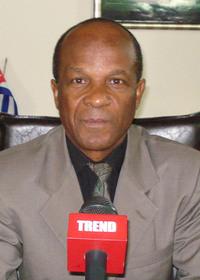
Cuban Ambassador in Baku, Marcelo Caballero Torres.
Torres told a news conference that the documents will deal with economic, humanitarian and other areas, including trade, sports, education, agriculture, and communications. The papers are scheduled to be signed at a meeting of the intergovernmental commission on economic cooperation, scheduled in Cuba in March 2010.
The ambassador said the agreement on sports collaboration would be concluded during Azerbaijani Youth and Sports Minister Azad Rahimov’s visit to his country, scheduled for November 25-30.
The Days of Azerbaijani Culture will be organized as part of the commission meeting. Up to 60 representatives of culture and art will head to Cuba to take part in the events. During the visit, they will familiarize Cubans with Azerbaijani art and, in particular, with the national folk music, Mugham.
The Days of Cuban Culture will take place as part of an intergovernmental commission meeting to be held in Baku in 2011.
Torres said Cuba was also interested in energy cooperation with Azerbaijan, noting that a working group has been set up for the purpose. He emphasized that 70 percent of oil field equipment used in Cuba’s energy sector was manufactured in Azerbaijan.
The ambassador noted that there is currently no direct turnover between Cuba and Azerbaijan, and Cuban goods are mainly delivered to Azerbaijan through other countries. "I hope the signing of bilateral agreements will positively affect the development of trade between our countries."
Torres went on to say that on October 28, the UN General Assembly will discuss a draft resolution condemning Cuba’s blockade. The document points out the need for ending what the country deems as economic, trade and financial blockade imposed by the United States. According to the ambassador, a new situation has emerged between the US administration and Cuba, and tension that existed during the Bush administration has now subsided.
"Though we doubt US President Barack Obama will be able to alter the whole system on his own, we are looking to the future with optimism," Torres added.
Here we are to serve you with news right now. It does not cost much, but worth your attention.
Choose to support open, independent, quality journalism and subscribe on a monthly basis.
By subscribing to our online newspaper, you can have full digital access to all news, analysis, and much more.
Subscribe
You can also follow AzerNEWS on Twitter @AzerNewsAz or Facebook @AzerNewsNewspaper
Thank you!