
PACE's winter session gets under way
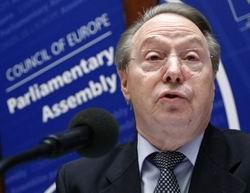
The winter session of the Parliamentary Assembly of the Council of
Europe (PACE) started in Strasbourg on Monday.
A group of MPs led by the head of the Azerbaijani delegation at the assembly, chairman of the parliamentary commission on international and inter-parliamentary relations, Samad Seyidov, is attending the discussions to last till Friday.
At the opening of the session, PACE elected Lluis Maria de Puig of Spain as its new president.
"You have just elected a president who believes in Europe, and who believes in the Council of Europe," he declared in his first speech as president of the assembly. "I am a convinced European and I regard the future of our institutions with optimism. I want to make a citizens' Europe the watchword of my term in office. I believe that the Assembly's task is to help shape a Europe which is being built for Europeans and by them."
He stressed his intention of forging closer ties with the other players on the European political scene, and particularly the European Union. "I know that institution well, and am convinced that the EU should make better use of the Council of Europe's experience, know-how and instruments."
A historian and politician, the 63-year-old de Puig has been a member of PACE since his country joined the Council of Europe in 1983. He has served as Chair of the Committee on Culture, Science and Education and the Socialist Group since 2004.
The head of the Azerbaijani delegation Seyidov was elected the assembly's vice-president.
The participants also heard a report on the work done by the assembly's bureau and permanent committee. Discussions kicked off on a wide range of issues, including the election of judges to the European Court of Human Rights, the future status of Kosovo, progress in the implementation of commitments by the CE member states, global warming and environmental catastrophes.
The long-lasting Armenia-Azerbaijan Upper (Nagorno) Garabagh conflict will be raised during the session. The PACE's relevant subcommittee will discuss conflict resolution efforts made so far and future steps. Azerbaijani members of PACE will submit documents to the European lawmakers concerning the Armenian aggression against Azerbaijan, the arsons committed by Armenians and the destruction of cultural and historical monuments in the occupied territories of Azerbaijan.
Azerbaijani MP Gultakin Hajiyeva said earlier there were challenges in proving the mentioned facts, as the occupied Upper Garabagh region and adjacent districts are not under the control of the Azerbaijani side that is trying to back up its fair cause through video materials at hand.
The PACE passed a resolution on Garabagh in January 2005 whereby it confirmed that Armenia occupies Azerbaijani districts and made proposals on the conflict resolution. The organization then set up a subcommittee to oversee the enforcement of the document. The papers to be distributed at the session by the Azerbaijani representatives include demands that the CE ratchet up pressure on Armenia to honor Resolution 1416.
Armenia has been occupying over 20% of Azerbaijan's internationally-recognized territory since the early 1990s, in defiance of international law. The ceasefire accord was signed in 1994, but peace talks have been fruitless so far and refugees remain stranded.
Here we are to serve you with news right now. It does not cost much, but worth your attention.
Choose to support open, independent, quality journalism and subscribe on a monthly basis.
By subscribing to our online newspaper, you can have full digital access to all news, analysis, and much more.
Subscribe
You can also follow AzerNEWS on Twitter @AzerNewsAz or Facebook @AzerNewsNewspaper
Thank you!