
Azerbaijan’s non-oil industry continues to grow [UPDATE]
By Sara Israfilbayova
Azerbaijan’s non-oil industry grew by 10 percent in January-March 2018.
Azerbaijani Economy Minister Shahin Mustafayev made the remarks in Baku on May 25 at the conference dedicated to the Day of Entrepreneurs.
“The non-oil export volume increased by 35 percent in January-March 2018. As for the figures over the past 15 years, Azerbaijan’s economy has grown by 3.2 times. Entrepreneurs, especially representatives of the non-oil sector, play a key role here,” adding that the figure for 2017 was 3.7 percent.
“The number of business entities increased fourfold in January-March 2018, the number of legal entities increased by more than twice, while the number of individuals increased by five times,” Mustafayev said. “Moreover, 75 percent accounts for the private sector in the employment structure."
The minister stressed that Azerbaijan attaches great importance to the development of entrepreneurship.
“Entrepreneurs are provided with concessional loans. The number of licenses, necessary to do business, has been reduced. Industrial parks, agricultural parks, business incubators are created. Business forums are held. Export delegations are organized. Mechanisms for encouraging investments and exports have been created. Reforms are carried out in the tax and customs systems to stimulate entrepreneurship.”
In turn, Azerbaijani Minister of Taxes Mikayil Jabbarov noted that Azerbaijan will reduce tax burden on representatives of small and medium-sized enterprises (SMEs).
The minister noted that extensive work is underway in this direction with Azerbaijan’s Agency for the Development of SMEs.
“Most of the amendments to the Tax Code are aimed at reducing the tax burden for micro and small businesses, and we continue to believe that this will have a positive impact on the development of this segment of the business,” Jabbarov said.
Referring to other changes to the code, the minister noted that another direction of changes will be the restoration of tax accounting. In addition, he said, it is planned to tighten up measures for systematic tax violations.
He went on to say that Azerbaijan may introduce a unified tax on salary, adding this issue is being discussed as part of amendments to Azerbaijan’s Tax Code.
“This issue is very important for all taxpayers,” Jabbarov said. “This step is aimed at reducing the tax burden and facilitating the taxation of salaries. The unified tax will be applied to salary and its rate will be substantially lower than that in the current legislation.”
The minister stressed that this step will also have an impact on the fight against informal employment.
“This reform helps reduce the level of informal employment, and stimulates the declaration of real salaries,” Jabbarov said.
Presently, the maximum income tax rate in Azerbaijan is 25 percent, and the maximum limit of monthly income taxed at a rate of 14 percent is 2,500 manats ($1,400). At the same time, the annual income of individuals (not engaged in entrepreneurial activity) taxed at a rate of 14 percent is 30,000 manats ($17,600).
If the monthly salary exceeds 2,500 manats ($1,400), the income tax is calculated as follows: 350 manats ($205) (14 percent tax on 2,500 manats-$1,400) plus 25 percent tax levied on the amount exceeding 2,500 manats ($1,400). The annual income exceeding 30,000 manats ($17,600) is taxed as follows: 4,200 manats-$2,400 (14 percent tax on 30,000 manats-$17,600) plus 25 percent tax levied on the amount exceeding 30,000 manats ($17,600).
This is while a 20 percent tax is levied on taxable income of individuals engaged in entrepreneurial activity without the creation of a legal entity.
Taking his turn, the country’s Agriculture Minister Inam Karimov underlined that state subsidies to agriculture have almost doubled in Azerbaijan for the past eight years, adding that the scope of subsidies has also been expanded, the structure of subsidies has been improved, up to the final product.
“The amount of some subsidies has increased 3-5 times in recent years,” according to the minister.
The Minister also noted that the volume of production of agricultural products in Azerbaijan in 2017 compared to the previous year increased by 4.1 percent, and for the first quarter of 2018 by 2.4 percent.
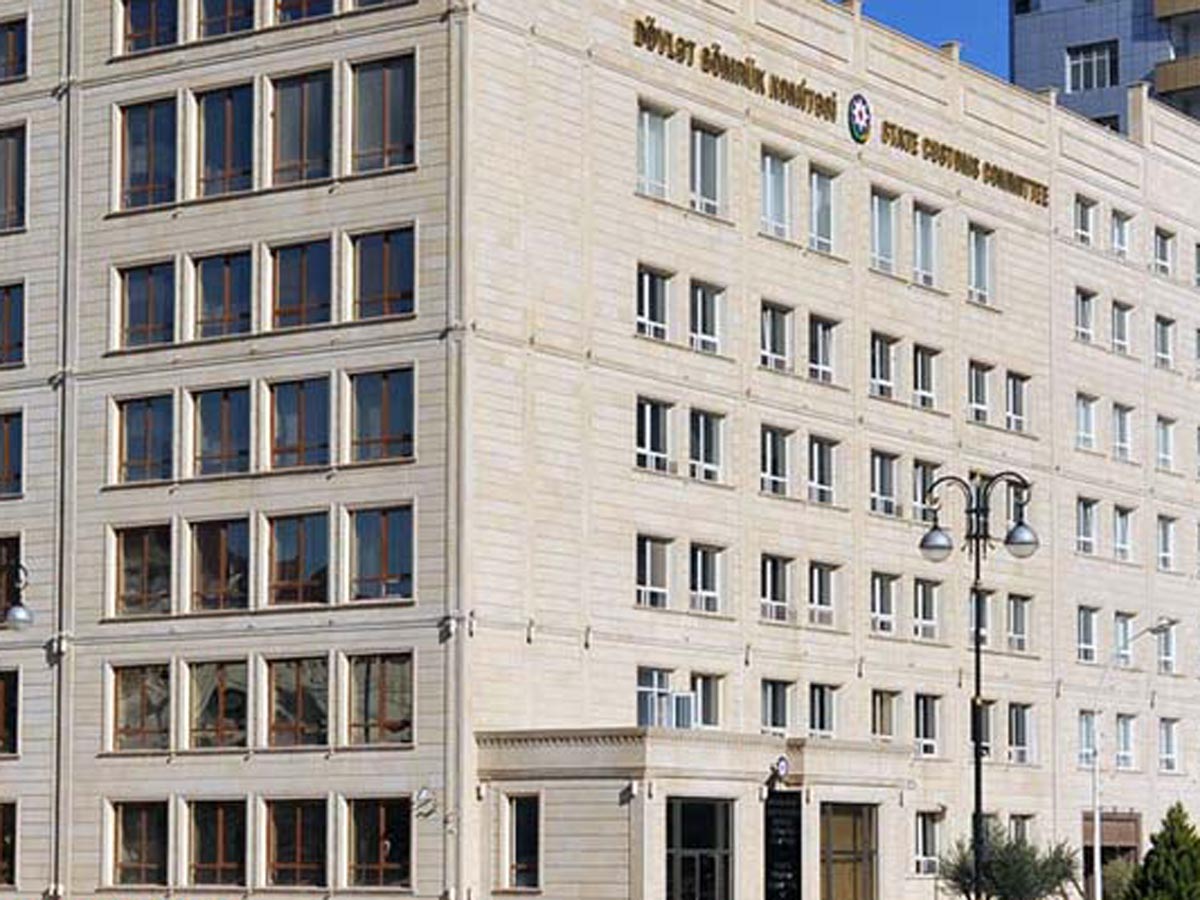
Addressing the event Azerbaijan’s State Customs Committee’s Chairman Safar Mehdiyev stated that the Committee will continue simplification of the customs declaration process.
In the near future, the committee will launch a new system of alerting entrepreneurs about the goods’ border crossing process, he noted.
Executive Director of Azerbaijan’s Agency for Development of SMEs Orkhan Mammadov, in turn, emphasized that all services to support entrepreneurship in Azerbaijan will be united within a single body – houses of Small and Medium-sized Enterprises (SMEs).
The international experience shows that the delivery of services to SMEs by a united body on a single window principle, along with positive results, allows to provide higher quality services, he noted.
“Given these factors, the Agency plans to create SME houses in Azerbaijani districts and cities. The main goal of this step, along with meeting the needs of entrepreneurs, is to achieve efficiency, transparency and convenience,” he stressed.
---
Sara Israfilbayova is AzerNews’ staff journalist, follow her on Twitter: @Sara_999Is
Follow us on Twitter @AzerNewsAz
Here we are to serve you with news right now. It does not cost much, but worth your attention.
Choose to support open, independent, quality journalism and subscribe on a monthly basis.
By subscribing to our online newspaper, you can have full digital access to all news, analysis, and much more.
You can also follow AzerNEWS on Twitter @AzerNewsAz or Facebook @AzerNewsNewspaper
Thank you!