
Correcting data in Iran's Rouhani administration
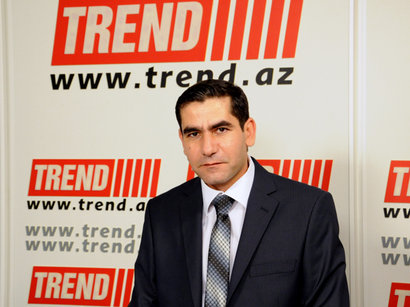
By Dalga Khatinoglu
Head of Persian News Service of Trend Agency
Experts of the International Monetary Fund have come to Iran after two years in order to reassess the country's economic indices.
In September 2011, the IMF corrected its previously projected data about Iran's economic outlook in an unexpected and unprecedented way. It changed Iran's economic growth rate for 2011 from zero percent to 2.4 percent instantly.
The index had been forecasted at -0.9 percent for 2012. The IMF report had also predicted a positive outlook for Iran's economy after removing cash subsidy payments. However, the report was seriously questioned by experts both inside and outside Iran. Current statistics show that the IMF projection was not correct.
The international organization has not sent any expert delegation to Iran during the past two years. The existing statistics of the IMF about Iran's economic growth rate are obviously different from data which has been announced by the Rouhani administration. Of course, the IMF is not presiding over economies of its member states. It issues reports mostly based on data which are provided by the member countries.
During his election campaigns, Hassan Rouhani had emphasized the need to avoid concealing realities about the national economy. The administration of former president Mahmoud Ahmadinejad had put the annual economic growth rate at 2.4 percent in the past Iranian calendar year (March 2012-March 2013). But, in the first month of the new government's incumbency (August 2013), the Central Bank of Iran announced that the national economy contracted by 5.8 percent last year. It put the current year's economic growth rate at zero percent.
The Ahmadinejad administration's unreal data announcement to international bodies, which is not confined to the IMF, misled national officials in planning to solve economic problems. It also deprived the country of consultation by international organizations.
For instance, the IMF provides countries with economic consultation in order to help them improve national economies. The fact that the IMF did not send any delegation to Iran last year is probably due to unreal data which had been published by the Ahmadinejad administration. The September 2011 report of the IMF about Iran's economic outlook and the real situation in the country were so poles apart that it can be referred to as a 'scandal'.
Iran presented OPEC with unrealistic data about its monthly oil
output for 18 months during Mahmoud Ahmadinejad's presidency. Based
on the last report of Ahmadinejad's administration, the country's
oil output in the second quarter of 2013 was surprisingly more than
the same period in 2011 (before the sanctions).
Iranian oil ministry's reports to OPEC, released under the name of
"direct dialogues" show that the country's oil output was around
3.628 million barrels per day in 2011, and reached 3.711 million
barrels per day in the second quarter of 2013. It is while OPEC's
estimation of Iran's oil production in the mentioned period in 2013
is about one million liters less than the mentioned amount. Iran's
current officials' remarks now approve OPEC's report.
Also in the agriculture sector, Food and Agriculture Organization
of the United Nations (FAO) has based its statistics on the Iranian
government's reports. FAO's report suggests that Iran's wheat
production was 14 million tons in the previous year.
Iran's domestic wheat consumption is just 12.5 million tons per
year. So, based on FAO's report the country didn't need to import
any wheat. However, based on Iran's Customs Administration's
official statistics, the country imported 6.7 million tons of wheat
in the previous year. Tehran also plans to import 7 million tons of
wheat in the current year.
Isa Kalantari, the secretary general of Iran's House of Farmers,
said last week that Ahmadinejad's administration submitted false
reports to the FAO. According to Kalantari, Iran produced seven
million tons of wheat in the previous year, but the administration
raised the figure to 14 million tons in its report to the FAO.
Here we are to serve you with news right now. It does not cost much, but worth your attention.
Choose to support open, independent, quality journalism and subscribe on a monthly basis.
By subscribing to our online newspaper, you can have full digital access to all news, analysis, and much more.
You can also follow AzerNEWS on Twitter @AzerNewsAz or Facebook @AzerNewsNewspaper
Thank you!