
Great Return enters new phase as focus shifts to jobs and growth

Elnur Enveroglu
Read moreOnce, it was difficult to imagine that regions which had witnessed tragedy and remained trapped in stagnation for years due to conflict would ever experience revival. However, if one reflects on the philosophical notion that "impossibility is nothing", there is indeed reason to believe that even the most challenging transformations can become reality.
Today, Baku’s vision for the lands reclaimed from decades of conflict rests on a calculated reckoning: that sustainable peace can be built through intensive farming, infrastructure, and top-down economic integration.
For decades, the landscapes of Aghdara and Khojaly were defined by the frozen lines of one of Eurasia’s most intractable conflicts. Today, however, the soundtrack of artillery has been replaced by the hum of agricultural machinery. A high-level delegation from Baku, which was led by Samir Nuriyev, Head of the Presidential Administration, swept through these territories this week. And the message was clear that Azerbaijan is moving swiftly from military victory to economic consolidation.
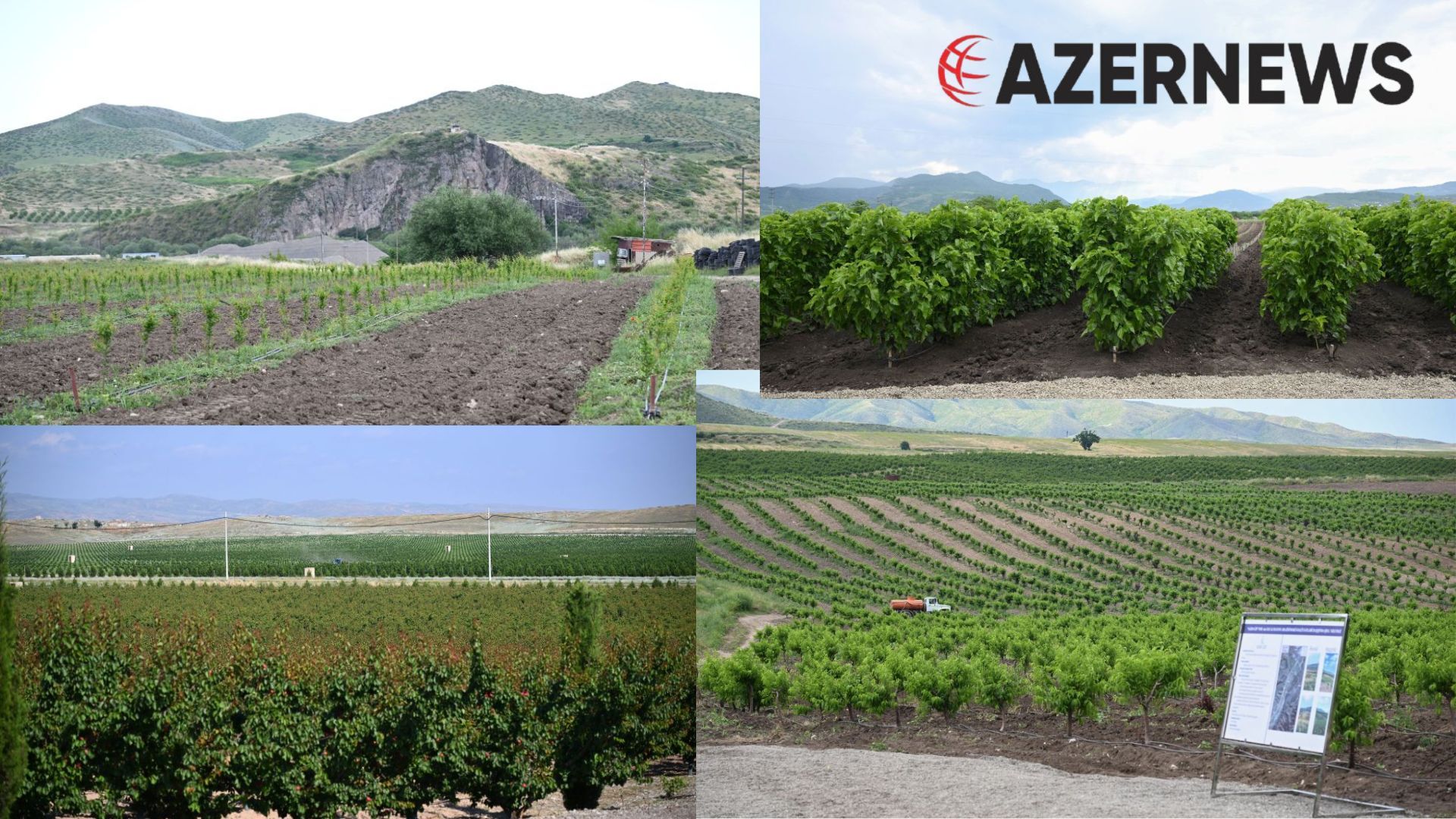
This transition is encapsulated by the "Great Return," an ambitious national strategy aimed at resettling hundreds of thousands of internally displaced persons (IDPs) who were forced from their homes in the 1990s. But as the delegation’s itinerary demonstrates, ranging from the intensive fruit orchards of Frutti Agro LLC in Chayli to the livestock complexes of Khanabad, Baku’s strategy is not merely about rebuilding homes. It is about the rapid, state-directed insertion of modern agrarian capitalism into a region effectively cut off from the global economy for thirty years.
There is a distinct, technocratic determinism to how Azerbaijan is approaching this reconstruction. In Aghdara, officials declared that the first phase of the Great Return is nearing completion, with a second state program already on the drawing board. The focus has shifted from primary demining and foundational infrastructure to economic sustainability. The state’s logic is pragmatic: people will only return and stay if there are jobs. By intertwining the resettlement program with the country's broader 2026–2030 agricultural strategy, the government is attempting to transform Garabagh into a highly efficient food basket, eyeing both domestic security and lucrative export markets.
However, underneath the optimism of pristine mulberry plantations in Dashbulag and high-tech horticulture farms lie significant structural challenges. The success of this massive resettlement hinges on an environmental gamble. The South Caucasus is acutely vulnerable to climate change, and the delegation’s focus on "water security" and "modern management of water resources" is an acknowledgment of a harsh reality. The region’s rivers and reservoirs must now support intensive farming and a surging civilian population simultaneously.
Moreover, for the thousands of families waiting to return, the transition from urban hubs back to rural agrarian life will require more than just corporate partnerships with companies like "Fruit Valley" or "Goch Et." It will require robust social institutions, genuine community integration, and long-term vocational retraining.
What is happening in Garabagh is a fascinating case study in post-conflict state-building. Azerbaijan is using its economic leverage to fast-track these territories into the national fold, attempting to create an irreversible reality on the ground through economic development. If Baku succeeds in creating a self-sustaining, ecologically viable economy in places like Khojaly and Aghdara, it will set a powerful precedent for how nations rebuild after protracted strife. But if the infrastructure outpaces the actual social and ecological capacity of the land, the "Great Return" may find its grandest ambitions deferred by the quiet realities of the soil.
Here we are to serve you with news right now. It does not cost much, but worth your attention.
Choose to support open, independent, quality journalism and subscribe on a monthly basis.
By subscribing to our online newspaper, you can have full digital access to all news, analysis, and much more.
You can also follow AzerNEWS on Twitter @AzerNewsAz or Facebook @AzerNewsNewspaper
Thank you!