
How Azerbaijan is cutting China–Europe transit times through Middle Corridor

AzerNEWS Staff
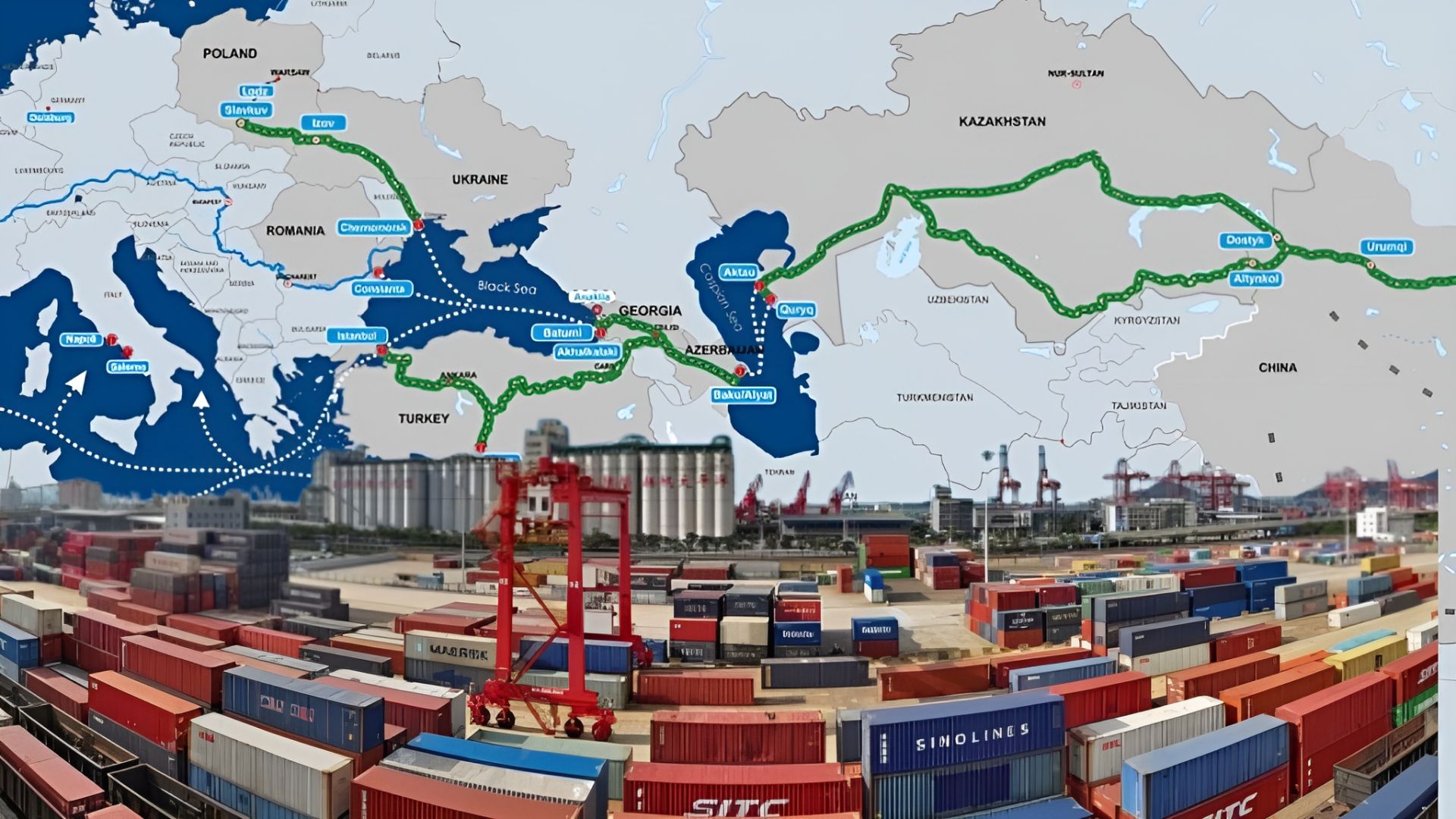
Read moreAzerbaijan is increasingly demonstrating that its economic relevance extends well beyond oil and gas. Historically positioned at the crossroads of East and West, the country has long functioned as a natural transit hub. Today, however, Azerbaijan is transforming this inherited geographic advantage into a strategic economic asset through the development of the Middle Corridor, officially known as the Trans-Caspian International Transport Route (TITR). As global supply chains face prolonged disruptions, geopolitical risks, and congestion along traditional routes, the Middle Corridor is emerging as a competitive alternative - defined not only by geography, but by speed, reliability, and institutional coordination.
Recent operational data underline a key trend: reduced transit time is rapidly becoming the corridor’s strongest value proposition. According to Wang Sui Dun, Managing Director of Beijing Cross-Eurasia International Logistics, the average delivery time for cargo transported via the Xi’an–Baku railway route fell to 16 days in January 2026, down from 17 days in December 2025. While a one-day reduction may appear marginal, in logistics terms it represents a meaningful efficiency gain - particularly for time-sensitive and high-value cargo. Faster transit reduces inventory holding costs, improves supply chain predictability, and enhances the overall competitiveness of the route vis-à-vis maritime transport.
The operational intensity of the corridor is also increasing. Eight freight trains were dispatched on the Xi’an–Baku route in January 2026, compared to eleven in December 2025, reflecting both seasonal fluctuations and ongoing optimization of schedules. Since the launch of regular container train services on the Middle Corridor in 2019, traffic has grown steadily, with more than 400 train runs recorded in 2025 alone. The launch of a new service from Beijing on 30 June 2025 further expanded the corridor’s geographic reach, reinforcing Azerbaijan’s role as a pivotal Eurasian logistics node.
Infrastructure investment has been a decisive factor behind these gains. The modernization of the Baku–Tbilisi–Kars (BTK) railway in 2024 increased annual throughput capacity from 1 million tonnes to 5 million tonnes, significantly reducing bottlenecks along one of the corridor’s most critical segments. Equally important is the growing institutional integration along the route. In August 2024, China Railway and Container Shipping Corporation (CRCT) joined the joint venture “Middle Corridor Multimodal Ltd,” signaling stronger coordination between rail, maritime, and logistics operators. This institutional consolidation has translated into measurable results: in early 2026, the first train of the year arrived in Baku with a reported transit time of just 11 days—approaching levels that position the Middle Corridor as a serious competitor to northern routes.
Yet, the corridor’s future success will depend not only on steel and concrete, but also on regulatory efficiency. According to forecasts by the International Road Transport Union (IRU), freight volumes along the Middle Corridor could triple by 2030. However, without decisive modernization of border-crossing procedures, customs digitalization, and harmonized documentation, actual volumes could fall up to 35% short of their potential. This gap highlights a critical reality: in modern logistics, institutional efficiency is as vital as physical infrastructure. Delays at borders can easily erase gains achieved through faster rail and port operations.
The growing strategic relevance of the Middle Corridor is also reshaping trade patterns. Whereas earlier cargo flows were dominated by raw materials such as oil and minerals, containerized freight is now expanding rapidly. Over the past 12 months, container volumes along the corridor have more than tripled, with over 60% consisting of Chinese exports destined for European markets. This shift reflects deeper integration into global value chains and underscores the corridor’s role not merely as a transit route, but as a facilitator of diversified trade.
In this context, Azerbaijan’s role extends beyond that of a transit country. By reducing transit time, expanding capacity, and strengthening institutional cooperation, the country is positioning itself as a key architect of a more resilient and multipolar Eurasian logistics architecture. As global trade increasingly prioritizes speed, security, and diversification, the Middle Corridor’s evolving efficiency may prove to be its most decisive competitive advantage.
Here we are to serve you with news right now. It does not cost much, but worth your attention.
Choose to support open, independent, quality journalism and subscribe on a monthly basis.
By subscribing to our online newspaper, you can have full digital access to all news, analysis, and much more.
You can also follow AzerNEWS on Twitter @AzerNewsAz or Facebook @AzerNewsNewspaper
Thank you!