
In shadow of regional war, South Caucasus turns to cooperation

Akbar Novruz
Read moreThree years ago, the idea of Azerbaijan, Armenia, and Georgia building a common regional home seemed a noble wish - admirable in concept, impossibly remote in practice. Indeed, the concept of the “South Caucasus House” in the context of the visionary ideas of prominent Azerbaijani writer and philosopher Mirza Fatali Akhundov streching back to the 19th century, when referring to the historical attempt to establish the short-lived South Caucasus Sejm in 1917, which ceased to exist within months since its establishment, and finally the declaration issued in 1996 by Heydar Aliyev and Eduard Shevardnadze, that gestured toward a common regional destiny. Conceivably, the concept had a habit of coming back like a boomerang defeated by politics.
In the past two years, the South Caucasus has undergone changes that no analyst had reliably forecast. Indeed, the peace accord signed between Armenia and Azerbaijan in the White House in August 2025, marking the end of the conflict, which had been going on for more than thirty years, was unprecedented in every possible way, as it represented the first time that there were positive relations between the three states in the region since their gaining independence after the dissolution of the USSR. Georgia and Azerbaijan have always had close and good relations. Now, it is time for the third vertex of that triangle, Armenia-Azerbaijan relations, to change from hostile to positive dynamics, albeit rather fragile.
Since the lifting of Azerbaijan's transit restrictions in late 2025, Russian grain and Azerbaijani fuel have been arriving in Armenia via Azerbaijani railways, over 10,000 tons of oil products and more than 22,000 tons of grain since January 2026 alone. They are the infrastructure of economic peace. It was done not by statesmen and their declarations but by logistics directors and railway operators who were previously unable to do it.
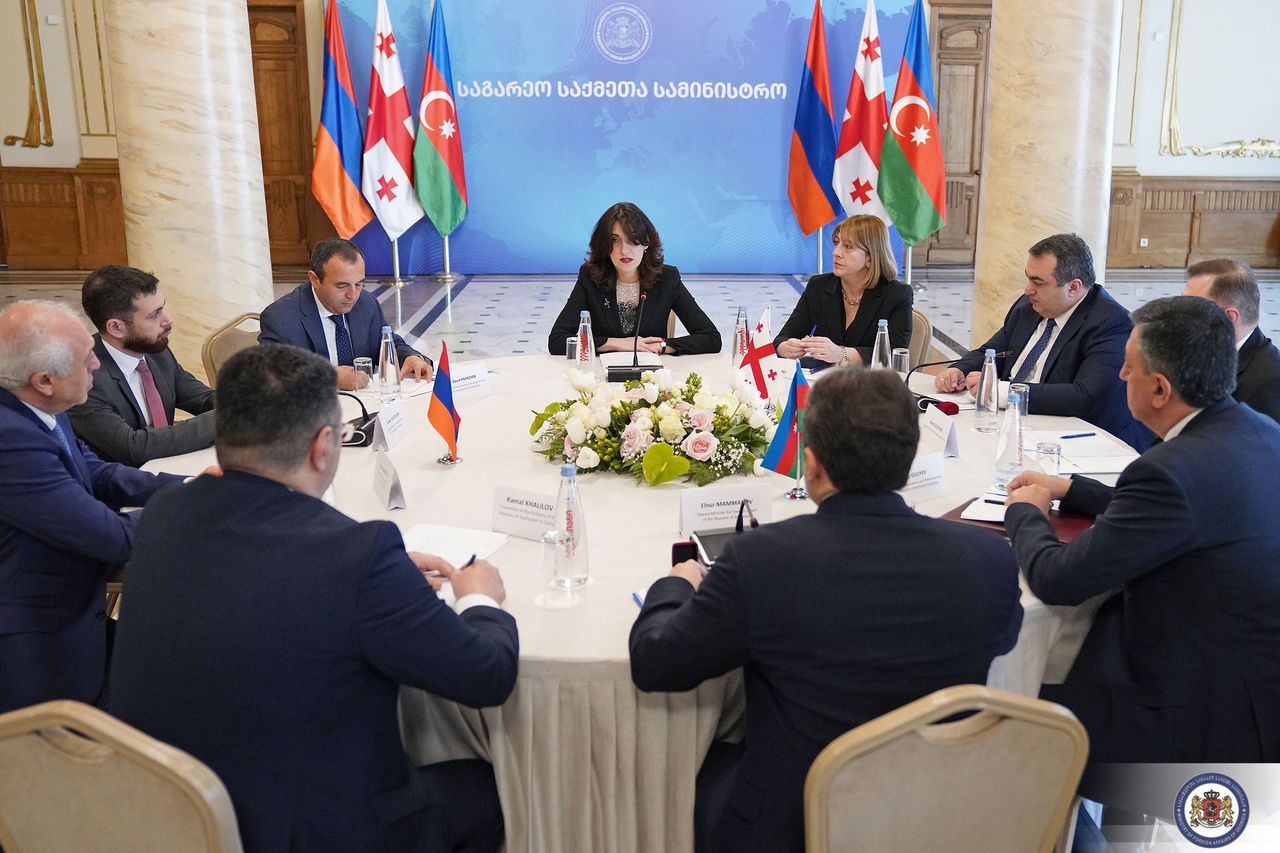
Georgia hosted a trilateral deputy foreign minister-level conference between Armenia and Azerbaijan in April 2025 - a process intended to let the three South Caucasus countries assume their role as a "trilateral agency" for the very first time. Although no startling announcements were made in the Tbilisi talks, the fact remains that such talks have taken place. Just two or three years ago, this would have been almost unattainable, yet impossible, in previous years. Gradually, the region is beginning to learn how to express itself without a third party’s intervention.
This new arrangement was just one more example that shows how the states of the South Caucasus are changing their foreign policy approaches and trying to make themselves independent as decision makers within the region.
One might wonder what is meant by "one more example."
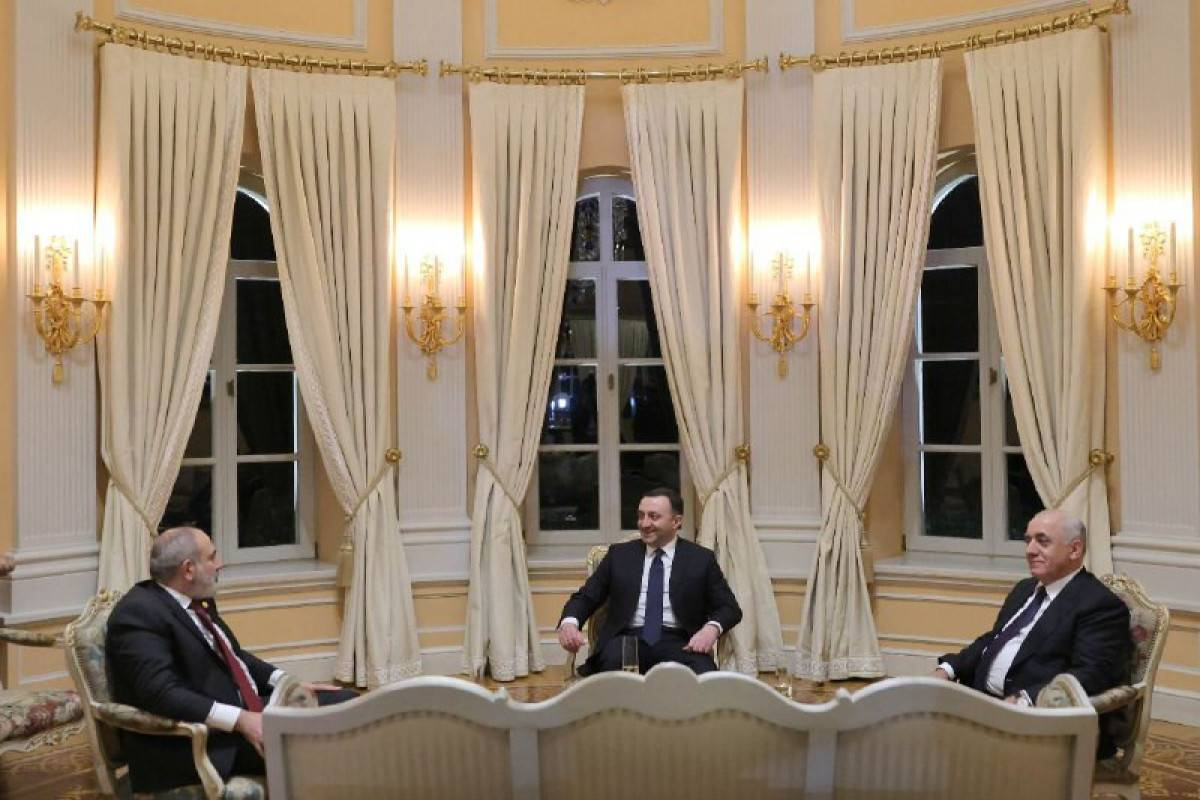
Well, back in October 2023, the prime ministers of Azerbaijan, Armenia, and Georgia had once met in Georgia. During this meeting, former Prime Minister Garibashvili emphasized that Georgia, as an impartial mediator and a friend to both Armenia and Azerbaijan, is committed to fostering peace in the region. Notably, this statement was made just one month after the anti-terrorist measures taken in Karabakh in 2023.
Given its strategic importance, the "Caucasus House" concept has the potential to evolve into an organization focused on the security and cooperation of the peoples of Azerbaijan, Georgia, and the North Caucasus.
Long road to this moment
1917 - South Caucasus Sejm established, the first attempt at a common regional parliament. Dissolved within months, partly due to irreconcilable positions on Armenia's role.
1996 - Heydar Aliyev and Eduard Shevardnadze sign a joint declaration in Tbilisi - the first practical step toward the "Common Caucasian House." Armenia's ongoing occupation of Azerbaijani territories stalls implementation.
2023 - Azerbaijan restores sovereignty over Karabakh. The final military chapter closes; the diplomatic one begins.
April 2025 - Georgia hosts the first trilateral meeting of Armenian, Azerbaijani, and Georgian deputy foreign ministers, a new format for direct regional dialogue without external mediation.
August 2025 - Armenia and Azerbaijan sign an initial peace agreement at the White House. For the first time in independent history, all three South Caucasus states are simultaneously in positive bilateral relations.
Since January 2026 - Azerbaijani fuel and Russian grain have been arriving in Armenia via Azerbaijani railways. The Iran war underscores the strategic logic of regional solidarity.
The situation in Iran has now tilted the equation in such a way that it was unlikely to be achieved by diplomacy alone. While the South Caucasus finds itself right above a region embroiled in conflict, whose effects have seen drone flights across the border into Azerbaijan, refugees crossing over to Armenia, and disruption of the energy flows relied upon by all three states for their economic needs. This is more than just an issue that exists in theory.
In such a situation, the “South Caucasus House” is no longer just an idea of solidarity within the region; it becomes a means of survival. An entity acting like a single organism, which can share transport networks, have diversified sources of energy, and keep corridors open, is much better positioned to handle the waves of disturbance coming from its southern neighbours than three nations, with conflicting agendas, sitting right across the border from a war. This survival instinct has already manifested itself in Azerbaijan by becoming a humanitarian corridor for Iran, permitting the transport of Russian assistance, and at the same time developing stronger economic relations with Armenia.
All of this can be undone. Georgia’s politics have yet to become settled matters. An Armenian parliamentary election is due to take place in June 2026, when the fate of the entire peace process will be truly on the line. No formal agreement has yet been concluded by Azerbaijan and Armenia. Russia, for the first time in more than two decades, has relinquished its mediating role in the region, and it has done so reluctantly. We kind of saw this in the recent Pashinyan-Putin talks. For its part, Iran, whose access to both Armenia and the Caucasus has been hindered by this new configuration, has made no secret of its displeasure.
However, something else has now happened which cannot easily be undone. For the very first time, Baku, Tbilisi, and Yerevan are speaking the same language to each other without relying on Moscow, Brussels, or Washington acting as intermediaries. In essence, that is what the "South Caucasus House" project has always been about from its earliest days - the people of the South Caucasus deciding to solve their problems together, accepting their interdependence, and constructing their security architecture without the assistance of any outside power. While it would certainly have been a visionary concept throughout much of the last century, there may finally be an occasion for its realization. This approach will help dispel the perception of isolation among the countries of the region. Since the South Caucasus is often described in geopolitics as a conflict zone, called the "Balkans of the Caucasus," implementing this idea could serve as a model for security and cooperation recognized by the international community. Additionally, it could foster a positive image among neighboring countries. Importantly, this does not imply forming a unified state like the South Caucasus Sejm, but rather enabling the three nations and their peoples to coexist peacefully and securely.
Here we are to serve you with news right now. It does not cost much, but worth your attention.
Choose to support open, independent, quality journalism and subscribe on a monthly basis.
By subscribing to our online newspaper, you can have full digital access to all news, analysis, and much more.
You can also follow AzerNEWS on Twitter @AzerNewsAz or Facebook @AzerNewsNewspaper
Thank you!