
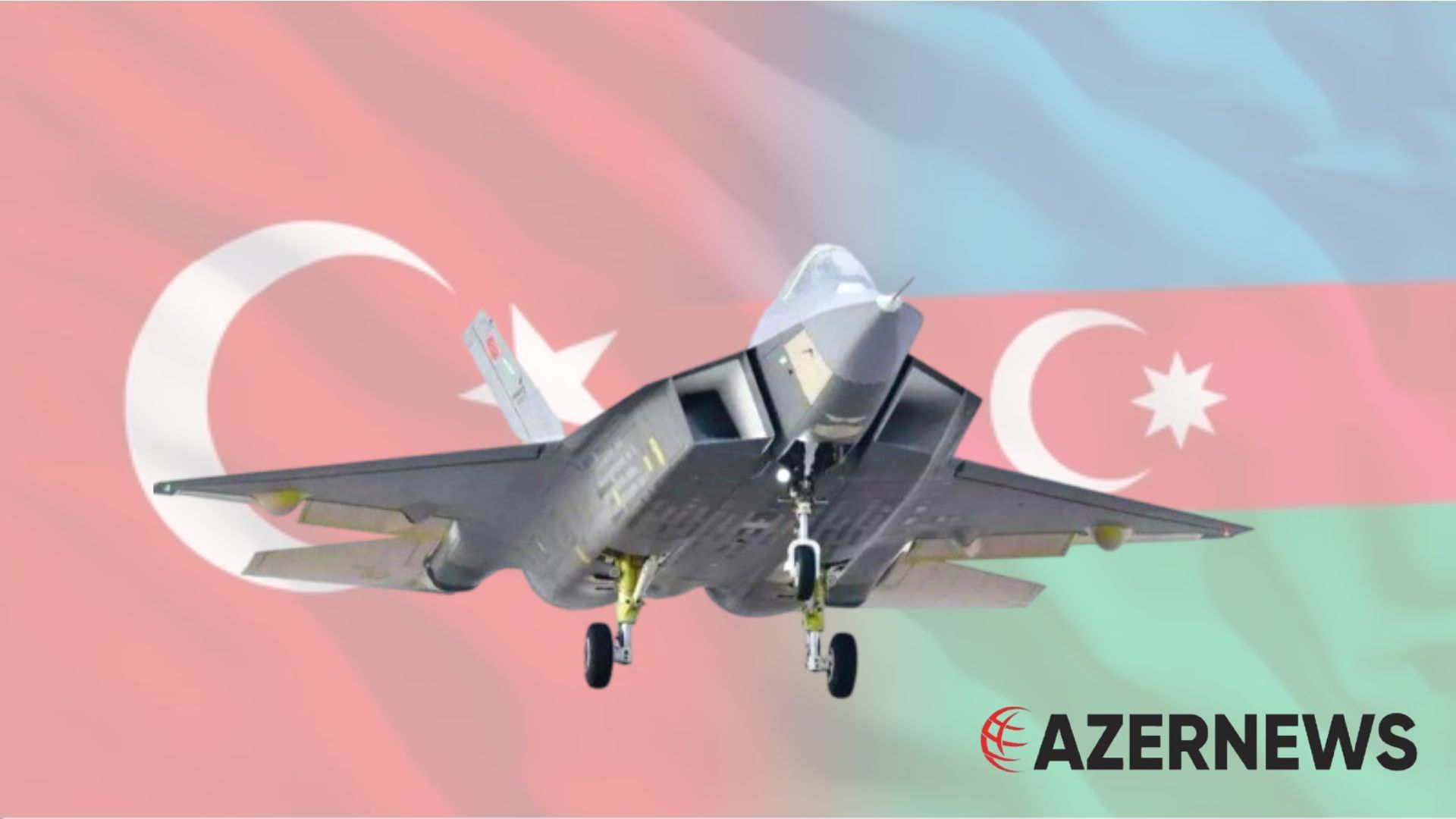
Azerbaijan joins Türkiye’s KAAN programme in shift from oil to aerospace
Qabil Ashirov
Read moreThe emergence of Azerbaijan as a manufacturing hub for components of Turkiye’s most ambitious aerospace projects—the KAAN fifth-generation stealth fighter and the HÜRKUŞ advanced trainer aircraft—marks a definitive departure from the country’s traditional economic and military identity. For decades, Azerbaijan’s regional standing was defined by its role as a reliable energy corridor and a significant purchaser of foreign military hardware. However, the announcement by TUSAŞ (TAI) CEO Mehmet Demiroğlu regarding the localization of component production within Azerbaijani borders signals a transition toward a high-tech industrial future. This shift is not merely a tactical arrangement between allies; it is a profound strategic evolution that offers Azerbaijan transformative benefits in terms of sovereignty, economic diversification, and intellectual capital.
The most immediate and perhaps most critical advantage for Azerbaijan is the drastic enhancement of its strategic autonomy. In the realm of modern warfare, the ability to maintain and repair advanced aerial platforms during a conflict is often as important as the platforms themselves. By integrating into the production chain of the KAAN and HÜRKUŞ, Azerbaijan is effectively building a domestic "life support system" for its future air force. When a nation relies entirely on imported finished goods, it remains vulnerable to supply chain disruptions, political shifts in the exporting country, or international embargoes. By manufacturing core components domestically, Azerbaijan ensures that its defense capabilities are not subject to the whims of external actors. This creates a level of military self-reliance that is rare for a country of its size, providing a psychological and physical deterrent that reshapes the security architecture of the South Caucasus.
Beyond the battlefield, the economic implications of this partnership are revolutionary. Azerbaijan has long sought to cure its "Dutch Disease"—an over-reliance on oil and gas exports—by diversifying its industrial base. The aerospace sector represents the pinnacle of industrial complexity. Establishing facilities to produce components for a fifth-generation jet like the KAAN requires a level of precision, quality control, and advanced material science that is light-years ahead of standard manufacturing. This "aerospace standard" acts as a catalyst for the entire industrial ecosystem. Local companies involved in these projects will be forced to upgrade their machinery, adopt international ISO certifications, and implement digital manufacturing processes. The ripple effect will be felt in non-military sectors; a factory capable of producing aerospace-grade carbon fiber or specialized electronics for a stealth fighter can easily pivot to high-end medical devices, automotive parts, or renewable energy infrastructure. This is how Azerbaijan builds a "knowledge economy"—not through theoretical policy, but through the practical rigors of high-stakes manufacturing.
Furthermore, the "brain drain" has been a perennial challenge for developing nations, where the brightest scientific and engineering minds often seek opportunities in the West or Turkiye due to a lack of high-tech roles at home. The localization of the KAAN and HÜRKUŞ production changes this narrative entirely. It offers Azerbaijani engineers, software developers, and technicians a chance to work on the frontier of global aviation technology without leaving their country. This isn't just about creating jobs; it is about creating high-value, prestigious careers. The intellectual capital generated by working on a 5th-generation stealth platform is immense. These professionals will become the architects of Azerbaijan's future technological landscape, fostering a culture of innovation and research and development (R&D) that could eventually lead to indigenous Azerbaijani aerospace designs.
There is also the significant factor of global market integration. By becoming an official supplier for TUSAŞ, Azerbaijan enters the global arms export market through the back door. As Turkiye markets the KAAN and HÜRKUŞ to international buyers in Asia, Africa, and the Middle East, every sale becomes a win for Azerbaijan. A portion of the revenue from every aircraft sold will flow back into the Azerbaijani economy through the component contracts. This transforms Azerbaijan from a "consumer" of security into a "provider" of the technology that powers it. It grants the country a seat at the table of elite nations capable of contributing to the assembly of complex aerial platforms—a club that includes only a handful of countries globally.
Finally, we must consider the long-term educational impact. Aerospace production requires a synergy between academia and industry. To sustain this manufacturing capability, Azerbaijani universities will need to align their curricula with the needs of the defense industry, leading to a modernization of the national education system. The collaboration between local technical schools and Turkish aerospace giants will facilitate a massive transfer of "know-how" that would otherwise take decades to acquire.
In conclusion, the decision to manufacture KAAN and HÜRKUŞ components in Azerbaijan is a watershed moment. It is a bold statement that the country is ready to move past its status as an energy giant and embrace its destiny as a technological powerhouse. By securing its defense supply chains, cultivating a world-class engineering class, and diversifying its exports into the high-margin aerospace sector, Azerbaijan is not just building parts for a plane; it is building the foundation of a modern, resilient, and truly independent state. The roar of a KAAN engine in the future will not just be a sound of Turkish engineering—it will be a testament to Azerbaijani industrial rebirth.
Here we are to serve you with news right now. It does not cost much, but worth your attention.
Choose to support open, independent, quality journalism and subscribe on a monthly basis.
By subscribing to our online newspaper, you can have full digital access to all news, analysis, and much more.
You can also follow AzerNEWS on Twitter @AzerNewsAz or Facebook @AzerNewsNewspaper
Thank you!