
Baku oil tycoon, great philantropyist, great man
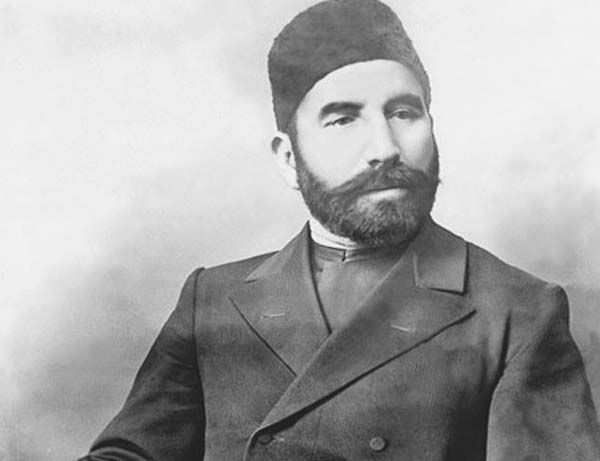
By Aynur Jafarova
The end of the 19th century went down in the history of Azerbaijan as a new era of industrial growth. The oil boom in Baku brought wealth to many people and improved the national welfare.
Baku millionaire Haji Zeynalabdin Taghiyev held a special place among the wealthy people of the 20th century. Born to a poor family of a shoemaker in Icheri Sheher, the old part of Baku, on January 25, 1821 (1838), he had to work to help his father earn a living and learned stone masonry. On a nice day, oil started gushing out and Taghiyev instantaneously became one of the richest men in the Russian Empire.
Well-known chemist Dmitri Mendeleev wrote that Taghiyev was "quite an important" person in Baku's oil industry. He said that Taghiyev was a good example of how one could quickly gain fortune "without any resources but with a clever approach to all operations".
He was a great philanthropist and thoughtful person, who used his wealth for education of youth and progress of his country. Taghiyev attached great importance to the social and cultural life of his nation, sponsoring the construction of the first Azerbaijani national theater in 1883, which was known as Taghiyev's Theater and later became the Azerbaijan State Theater of Musical Comedy. It was the first European-style theater in the Muslim East.
For Taghiyev education was the most necessary thing in the life of a person. He said in his interview with the Teze Heyat (New Life) newspaper of February 12, 1908: "...The one thing that I believe is important for the future is the upbringing and education of my people... Recognizing the necessity of opening schools to educate and raise children and the importance of publishing books and newspapers for the education and development of adults, I attended to these issues and will do so in the future."
Taghiyev was concerned about Muslim women's isolated lives and their unawareness of their rights and wanted them to be educated. He believed that an uneducated woman would also be an uneducated mother. He often asked: What can such a woman give her child? He was certain that an educated girl means an educated mother and an educated family in the future. That is why he sent his daughters Leyla and Sara to receive higher education in Petersburg.
The school for Muslim women built in 1901 was the peak of Taghiyev's support for education in Azerbaijan. He had to spend energy and resources to overcome both the refusal by Czarist authorities on the one hand, and opposition of the local Muslim clergy on the other.
But he could succeed in both cases. First, he promised to name the school after Alexandra Fyodorovna, the wife of the late Russian Czar Nicholas II, and the school took the name "Alexandrian Russian-Muslim Female Boarding School."
To resolve the problem with the clergy, he sent a trusted person
to all the Muslim centers seeking a written certification that the
Holy Quran did not include a single word disallowing women to get
an education.
Yosif Goslavsky, a talented Polish architect, designed the building
of that school. Finally, the Alexandrian Russian-Muslim Female
Boarding School opened its doors for Azerbaijani girls. It was not
only the first secular European-style female school in Azerbaijan,
but also the first one in the whole Muslim world.
The goal of the school was not to develop scientists or stateswomen but to enable women to become intelligent and educated mothers first of all.
The school had an abundant library including the works of Azerbaijani, Russian and foreign classical writers such as Nizami, Fuzuli, Pushkin, Lermontov, Turgenev, Tolstoy, Shakespeare, Byron, Schiller, Moliere, Voltaire, Seyid Azim Shirvani and others. Many magazines, including Molla Nasreddin, were delivered to the library.
During Azerbaijan's early independence years (1918-1920), Taghiyev gave the school building to the Azerbaijan Democratic Republic (ADR) government. Today, this beautiful building houses the Institute of Manuscripts.
Taghiyev also provided scholarships for many Azerbaijani youths who aimed to get higher education in Russian and European universities.
Taghiyev aimed at the development of Baku and helped to maintain many city institutions. He provided financial assistance in creating a horse tramway in Baku.
The people of Baku were suffering from a lack of water supply, and Taghiyev pursued exploration and construction activities to solve this problem. He invited British engineer William Lindley, known for water pipeline construction in Europe, to address the water problem in 1899.
Lindley found water for Baku: it was Shollar water near Guba, northern Azerbaijan. According to Lindley's calculations, this source was enough to provide the city with water. The city's management was doubtful about Lindley's project, but Taghiyev insisted: "Just as Shahdagh (the highest mountain peak in Azerbaijan) will exist forever with its snow and ice, so will Shollar water. As for me, I won't spare the money or the effort. I'll do my best to provide my native city with water, even if I have to spend my entire fortune." Taghiyev achieved his goal and Baku residents' water crisis was resolved.
As a devout Muslim, Taghiyev wished the Quran to be translated into Azerbaijani. But this was opposed by the local clergy who believed that since the content of the Quran was holy no one had the right to translate it. Taghiyev cleverly found a solution to this problem: he sent a mullah envoy to Baghdad who came back with an official permission to translate the Quran. Taghiyev ordered the necessary equipment from Leipzig and sponsored the translation and the publishing of the holy book.
The end of his life was hard as well as his early times: after the invasion of Azerbaijan by Bolshevik Russia in 1920, all of Taghiyev's wealth was confiscated by the state.
Taghiyev was a friend of Molla Abuturab, who was an educated person and akhund (singer of prayers). Taghiyev respected him very much and often followed his advice.
Once on the way to his country house in Mardakan, near Baku,
Taghiyev saw Molla Abuturab in his old horse carriage. He stopped
his cab and invited Molla Abuturab to join him. Taghiyev asked him:
"What do you think? Is it possible that I could ever lose all my
wealth?"
The Molla replied: "Haji, you've made the pilgrimage to Mecca. You
know all about the hardships of life. If God is willing, he can
take away all of your possessions in a split second. So, set your
thoughts on more eternal things."
After the confiscation of his wealth Taghiyev often thought about
the Molla's words. He used to say: "Even his little finger knew
more than my head did. And that's why I want to be buried at the
feet of the Molla."
Taghiyev's heart stopped beating on September 1, 1924. He was buried at the foot of the grave of Molla Abuturab in accordance with his wishes.
People will always remember Taghiyev for his charity endeavors and services. As Azerbaijani President Ilham Aliyev has said, "this personality, who had amassed big wealth thanks to his hard work, made a great contribution to the enlightenment of the Azerbaijani youth".
For his outstanding contributions, Taghiyev was twice awarded the Order of Saint Stanislaus. But the most valuable award for him was the name "Father of the Nation" given by his people.
Here we are to serve you with news right now. It does not cost much, but worth your attention.
Choose to support open, independent, quality journalism and subscribe on a monthly basis.
By subscribing to our online newspaper, you can have full digital access to all news, analysis, and much more.
You can also follow AzerNEWS on Twitter @AzerNewsAz or Facebook @AzerNewsNewspaper
Thank you!