
Azerbaijan to pass anti-smoking law
By Sara Rajabova, AzerNews Staff Writer
The rising percentage of smokers in Azerbaijan has necessitated adopting a smoking restriction law. The bill has been under development at the parliamentary committee on social policy for almost three years.
Deputy chairman of the committee, Musa Guliyev, said the bill was drafted three years ago, but was not submitted to parliament for consideration. In fact, the draft law has been reviewed repeatedly and received positive feedback from relevant committees and ministries. However, the Azerbaijani public wasn't ready for the adoption of this bill at the time.
The issue first emerged in 2001, but was not welcomed by members of parliament. "Now, the majority of MPs consider that the adoption of such a law is necessary," Guliyev added.
According to researches, 45 percent of men in Azerbaijan smoke. Moreover, the number of women-smokers has increased -- from 3 percent six to seven years ago to the current 10 percent. In addition, smoking is widespread among teenagers.
Azerbaijan signed the World Health Organization's Framework Convention on Tobacco Control in 2005, which envisions the restriction of smoking at the state level in the country.
Essence of the law
In its initial version, the bill envisioned special places for smoking in the workplace, Guliyev noted. However, international experience, including the Turkish legislation, shows the inefficiency of this measure. So, the new draft law will absolutely ban smoking in closed places. Only three places are allowed for smoking - hospitals for mentally challenged people, nursing homes and prisons. The people in these places may smoke in closed areas. Smoking will be banned in other closed places, including medical and health institutions, public transport, catering outlets, closed facilities which host cultural and sporting events, airports, and railway stations. Special rooms are allocated for smoking guests at the hotels. The purpose of this bill is to struggle not with smokers, but with the environment of smoking.
The bill also envisages broadcasting educational and news programs for no less than 90 minutes on every TV channel during a month. They may include social advertisements, as well as promotional materials against tobacco smoking. Also, such footage will be aired on radio stations. In addition, it is intended to hold events jointly with the Ministries of Health, Youth and Sports and Education.
The bill also envisions governmental support to people who want to give up smoking with free medical and psychological help. The government will provide these people with necessary medicine.
Guliyev said that after the adoption of the anti-smoking law all tobacco products can be sold in the same packages in Azerbaijan. In this case, the manufacturer brand will be printed in tiny fonts in order not to attract attention of the buyer.
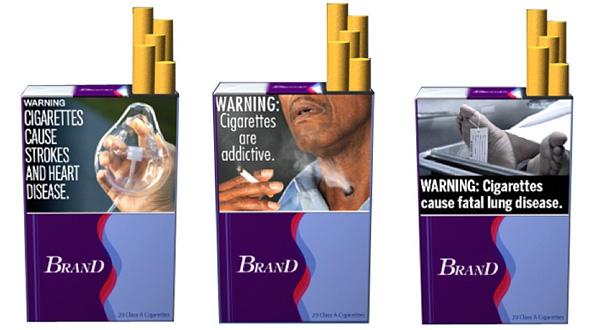
The only "decoration" on the boxes will be warnings about the dangers of smoking - naturalistic images of diseases, Guliyev noted. Besides, all the components that make up a cigarette should be definitely indicated on a pack of cigarettes.
International experience
Tough struggle against smoking has been waged worldwide over the last 30 years. Roughly 47-48 U.S. states adopted laws on smoking restrictions. In addition, smoking is completely banned in several U.S. states. Smoking restrictions in European countries are strictly regulated by such laws. The developing countries have already realized the harm of smoking and made certain adjustments in their state policy.
According to the new legislation, in Bhutan police can enter the homes of suspected smokers, while those detained may face nine years in prison. Bhutan banned the sale of tobacco in 2005, but cigarettes remain widely available on the black market. At the beginning of 2011, the country began enforcing the Tobacco Control Act.
In Russia, the smoking restriction law was adopted three times, but, unfortunately, none of them have been enforced. Georgia also adopted such a law, but it didn't work there either.
Turkey has adopted two smoking restriction laws so far. The law adopted in 1996 was imperfect. It applied restrictions only in public transport and was rather advisory. However, a new law, passed in 2008 and entered into force in 2009, turned out very successful. The statistics is promising: the number of smokers there has decreased by 25 percent over the past two years.
Packaging cigarettes without branding and graphic health warnings on it is on the agenda now. In Australia, tobacco products must be in plain packaging without logos and have graphic health warnings from Dec. 1, 2012. It's the latest move in a global trend toward packing that shows diseased organs, dying patients, skin lesions or other medical maladies caused by smoking.
Health officials around the world hailed the decision by Australia's high court, which stubbed out claims by tobacco companies that the packaging of cigarettes without branding was unconstitutional.
The Australian decision raises the hopes of anti-tobacco forces over similar moves in other nations.
Canada was the first nation to pass legislation requiring a graphic health warning in 2001 -- 41 nations have since followed suit. Canada and 18 other nations require at least 50 percent of the packaging to contain health warnings. Until the Australian decision, the nation that required the most prominent warning was Uruguay, where 80 percent of packages contain graphic health advisories.
But tobacco companies said the Australian ruling -- which would eliminate iconic branding from appearing on the package -- would raise the amount of counterfeit products on the market, eroding government taxes collected on tobacco.
Last year the United States unveiled nine graphic health warning labels that must cover half the area of cigarette packages by this September.
Court of Appeals in Washington ruled that the U.S. government should waive the requirements of the tobacco companies to place on cigarette packs the photographs showing the hazards of smoking, The Associated Press reports. According to the court, the government was exceeding its mandate by trying to make smokers give up the habit.
Cigarette packs in Russia will soon have graphics that demonstrate the harm of smoking in accordance with a relevant order signed by former Russian Health Minister Tatyana Golikova in May 2012.
Bill needs clarification
According to Guliyev, some issues regarding Azerbaijan's anti-smoking bill are still to be coordinated. One of them is related to the amount of fines to be imposed on violators. The low amount of fines would have little importance. Smokers will not refrain and continue to easily break the law. At the same time, it will be impossible to pay a high fine, which causes additional difficulties. The amount of smoking fines in the world varies between 50 and 300 euros for individuals, and 500 and 5,000 euros for legal entities and officials. According to Guliyev, the fine should be high enough so that people would understand how strict the law is.
Another disputable point is linked to an organization that will oversee the enforcement of the law. The bill defines municipalities as controlling bodies, but the Turkish experience has shown that actually this option is not working.
Guliyev noted that the fight against smoking is not only a health issue, but also a matter of culture. "Some famous and influential people in the world have considered smoking as an offensive activity," he added.
Here we are to serve you with news right now. It does not cost much, but worth your attention.
Choose to support open, independent, quality journalism and subscribe on a monthly basis.
By subscribing to our online newspaper, you can have full digital access to all news, analysis, and much more.
You can also follow AzerNEWS on Twitter @AzerNewsAz or Facebook @AzerNewsNewspaper
Thank you!