
Iran, India to start new round of gas talks
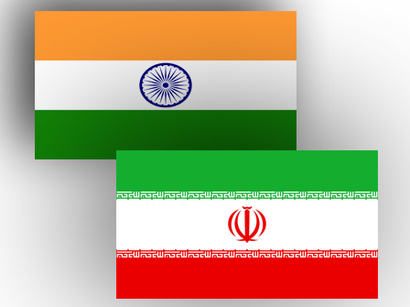
Iran will be ready to change the path of Iran-India gas pipeline
in case New Delhi increases its gas imports volume to the figures
before the implementation of sanctions against Tehran.
Iran is also ready to lower the price of gas exports, as well as
granting a production sharing contract to India for developing
Farzad B gas field, ISNA news agency reported.
The issues will be discussed during the upcoming visit of Iranian
Oil Minister Rostam Qasemi to New Delhi.
Production sharing agreements are a common type of contract signed
between a government and a resource extraction company (or group of
companies) concerning how much of the resource (usually oil)
extracted from the country each will receive.
In production sharing agreements the country's government awards
the execution of exploration and production activities to an oil
company. The oil company bears the mineral and financial risk of
the initiative and explores, develops and ultimately produces the
field as required.
When successful, the company is permitted to use the money from
produced oil to recover capital and operational expenditures, known
as "cost oil".
The remaining money is known as "profit oil", and is split between
the government and the company, typically at a rate of about 80
percent for the government, 20 percent for the company. In some
production sharing agreements, changes in international oil prices
or production rate can affect the company's share of
production.
Farzad B will be Iran's first production sharing contract.
India has repeatedly declared its readiness to join the
Iran-Pakistan natural gas pipeline project, referring to the
project as beneficial.
Iran plans to hold similar talks with China once India joins the
project.
Iranian officials say that the pipeline will ultimately make it
possible to export 150 million cubic meters per day of natural gas
to Pakistan, India and China.
According to Fars news agency, New Delhi eyes to import 90 million
cubic meters of gas from Iran through the pipeline.
Iranian contractors are building around 800 kilometers of the
pipeline within the Pakistani territory.
India will have to build 600 kilometers more, if it decides to join
the multi-billion-dollar energy project.
Indian Minister of Petroleum and Natural Gas Veerappa Moily had
said in March that the pipeline project was beneficial for
India.
The Iran-Pakistan gas pipeline, projected to cost $1.2-1.5 billion,
would enable the export of 21.5 million cubic meters of Iranian
natural gas to Pakistan on a daily basis. Iran has already
constructed more than 900 kilometers of the pipeline on its
soil.
The pipeline's construction plan was officially started on March
11. The pipeline is projected to come on stream in 2014.
Iran plans to extend its 7th cross-country pipeline from
Southwestern port city of Assaluyeh to the southeastern city of
Iranshahr, and from there to the Pakistan border. By extending the
pipeline Iran can also supply gas to its eastern provinces.
An Iranian contractor will lay some 780 kilometers of the pipeline
in the Pakistan soil in 22 months, he said.
Iran and Pakistan have devised a plan to finance the gas pipeline
on Pakistan's side without the need for Islamabad to transfer funds
to Tehran.
Based on the agreement, Tehran will grant a $500-million loan to
Tehran-based Tadbir Energy Development Group, which is responsible
for laying a pipeline in Pakistan under the multi-billion-dollar
project.
In the first phase, Iran will lend 250 million dollars and extend
the assistance later to 500 million dollars.
Pakistan will pay back Iran's $500-million loan after peace
pipeline's inauguration.
Discussions between the governments of Iran and Pakistan started in
1994. A preliminary agreement was signed in 1995.
This agreement foresaw construction of a pipeline from South Pars
gas field to Karachi in Pakistan. Later Iran made a proposal to
extend the pipeline from Pakistan into India.
In February 1999, a preliminary agreement between Iran and India
was signed.
In April 2008, Iran expressed interest in China's participation in
the project. In August 2010, Iran invited Bangladesh to join the
project.
In 2009, India withdrew from the project over pricing and security
issues.
However, in March 2010 India called on Pakistan and Iran for
trilateral talks to be held in May 2010 in Tehran.
Here we are to serve you with news right now. It does not cost much, but worth your attention.
Choose to support open, independent, quality journalism and subscribe on a monthly basis.
By subscribing to our online newspaper, you can have full digital access to all news, analysis, and much more.
You can also follow AzerNEWS on Twitter @AzerNewsAz or Facebook @AzerNewsNewspaper
Thank you!