
South Korea may be next to face halt in Iran oil over insurance - sources
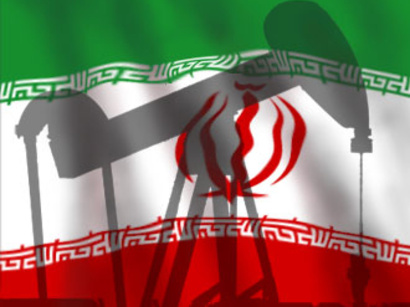
South Korea could become the second major buyer of Iran's crude
to face a halt in imports from the Middle Eastern nation, as
insurers broaden Western sanctions to refineries, people involved
with the matter said, Reuters reported.
Tough curbs by the United States and Europe to force Tehran to end
its nuclear programme have more than halved Iran's oil exports over
the past year, as an EU ban on insurers aiding transport of its
crude left buyers unable to find coverage.
Now the focus is shifting to refineries that process the oil, as
insurers worry about running afoul of the sanctions.
Refiners operating without insurance pose huge financial risks to
their owners. Indian insurers have already taken a tough stance,
warning that they would not be able to pay claims at plants
processing Iranian crude.
A similar move is underway in South Korea, the fourth-biggest buyer
of Iranian crude, worth about half a billion dollars each
month.
Hyundai Oilbank, one of South Korea's two refiners of Iranian
crude, struggled to find reinsurers willing to renew its coverage
late last year, a person with direct knowledge of the matter
said.
"It's not a problem of a higher price. Even if the reinsurers get a
higher premium for covering Iranian crude, the policy is
forbidden," the person said, adding that the world's two biggest
reinsurers, Munich Re and Swiss Re, did not want to cover Iranian
crude for fear of breaching the sanctions.
The person is an employee of reinsurer Korean Re, and did not want
to be identified.
Reinsurers back insurance companies, and without the former, the
insurance industry can't function. Wariness by reinsurers in both
Europe and the United States, who dominate the global market, was
among the chief reasons why India's insurers have said they may not
be able to provide coverage.
Refiners in India, which is Iran's second-biggest crude buyer, said
last month that they would halt imports if they were unable to find
a solution.
Insurance contracts for South Korea's other major Iranian crude oil
refiner, SK Energy, come due in July, said the Korean Re
employee.
Most Iranian crude flows to Asia, with China, India, Japan and
South Korea the biggest buyers. It was not immediately clear how
China's insurers and reinsurers are treating the sanctions in
relation to refiners.
Responding to a Reuters query about what China would do if global
reinsurers stopped covering refineries processing Iranian crude,
Foreign Ministry spokesman Hong Lei said China's economic
development required it to keep normal energy ties with Iran.
"This cooperation is transparent," Hong said. "Such cooperation is
also not in violation of the relevant resolutions of the United
Nation's Security Council and does not hurt the interests of the
international community."
State-backed reinsurer China Re was not immediately available for
comment.
Last year, when sanctions wiped out tanker insurance, it forced a
temporary halt to imports in Japan and South Korea.
To get around the ban, South Korea and China asked Iranian tankers
covered by Iranian insurance to deliver the oil. India provided
partial insurance and allowed Iran to deliver, and Japan provided a
sovereign guarantee.
The countries were still paying nearly $3.5 billion to Iran each
month for oil at the time.
A decision by global reinsurers to stop covering refineries
processing Iranian crude could wipe out that remaining trade.
Iran's remaining oil exports depend in large part on the $50
billion global reinsurance industry, which underlies all insurance
policies, including those of oil refineries.
Domestic insurers typically write policies but they rely on the
financial support of a handful of global reinsurers, particularly
for large policies such as those for refineries.
Eight of the ten largest reinsurers in the world are based in the
European Union or the United States, according to insurance ratings
agency A.M. Best.
Those reinsurers, especially those in Europe, are becoming
increasingly concerned about EU sanctions that expressly prohibit
"directly or indirectly...insurance and re-insurance related to the
import, purchase or transport of crude oil and petroleum products
of Iranian origin."
In an e-mail reply to Reuters' questions, the world's largest
reinsurer, Munich Re, said Iranian crude was deemed such until it
had been subjected to "material, economically justified processing
in a third country", and it was necessary for insurers to check if
it was being processed to bypass sanctions.
"In many cases [these checks] will certainly prompt insurers to
refuse cover due to apprehension about breaching the sanctions,"
Munich Re said.
Munich Re declined to comment on Hyundai Oilbank and did not
directly address whether it would cover refineries processing
Iranian crude.
Swiss Re, the world's second-largest reinsurer, declined
comment.
Insurance contracts for refineries typically come up for renewal
each year. Korean Re has begun asking multinational insurers to
clarify how they will treat Iranian crude in refineries, the
employee said.
Roughly half of the reinsurers Korean Re speaks to will cover
Iranian crude in refineries; the rest refuse, citing sanctions, the
Korean Re employee said.
"It's a gray area. It is really ambiguous."
Whether refineries fall under the sanctions may be a moot point as
the rules will be difficult to enforce, said a Japanese insurance
executive, who recently negotiated refinery policies with European
reinsurers ahead of April 1 renewals.
Refineries process crude from many countries and aren't required to
disclose the origin of the crude they process, said the source, who
spoke on condition of anonymity.
Furthermore, once Iranian oil is imported, its ownership transfers
to the refinery, the source added.
Here we are to serve you with news right now. It does not cost much, but worth your attention.
Choose to support open, independent, quality journalism and subscribe on a monthly basis.
By subscribing to our online newspaper, you can have full digital access to all news, analysis, and much more.
You can also follow AzerNEWS on Twitter @AzerNewsAz or Facebook @AzerNewsNewspaper
Thank you!