
Azerbaijan to keep stable rate of national currency
By Gulgiz Dadashova
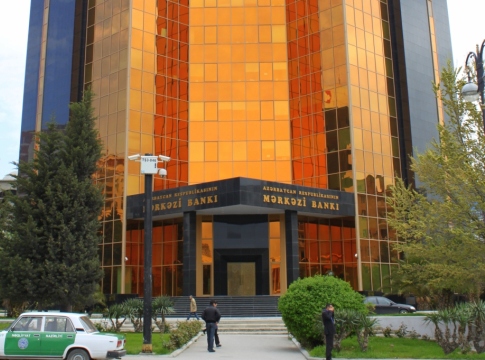
Chairman of the Central Bank of Azerbaijan (CBA) Elman Rustamov
said the bank seeks to support the stability of the national
currency rate in 2013.
"The Exchange rate of manat is stable in Azerbaijan and we intend
to maintain its stability this year," Rustamov told reporters on
Tuesday.
In 2012, the Central Bank sterilized currency in the amount of
$1.584 million with the aim to prevent a significant strengthening
of manat, and thereby neutralize the negative impact on the
competitiveness of non-oil sector.
The CBA controls the national currency rate to avoid excessive exchange rate of manat towards cheapening or appreciation. The stability of the national currency positively impacts the stability of macroeconomic and financial sector.
While implementing the exchange rate policy, the CBA focuses on the inflation process and the maintenance of the country's competitiveness.
The CBA maintains stable national currency rate through
additional inflows into the foreign exchange market of the country.
Over the past 15 years, the annual exchange rate of the Azerbaijani
national currency to the US dollar did not exceed one percent.
Since early 2013, the exchange rate of manat dropped by 0.025
percent, amounting to 0.7849 AZN to the $ 1 as of February 26.
Issuing of high denomination banknotes
postponed
The CBA has postponed issuing new high denomination banknotes for the period after 2013. CBA Chairman Rustamov told media that implemntation of the project will take several years to complete.
"There is no decision to issue high denomination banknotes. It is still just a proposal and its realization is possible after 2013, he added.
CBA originally planned to issue new banknotes of high denominations of 200 and 500 manat for the next five years that will save up to 10 million euro.
Rustamov said earlier that the share of high denomination banknotes of 50 and 100 manat in circulation has recently increased. This is a large financial burden for the state and in accordance with the international practice, their share must not exceed 60-65 percent.
In accordance with the international structure, only seven or eight banknotes and coins in the same amount can be released into circulation. Now, six coins and six banknotes are in circulation in Azerbaijan.
After a certain period of time when the country will need the
removal of low denomination coins from circulation, then the
structure of currency (in case of availability of high denomination
banknotes) will be required to be streamlined. In this case, it
will be possible to issue large denomination coins. For example,
there are metal coins of one and two euro in Europe, and coins of
one and five Swiss francs in Switzerland.
The decision on choosing the coin denomination depends on the
structure of the economy of each country, as well as the scale of
prices.
The studies carried out by the CBA showed that the scale of prices
in Azerbaijan is at such a level that the need for metal coins will
still be maintained and widely used in shopping centres.
Azerbaijan has announced the currency denomination and switched to new banknotes in 2007. This allowed prevention of difficulties that might arise among trade and economic entities in connection with the circulation of banknotes of 19 denominations.
The total volume of the order of new currency was 1.7 billion manat given the stock for three years. Some 94 percent of the total amount accounted for banknotes (1, 5, 10, 20, 50 and 100 manat) and six percent accounted for metal coins (1, 3, 5, 10, 20 and 50 kopecks).
The operating period of banknotes is up to five years and coins 20 years.
Today, much load falls to the banknotes of one and five manat.
Their life cycle is up to two years as they are damaged due to
frequent use. Therefore, the CBA is considering an opportunity of
issuing metal coins of high denomination to reduce the burden on
them and reduce the costs.
Meanwhile, the CBA reported that it may cancel a commission of 0.3
percent, which has been applied to the commercial banks for each
100 manat banknote in cash since Feb. 1, 2013.
The banks, knowing about the Central Bank's policy, which also has costs in the money supply governance (storage, printing new banknotes and utilization of old banknotes), believe that it would be reasonable to set a lower commission, for example, at 0.05 percent.
Earlier, around 90 percent of the banks bought cash money by 100 manat banknotes from the CBA. But now they take banknotes of small denomination to avoid unnecessary expenditure.
The banks hope that this commission will be eliminated, as there is common understanding of the situation during the consultations with the Central Bank.
The CBA originally planned to set a similar commission for 50 manat banknotes, along with 100 manat banknotes, but it has not been set due to the efforts of banks.
The Central Bank justifies the decision by the necessity to optimize the nominal structure of banknotes, reduce using cash in calculations and promote the use of non-cash payment systems.
According to experts, tax incentives rather than administrative is the most effective measure in the international practice to increase the volume of cashless payments.
The share of cash payments in the turnover hits only 4-5 percent in Western countries, while in Azerbaijan the figure hits 50-60 percent.
Here we are to serve you with news right now. It does not cost much, but worth your attention.
Choose to support open, independent, quality journalism and subscribe on a monthly basis.
By subscribing to our online newspaper, you can have full digital access to all news, analysis, and much more.
You can also follow AzerNEWS on Twitter @AzerNewsAz or Facebook @AzerNewsNewspaper
Thank you!